
Remember the first time you saw “afk” pop up in a group chat or a fast-paced online game? You’re in the middle of a heated conversation or a crucial raid, and suddenly your friend drops an “afk 5” and vanishes. For a second, you’re left wondering if it’s a typo, a secret code, or maybe just a random keysmash. You’re not alone. In the speedy world of digital communication, acronyms like AFK are the unsung heroes that keep our virtual interactions smooth and frustration-free. It’s the polite, efficient way to announce a mini-departure without leaving everyone hanging.
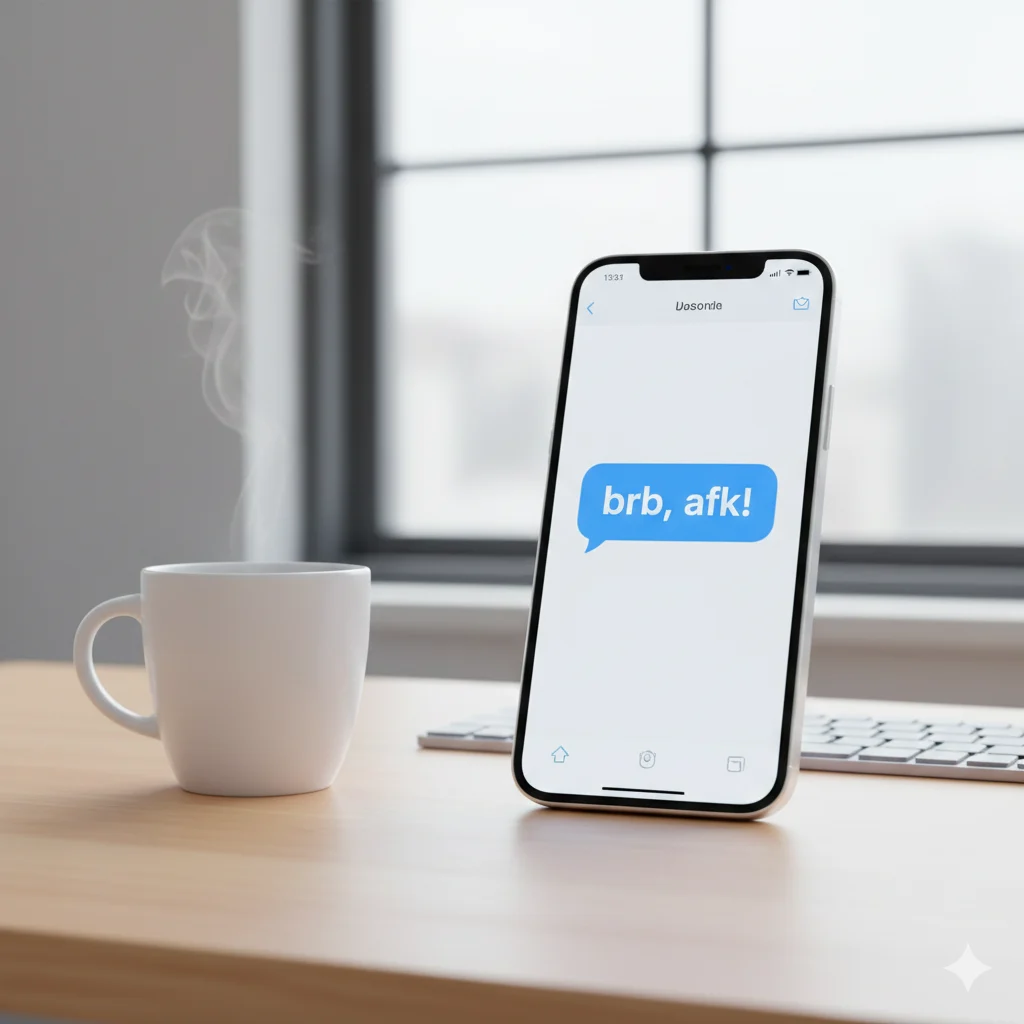
“AFK” means “Away From Keyboard.” It’s a casual and polite way of telling someone you’re stepping away from your device for a short time.
🧠 What Does AFK Mean in Text?
At its core, AFK is an acronym for “Away From Keyboard.” It’s a quick, convenient status update used to inform others in a digital space that you are temporarily unavailable to respond or participate because you are not at your device.
While it literally refers to being away from a keyboard, its use has expanded far beyond PC gaming. Today, you’ll see it used for any temporary absence, whether you’re stepping away from your phone, console, or computer. It’s the digital equivalent of saying, “Hold that thought, I’ll be right back.”
Example: In a Discord voice channel, you might type: “afk, my food just got delivered 🍕.”
In short: AFK = Away From Keyboard = “I’m stepping away for a moment.”
📱 Where Is AFK Commonly Used?
AFK originated in the early days of online chat rooms and Multi-User Dungeons (MUDs) but has since become a staple across virtually every digital platform. Its primary purpose is to manage expectations in real-time communication.
- 🎮 Online Gaming (Its Original Home): Crucial in games like World of Warcraft, League of Legends, or Valorant to let your team know you’re not just ignoring them. Going AFK without warning can get you reported!
- 💬 Messaging & Chat Apps (Discord, Slack, WhatsApp): Used in group chats or channels to signal you’re temporarily unavailable, preventing the dreaded “??? r u there?” messages.
- 👾 Streaming (Twitch, YouTube Live): Streamers often type !afk or have an AFK screen to let viewers know they’ve stepped away briefly.
- 📱 Social Media (Less common, but in DMs): You might see it in direct message conversations, especially longer, real-time ones.
Tone & Formality: AFK is decidedly casual and informal. It’s perfect for friends, teammates, and online communities. You should never use it in formal emails, professional reports, or any official workplace communication (unless your workplace culture is very relaxed on platforms like Slack).
💬 Examples of AFK in Conversation
Here’s how AFK looks in real, messy, authentic digital chats.
- In a Gaming Squad:Alex: Pushing mid, need backup!
Sam: afk 30 sec, cat on keyboard 😾 - In a Discord Friend Server:Jamie: Should we watch the new episode at 8?
Taylor: Yes! afk for a bit, walking the dog. BRB. - In a Work Slack Channel (Casual Setting):Team Lead: Any final thoughts on the design mockup?
You: Looks great from my side. afk for a quick coffee ☕, back in 10. - Explaining a Longer Absence:A: You’ve been quiet.
B: Sorry, was AFK—phone died while I was out. - Announcing Your Return:Player1: afk bio
…(2 minutes later)…
Player1: back, what did I miss? - In a Group Plan:A: Calling in 5 mins!
B: gotta go afk, someone’s at the door. Start without me. - The Considerate AFK:In Valorant Chat: “afk round, doorbell.”
🕓 When to Use and When Not to Use AFK
Being a good digital citizen means knowing when this slang is helpful and when it might fall flat.
✅ When to Use AFK:
- In live, collaborative situations (gaming, voice chats, live documents) where your absence affects others.
- To be polite and manage expectations so people don’t think you’re ignoring them.
- In casual, informal settings with friends, online communities, or relaxed teams.
- When you need a quick bio break, to grab a drink, answer the door, or deal with a minor interruption.
- To indicate you’re still “present” but not actively engaging (e.g., “afk but listening”).
❌ When NOT to Use AFK:
- In formal emails or professional correspondence.
- During urgent or critical conversations where your input is needed immediately.
- As an excuse for prolonged, unexplained absences (that’s just rude).
- In serious or sensitive discussions where it could seem dismissive.
- If you’re actually leaving for a long time (use “BRB” for short breaks, “GTG” or “Signing off” for longer ones).
Contextual Use Table
| Context | Example Phrase | Why It Works (or Doesn’t) |
|---|---|---|
| Friend Gaming Chat | “afk 1 min, mom call 📞” | Casual, informative, sets a clear expectation for the team. |
| Work Chat (Casual) | “afk for the 3 PM standup, back after.” | Acceptable in a relaxed Slack/Teams culture to signal availability. |
| Formal Work Email | “I will be away from my desk briefly and will respond upon my return.” | AFK is too informal. A professional phrase is required. |
| Urgent Situation | “Can’t talk now, emergency. Will call later.” | AFK minimizes the seriousness. A direct, clear message is needed. |
🔄 Similar Slang Words or Alternatives
AFK is part of a whole family of shorthand used to communicate availability. Here’s how it stacks up against its cousins.
| Slang | Meaning | When to Use (Nuance) |
|---|---|---|
| BRB | Be Right Back | The most common alternative. Implies a very short absence, often shorter than AFK. |
| GTG / G2G | Got To Go | Signals you’re leaving entirely, not just stepping away temporarily. |
| BBL | Be Back Later | For a longer, unspecified absence. Less immediate than BRB/AFK. |
| IRL | In Real Life | Explains why you’re away (e.g., “sorry, afk IRL stuff”). |
| OOO | Out of Office | The formal, professional version for extended absences (hours/days). |
| AFK | Away From Keyboard | Specifically implies physical absence from the device, often in live, interactive settings. |
| TTYL | Talk To You Later | A friendly sign-off, ending the conversation for now. |
❓ FAQs About AFK
Q: Is AFK rude to use?
A: Not at all! In fact, it’s considered polite and proactive in casual digital spaces. It’s ruder to disappear without warning, leaving others confused.
Q: How long can I be AFK?
A: There’s no strict rule, but the general understanding is a few minutes. If you’ll be gone for 15+ minutes, it’s better to use “BBL” or just say you’re logging off. In gaming, being AFK for a full match is almost always frowned upon.
Q: What’s the difference between AFK and BRB?
A: They are often used interchangeably, but there’s a subtle nuance. BRB (Be Right Back) emphasizes the return. AFK (Away From Keyboard) emphasizes the state of being away. AFK is also more rooted in gaming and multi-user environments.
Q: Can I use AFK at work?
A: It depends entirely on your workplace culture. In a fast-paced, formal office, avoid it. In a tech-savvy, relaxed startup using Slack, it might be perfectly acceptable in non-critical channels. When in doubt, use a more professional phrase like “Stepping away.”
Q: Is there a flirty or romantic meaning to AFK?
A: No, AFK does not have an inherent flirty meaning. It is purely functional. However, like any word, tone and context matter. A message like “sadly afk, but thinking of our convo 😉” adds a personal, flirty layer to the standard acronym.
Q: What does “AFK farming” mean in games?
A: This is a specific gaming term where a player sets up their character to perform repetitive tasks (like collecting resources) while they are physically away from the keyboard. It’s a way to progress in the game without active play, and it’s often governed by specific game rules.
💎 Conclusion
In the end, AFK is a tiny piece of digital etiquette that makes a big difference. It’s a clear, concise, and considerate way to navigate our multitasking lives, where we’re constantly juggling conversations on screens and responsibilities in the real world. By understanding and using “afk,” you’re not just typing an acronym—you’re being a respectful friend, a reliable teammate, and a savvy digital communicator. So next time your doorbell rings or your coffee calls, don’t just ghost your chat. A quick “afk 2!” is all it takes to keep the connection smooth and everyone on the same (virtual) page. Now, if you’ll excuse me… I’m afk for a snack. 🍕

Freya Huge is a digital writer and content strategist known for her clear, relatable explainers on modern slang, online culture, and everyday communication. She blends creativity with research to help readers understand trends and express themselves confidently.