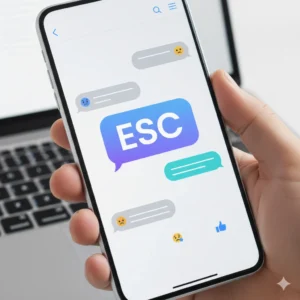


Remember the last time you got a text that was just… confusing? Maybe your friend sent a cryptic “We need to talk 👀” and your heart dropped. Or a family member forwarded one of those wildly exaggerated news headlines, and you couldn’t tell if they were warning you or joking. In that moment of confusion, you were desperately trying to figure out the author’s purpose. You were asking yourself: “What is their goal here? To scare me? To inform me? Or just to be dramatic?” We do this instinctively with texts and social media posts all the time. “Author’s purpose” is simply the formal name for that detective work—the why behind any piece of writing, from a Shakespearean sonnet to your bestie’s latest Snapchat story.
“Author’s Purpose” means the reason an author decides to write something. It’s the goal they hope to achieve, whether it’s to Persuade, Inform, Entertain, Explain, or Describe. It’s the key to understanding the real message behind the words.
🧠 What Does Author’s Purpose Mean in Text?
At its core, the author’s purpose is the intent behind the message. It’s the “why” that drives the “what.” When you understand the purpose, you can better understand the tone, the content, and even what the author isn’t saying. While you might remember the classic “PIE” acronym (Persuade, Inform, Entertain) from school, the digital world has expanded the reasons we write. An author’s purpose can be to vent frustration, seek validation, build a connection, or simply go viral.
Think of it like the “vibe” of a message. A text that says “The meeting is at 3 PM” has a very different vibe and purpose than one that says “OMG, you will NEVER believe what just happened!!!”
In short: Author’s Purpose = The Author’s Goal = The “Why” Behind the Words.
📱 Where Is Understanding Author’s Purpose Important?
Figuring out the author’s purpose isn’t just for English class essays anymore. It’s a crucial digital literacy skill you use every single day across all platforms. It helps you navigate online spaces safely and effectively.
- 💬 Texting & Messaging Apps (WhatsApp, iMessage): Is your partner using a period at the end of a sentence? Are they being formal (to inform) or passive-aggressive (to persuade/manipulate your feelings)?
- 📸 Social Media (Instagram, TikTok, Facebook): Is that influencer’s post about a new skincare product genuinely trying to inform you about its benefits, or are they subtly trying to persuade you to buy it with an affiliate link?
- 🐦 News & Social Discourse (Twitter/X, Reddit): Is a post designed to explain a complex current event, or is it crafted to persuade you toward a specific political viewpoint, or even to anger you for more engagement?
- 📧 Email Communication: Is this marketing email trying to entice me with a sale (to persuade), or is my boss’s email a direct set of instructions (to inform)?
- 🎮 Gaming Chats (Discord, In-Game Chat): Is a player’s message meant to explain a game strategy or to trash-talk (a form of entertainment/social dominance)?
Understanding author’s intent is essential for being an informed consumer of information and a savvy communicator. It’s inherently a casual, analytical skill you apply to both formal and informal content.
💬 Examples of Author’s Purpose in Conversation
Let’s see how author’s purpose plays out in real, text-based conversations.
Example 1: The Persuasive Friend
A: “You HAVE to come to this new pizza place with me. The crust is literally life-changing, and they have that garlic dip you love. My treat? 🍕”
Purpose: To Persuade. The use of exaggeration (“life-changing”), a personal appeal (“dip you love”), and an incentive (“my treat”) all aim to convince.
Example 2: The Informative Group Chat
A: “Hey everyone, just a heads-up: the bridge on Main St. is closed for construction. Take Elm St. instead to avoid traffic. 🚧”
Purpose: To Inform. This is a straightforward, factual message intended to share useful information.
Example 3: The Entertaining Storyteller
A: “So I tried to be smooth and wave at someone across the street… turns out it was a mannequin in a store window. I then proceeded to wave at two more people out of sheer commitment to the bit. 😭”
Purpose: To Entertain. The self-deprecating humor and relatable awkwardness are meant to amuse the reader.
Example 4: The Descriptive Planner
A: “Imagine this: a cozy cabin, a crackling fireplace, the smell of pine, and zero cell service for 48 hours. That’s the weekend I’m planning. 🏔️”
Purpose: To Describe. The author uses sensory language to paint a vivid picture and evoke a feeling.
Example 5: The Explainer
A: “ok so the reason your sourdough is flat is probably that your starter isn’t active enough. you need to feed it and let it double in size before you bake. it’s like using a sleepy yeast! 🍞”
Purpose: To Explain. This breaks down a “why” or “how,” providing clarity on a specific topic.
🕓 When to Analyze and When to Ignore Author’s Purpose
✅ WHEN TO ANALYZE AUTHOR’S PURPOSE:
- Reading News Articles: To identify potential bias or persuasion tactics.
- Engaging with Marketing/Ads: To understand how a brand is trying to influence your buying decisions.
- Interpreting Ambiguous Texts: When a message’s tone is unclear, figuring out the purpose can prevent misunderstandings.
- Consuming Social Media Content: To discern between genuine information, satire, and misinformation.
- Academic or Professional Work: To critically evaluate sources and understand arguments.
❌ WHEN YOU CAN IGNORE IT:
- Simple, Factual Directives: “Pick up milk on your way home.”
- Casual, Obvious Greetings: “Hey, what’s up?”
- Messages from a trusted source that are purely logistical: “Your package will arrive by 8 PM.” (The purpose to inform is clear and requires no deep analysis).
Author’s Purpose Quick Guide
| Context | Example Phrase | Why It Works / The Purpose |
|---|---|---|
| Friend’s Persuasion | “You’ll love this movie, it’s so your sense of humor! 🍿” | Persuade: Uses personal connection to convince. |
| News Alert | “City Council will vote on the new park proposal tonight at 7 PM.” | Inform: States a neutral, public fact. |
| Funny Meme Caption | “My brain at 3 AM remembering that thing I said in 2007:” | Entertain: Aims for a laugh with a relatable joke. |
| Recipe Blog Post | “Creaming the butter and sugar incorporates air, which helps the cookies rise.” | Explain: Clarifies the science behind a step. |
| Travel Influencer Post | “The water was a breathtaking, crystal-clear turquoise, so clear you could see every shell on the ocean floor.” | Describe: Creates a vivid, sensory experience. |
🔄 Similar Concepts and Analytical Frameworks
Understanding author’s purpose often goes hand-in-hand with other analytical concepts. Here’s how they relate:
| Concept | Meaning | When to Use It |
|---|---|---|
| Author’s Tone | The author’s attitude toward the subject or audience (e.g., sarcastic, formal, joyful, somber). | When you want to describe the “feeling” of the writing. The purpose influences the tone. |
| Point of View (POV) | The perspective from which a story or message is told (e.g., first-person “I,” third-person “he/she”). | When analyzing whose voice is being used and how it affects the message’s reliability. |
| Audience | The specific group of people the author is trying to reach. | To understand why the author chose certain words, examples, or tones to connect with that group. |
| Main Idea | The central point or most important thought the author wants to communicate. | To summarize the “what” of the message, which is directly shaped by the “why” (the purpose). |
| Bias | A prejudice for or against something, often in an unfair way. | When you suspect the author’s purpose to persuade is based on a skewed perspective rather than facts. |
❓ FAQs About Author’s Purpose
1. What does PIE stand for?
PIE is a common acronym for the three main author’s purposes: Persuade, Inform, and Entertain. It’s a great starting point for understanding this concept.
2. Can a text have more than one purpose?
Absolutely! A blog post about climate change can inform you with data and also try to persuade you to live more sustainably. A novel’s primary purpose is to entertain, but it can also inform you about a historical period.
3. How do I find the author’s purpose?
Ask yourself key questions: What is the main message? How does the author want me to feel or react? What is the tone? Why did the author choose these specific words or examples? The answers will point you toward the purpose.
4. Is author’s purpose the same as main idea?
No. The main idea is what the author is saying (the content). The author’s purpose is why the author is saying it (the goal). For example, the main idea could be “Exercise is healthy.” The purpose could be to inform you of the facts or to persuade you to start working out.
5. Why is author’s purpose important for students?
It’s a foundational critical thinking skill. It helps students become better readers and writers by allowing them to deconstruct texts, understand bias, and craft their own writing with a clear goal in mind.
Conclusion:
Understanding the author’s purpose is like being given the key to a secret code. It transforms you from a passive consumer of words into an active, critical thinker. Whether you’re decoding a friend’s vaguebooking, evaluating a news source for bias, or crafting the perfect text to get what you want, knowing the “why” is your superpower. The next time you read anything—from a government document to a meme on your feed—take a second to ask: “What is this author’s purpose?” The answer will make you a more empathetic, discerning, and effective communicator in our text-saturated world. 🗝️✨

Freya Huge is a digital writer and content strategist known for her clear, relatable explainers on modern slang, online culture, and everyday communication. She blends creativity with research to help readers understand trends and express themselves confidently.