
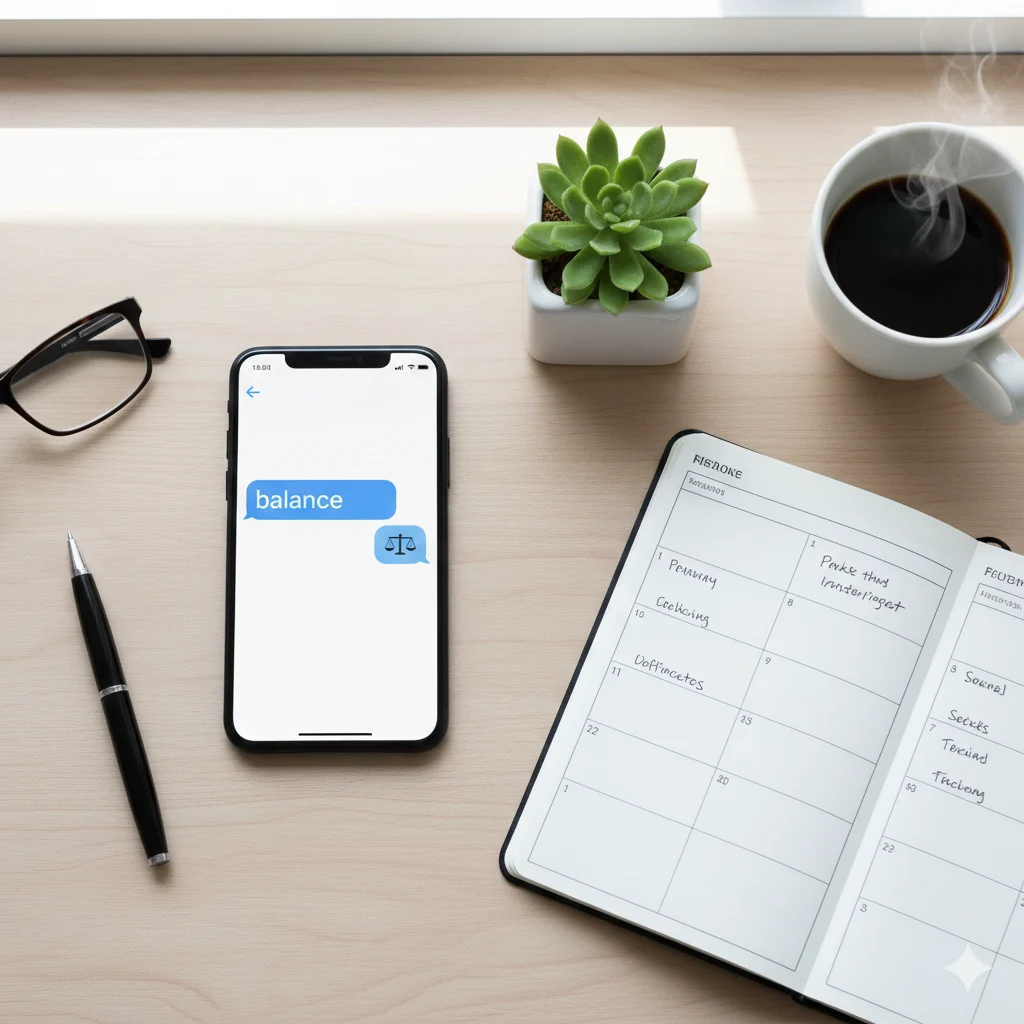
In modern slang, “balance” means finding a healthy equilibrium in your life, especially between digital activity (social media, work, gaming) and offline well-being. It’s a casual, self-care-focused term used to discuss mental health and lifestyle habits.
Ever been deep in a TikTok scroll hole, only to see a friend post a Story with the caption “Trying to find my balance this week 🌿”? Or maybe your group chat blew up when someone suddenly said, “I need to log off and get some balance.” If your first thought was about your bank account, you’re not alone. The first time I saw “balance” used this way, I was totally confused. Was my friend suddenly giving financial advice mid-meme thread?
But in the swirling world of text slang, words constantly evolve beyond their dictionary definitions. “Balance” has been quietly transformed from a spreadsheet term into a powerful shorthand for a whole generation’s quest for sanity in a hyper-connected world. It’s the buzzword for managing the chaos of notifications, FOMO, and endless to-do lists. Let’s dive into what “balance” really means when it’s typed between emojis and DMs.
🧠 What Does “Balance” Mean in Text & Social Media?
Forget the ledger. In texting, social media captions, and digital lingo, “balance” refers to achieving a healthy, sustainable equilibrium between different aspects of your life. It’s most commonly about the tug-of-war between your online and offline worlds.
The core idea is digital wellness and intentional living. When someone says they’re “seeking balance,” they’re talking about:
- Screen Time vs. Real Life: Balancing hours on Instagram with time spent offline with friends, hobbies, or nature.
- Work vs. Play: Managing a demanding job or studies with sufficient rest and leisure.
- Social Energy vs. Solitude: Juggling a busy social calendar with necessary alone time to recharge.
Example in a sentence: “The constant pings from our work chat are too much. I’m setting ‘Do Not Disturb’ hours after 7 PM for better balance.”
In short: Balance = Digital/Life Equilibrium = The pursuit of a less stressful, more intentional lifestyle.
📱 Where Is “Balance” Commonly Used?
This term thrives in spaces where people discuss lifestyle, mental health, and personal growth. It’s inherently casual and community-oriented.
- 📸 Instagram & TikTok: Dominant in captions, bio (“Just a girl seeking balance ☕️📚”), and hashtags (#FindYourBalance, #WorkLifeBalance, #DigitalBalance). Often paired with aesthetic images of journals, yoga, or coffee.
- 💬 WhatsApp/Group Chats: Used to explain why someone is going offline or setting boundaries. “Guys, I’m muting this chat for the weekend. Need some balance.”
- 🧵 Twitter/X: In discussions about burnout, productivity culture, and self-care threads.
- 💼 LinkedIn (in a more professional tone): Appears in posts about remote work boundaries, avoiding burnout, and sustainable productivity.
- 👥 Discord & Gaming Communities: Gamers use it to talk about managing marathon sessions with real-life responsibilities.
Tone: It’s almost exclusively casual, reflective, and self-care-focused. It signals a desire for well-being and is met with support, not ridicule.
💬 Examples of “Balance” in Conversation
Here’s how “balance” flows in real chats:
- In a Friend Group Chat:A: Anyone free for brunch tomorrow?
B: Can’t, sorry. I’ve been out every night this week. Gotta stay in and cook to restore my balance 😅. - On Social Media (Caption):Spent the morning offline. A long walk, a real book… just what I needed for a little balance. 📖🌲 #DigitalDetox
- Setting a Boundary:A: Did you see my 10 messages about the project?
B: Hey, I’m offline after 6 PM for balance. I’ll look first thing tomorrow! - Self-Reflection:A: You’ve been quiet on socials lately!
B: Yeah, trying to find a better balance. Scrolling was making me anxious. - Encouraging a Friend:A: I feel guilty for not answering work emails on Sunday.
B: Don’t! Protecting your personal time is key for balance. You’ll be more focused Monday.
🕓 When to Use and When Not to Use “Balance”
✅ When to Use “Balance”:
- When explaining why you’re going offline or being less responsive.
- In captions discussing self-care, mental health, or lifestyle changes.
- To empathize with a friend feeling overwhelmed or burnt out.
- When setting healthy boundaries with work, social groups, or family.
- In casual discussions about productivity and well-being.
❌ When NOT to Use “Balance”:
- In formal emails or official workplace correspondence (use “work-life balance” or professional phrases).
- When discussing literal financial accounting.
- In urgent or critical situations where clear, direct language is required (e.g., “I am unavailable” not “I need balance”).
- To mock someone’s legitimate need for boundaries (it’s dismissive).
| Context | Example Phrase with “Balance” | Why It Works (or Doesn’t) |
|---|---|---|
| Friend Chat | “Taking a social media break for balance ✌️” | Casual, relatable, and clearly communicates a personal goal. |
| Work Chat (Casual Team) | “Logging off early to keep some balance this week!” | Friendly and humanizing, if your workplace culture is open to it. |
| Professional Email | “I prioritize maintaining a healthy work-life balance.” | The full, formal phrase is appropriate and professional. |
| Urgent Situation | ❌ “I can’t help with the emergency, I need balance.” | Ineffective. Sounds tone-deaf. Use: “I’m unavailable right now.” |
🔄 Similar Slang Words or Alternatives
“Balance” is part of a larger vocabulary of digital wellness. Here are related terms:
| Slang / Phrase | Meaning | When to Use It |
|---|---|---|
| Digital Detox | A period of abstaining from electronic devices. | For a deliberate, often longer break from screens. More intense than “balance.” |
| Touch Grass | A (sometimes rude) suggestion to go outside and get offline. | Often used in gaming or online arguments to tell someone they’re too immersed. |
| Main Character Energy | Focusing on your own life and well-being as if you’re the main character in your story. | When prioritizing self-care and confidence. Positive and empowering. |
| Off the Grid | Being completely unreachable by digital means. | For a total disconnect, often on vacation or retreat. |
| Vibe Check | Assessing the energy or emotional state of a person or situation. | Can be a precursor to seeking balance: “My vibe is off, need to recalibrate.” |
| Recharge | Taking time to restore energy, often alone. | More focused on internal energy than the equilibrium “balance” implies. |
❓ FAQs About “Balance”
Is “balance” a flirty term?
No, it’s not typically flirty. Its tone is self-reflective, casual, and health-oriented. It might be used in a deep, meaningful conversation with someone close, but it doesn’t carry romantic connotations by itself.
Can I use “balance” at work?
Be cautious. In casual Slack/Teams chats with a friendly team, it might be okay. In formal emails or with superiors, use the full phrase “work-life balance” or more professional language like “managing my workload sustainably.”
Why did this become slang?
It rose with the burnout generation and discussions around mental health in the digital age. As our lives became more integrated with technology, the need for a simple word to describe the fight for separation grew. It encapsulates a modern struggle in a single, positive, aspirational word.
How do I respond if someone says they need balance?
Be supportive! Respond with empathy, not pressure. Good replies: “Totally get that.” “Good for you!” “Enjoy your offline time!” “Let me know when you’re back.” Avoid guilting them or demanding immediate attention.
Finding Your Own Balance 🪷
In the end, the slangification of “balance” is more than just a linguistic trend—it’s a cultural signal. It shows that collectively, we’re recognizing the cost of being always-on and are seeking a language to reclaim our time and peace. Using “balance” in a text isn’t just about explaining your absence; it’s a tiny act of advocacy for a healthier way to live with technology.
So the next time you see it in a bio or a chat, you’ll know it’s not about money. It’s an invitation to a broader conversation about wellbeing. And maybe, just maybe, it’s the reminder you need to close that extra browser tab, put your phone on silent, and find a little of your own balance, whatever that looks like for you.

Charles Dickens was a legendary English novelist and social commentator known for his timeless storytelling and deep understanding of human nature. His works continue to inspire writers and readers worldwide, shaping literature, culture, and modern narrative craft.