
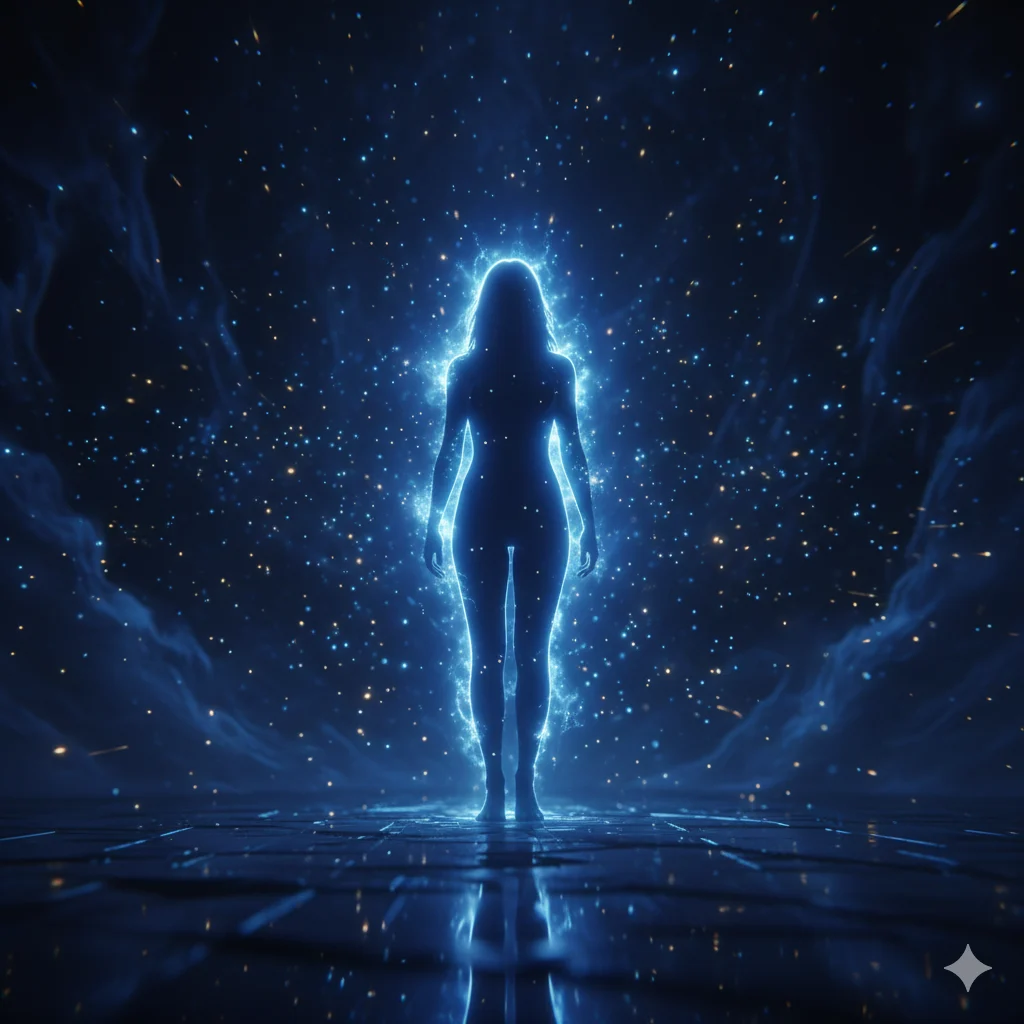
A “blue aura” refers to the color of a person’s bioenergetic field in metaphysical practices, representing communication, calmness, truth, and clarity.
Picture this: you’re scrolling through your favorite self-care TikTok or a spiritual blog, and you see someone say, “I’ve been feeling so communicative and peaceful lately—must be my blue aura shining through!” You pause, mid-scroll. A blue aura? Is that like a mood ring for your soul? A special effect? If you’ve ever stumbled upon this term in wellness circles, online personality quizzes, or even in casual conversation and felt a twinge of confusion, you’re definitely not alone. The world of auras can seem like a mysterious, colorful code.
In this guide, we’re decoding exactly what having a blue aura means, breaking down the personality traits it’s associated with, and exploring how this concept is used in modern digital slang and spiritual communities. Whether you’re curious about your own energy or just trying to understand what your friend means when they hashtag #BlueAuraVibes, we’ve got you covered.
🧠 What Does a Blue Aura Mean in Spiritual and Modern Contexts?
At its core, an aura is believed to be a field of subtle, luminous radiation surrounding a person or object. In metaphysics, holistic healing, and various spiritual traditions, it’s thought to be a visual map of our emotional, spiritual, and energetic state. Each color in this energetic spectrum corresponds to different qualities.
A blue aura specifically is associated with the throat chakra (Vishuddha), which is the energy center linked to communication, expression, and truth. It signifies calmness, clarity, honesty, and strong communication skills.
Think of it as your energetic signature. A clear, bright blue often indicates someone who is a natural communicator, a truth-seeker, and a peaceful presence. It’s the color of a calm sea and a clear sky—representing depth, serenity, and expression.
In short: A Blue Aura = A Calm, Communicative, and Truthful Energy Field.
📱 Where Is “Blue Aura” Talk Commonly Used?
The concept of the blue aura has moved from niche spiritual circles into mainstream digital conversation. Here’s where you’ll commonly encounter it:
- 🌿 Wellness & Spirituality TikTok/Instagram: Short videos explaining aura colors, meditations for balancing the throat chakra, and personality breakdowns.
- 💬 Online Forums & Communities: Places like Reddit (r/spirituality, r/psychic), Pinterest, and holistic wellness blogs where people share experiences and interpretations.
- 📊 Personality Quizzes: “What’s your aura color?” quizzes are hugely popular on social media and websites like BuzzFeed.
- 👥 Casual Conversation: Used metaphorically to describe someone’s vibe or mood. (e.g., “She gives off such a calming, blue aura today.”)
- 🎨 Artistic & Creative Spaces: Descriptions in art, music, and writing to convey a certain feeling or character trait.
Tone: It’s almost always casual, introspective, and social-media-friendly. It’s rarely used in formal, medical, or scientific contexts unless in a comparative or explanatory discussion.
💬 Examples of “Blue Aura” in Digital Conversation
Let’s see how this term flows in real talk, from spiritual chats to everyday slang.
- In a Spiritual Group Chat:A: Just had the most amazing therapy session. Finally spoke my truth.
B: Amazing! Your throat chakra is wide open. Total blue aura moment. 💙 - Commenting on a Friend’s Vibe:A: I love catching up with you. I always leave feeling so heard and calm.
B: Aw, thanks! Maybe it’s my blue aura at work. 😄 - Discussing a Personality Quiz Result:A: OMG, I took that aura quiz and got “sky blue.” What does that even mean?
B: It means you’re a peaceful communicator! Blue aura gang! It says you’re honest and a good listener. - Describing a Character or Aesthetic:A: I’m designing my OC for a story. She’s very wise and calm.
B: Give her a blue aura in her descriptions. It instantly codes her as truthful and serene. - As a Metaphor for Mood:A: I’ve been journaling all morning and feel so clear-headed.
B: You’re radiating a blue aura today. Love that for you.
🕓 When to Use and When Not to Use “Blue Aura”
✅ When to Use “Blue Aura”:
- In spiritual, metaphysical, or holistic wellness discussions.
- When talking about personality traits related to calmness and communication.
- In casual, creative, or artistic contexts to describe a vibe or aesthetic.
- When engaging with friends who are open to or interested in energy talk.
❌ When NOT to Use “Blue Aura”:
- In formal, scientific, or medical reports or conversations.
- During urgent or crisis situations where clear, literal language is needed.
- To dismiss someone’s feelings (e.g., “Just fix your blue aura” is invalidating).
- With people who have explicitly stated they are not interested in spiritual concepts.
| Context | Example Phrase | Why It Works |
|---|---|---|
| Spiritual Discussion | “Meditating really helped balance my throat chakra and brighten my blue aura.” | Appropriate and specific to the context. |
| Giving a Compliment | “You’re such a great listener—such blue aura energy.” | A casual, modern compliment among receptive friends. |
| Formal Analysis | “The subject reported feelings of calm and clarity.” | Uses standard psychological language, which is more professional and universal. |
🔄 Similar Spiritual & Slang Color Vibes
The blue aura is part of a whole spectrum of “color coding” for personalities and energies. Here are some similar terms:
| Slang / Term | Meaning | When to Use |
|---|---|---|
| Green Aura | Represents the heart chakra; signifies healing, growth, compassion, and love. | Talking about someone who is nurturing, a natural healer, or in a period of personal growth. |
| Purple Aura | Linked to the crown & third-eye chakras; signifies intuition, spirituality, and wisdom. | Describing someone who is deeply intuitive, mystical, or spiritually connected. |
| Red Aura | Rooted in the root chakra; signifies passion, energy, survival, and physicality. | Talking about someone with strong life force, ambition, or grounded, practical energy. |
| Yellow Aura | Connected to the solar plexus; signifies joy, intellect, confidence, and optimism. | Describing someone who is bubbly, mentally sharp, or radiating positivity. |
| Good Vibes | A more general slang for positive energy. | A universal, non-spiritual way to describe positive feelings or a person’s pleasant energy. |
| Zen | A state of calm attentiveness. | Describing a peaceful, calm mood or demeanor without the spiritual layer. |
🌈 Shades of Blue: Different Types of Blue Auras
Not all blue is the same! In aura interpretation, the shade and clarity matter:
- Sky Blue: A bright, clear sky blue indicates excellent communication, peace, truthfulness, and spiritual clarity. The person is likely expressive and calm.
- Royal Blue: A deep, vibrant blue suggests a highly intuitive, spiritually gifted, and loyal individual. They may have strong psychic or empathetic abilities.
- Turquoise: A blue-green mix signifies a dynamic healer and communicator. This person may be a counselor, teacher, or compassionate leader who motivates others.
- Cloudy or Muddy Blue: A dull, grayish blue can indicate blocked communication, fear of speaking one’s truth, or unresolved grief. It suggests the throat chakra may need balancing.
❓ FAQs About Blue Auras
Q: Can my aura color change?
A: Yes! Most believers think aura colors are dynamic and can shift with your mood, health, spiritual practice, and personal growth. You might have a dominant color, but others can appear.
Q: How do I find out my aura color?
A: People use various methods: intuitive/psychic readings, Kirlian photography, meditation and self-sensing, or even those popular online quizzes (though these are just for fun).
Q: Is a blue aura rare?
A: Not particularly. Blue is considered a common aura color, especially given its connection to communication—a fundamental human trait.
Q: What if I don’t “believe” in auras?
A: That’s completely fine! You can still use the concept as a metaphor or a tool for self-reflection. Thinking “What would a blue aura trait be?” can simply mean “How can I be more clear and calm in my communication today?”
Q: What’s the opposite of a blue aura?
A: There isn’t a direct opposite, but a blocked or imbalanced throat chakra (showing as a muddy blue or absence of blue) would contrast a clear blue aura. In terms of color energy, a very dominant red aura (physical, grounded) might express energy very differently than a cerebral blue.
Conclusion
Whether you view it as a literal energy field, a helpful psychological metaphor, or just a fascinating piece of modern slang, understanding the blue aura meaning opens a window into how we discuss personality, mood, and spiritual wellbeing in the digital age. It’s a shorthand for calm, clarity, and authentic expression.
At the end of the day, these colorful concepts are tools for introspection and connection. If the traits of the blue aura resonate with you—valuing honesty, striving for peaceful communication, seeking truth—then embracing that “blue aura energy” can be a powerful way to frame your personal journey. And if not, maybe you’re radiating a brilliant green or a passionate red. The beauty lies in the spectrum itself. So, the next time you see #BlueAura, you’ll know it’s more than just a pretty color—it’s a whole vibe. 💬✨

Freya Huge is a digital writer and content strategist known for her clear, relatable explainers on modern slang, online culture, and everyday communication. She blends creativity with research to help readers understand trends and express themselves confidently.