
Ever looked at your car battery and thought, “What does CCA mean on a battery?” I did the first time I bought a replacement, and it felt like reading hieroglyphics. You see numbers, letters, and a whole lot of confusion.
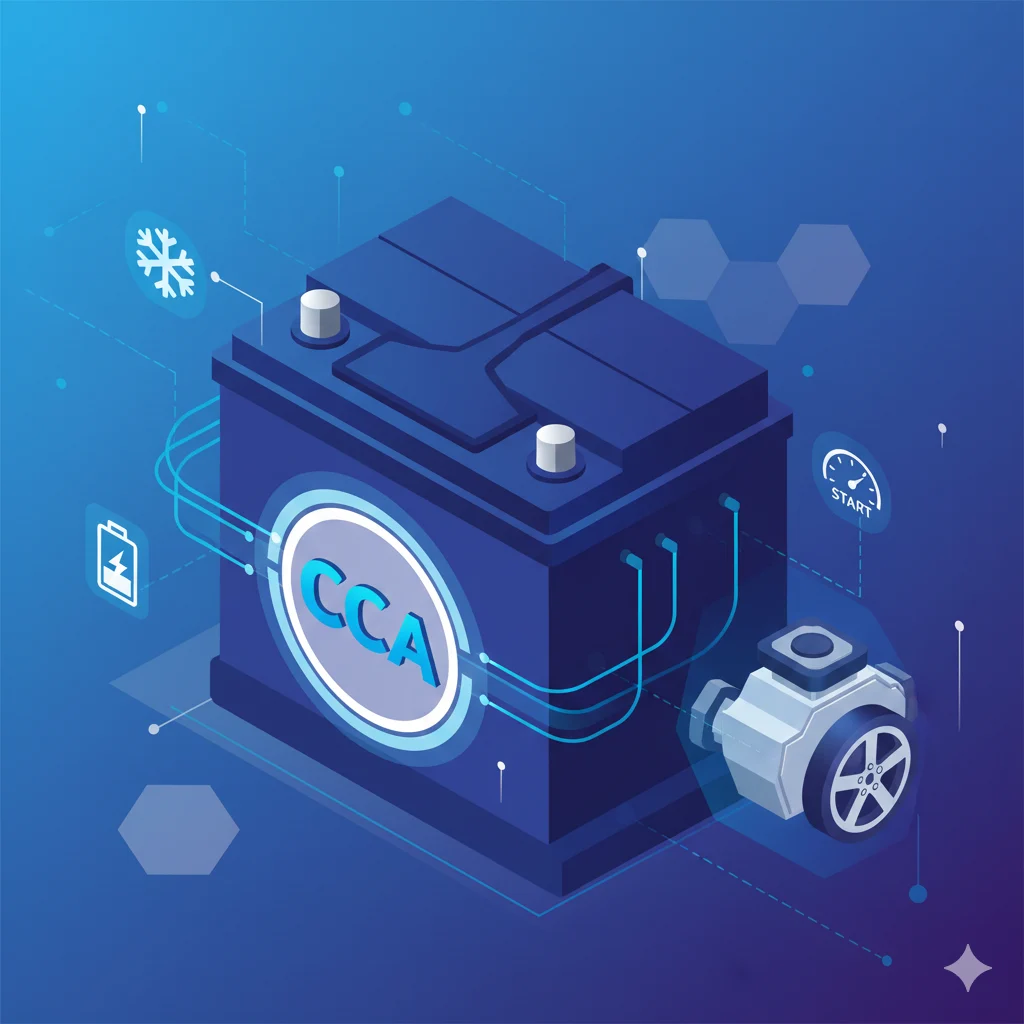
Quick Answer: CCA stands for Cold Cranking Amps. It’s a friendly, informative term that measures how much power your battery can deliver to start your car in cold weather. Simply put, the higher the CCA, the more confidently your car starts on a freezing morning. Knowing this number saves you from “why won’t my car start?” panic moments.
🧠 What Does CCA Mean on a Battery?
- Full Form: Cold Cranking Amps
- Definition: The amount of current a fully charged battery can deliver for 30 seconds at 0°F while maintaining at least 7.2 volts.
- Example: “This battery has 700 CCA, so your engine will start easily even in snowy winters.”
In short: CCA = Cold Cranking Amps = Battery’s cold-start strength
📱 Where Is CCA Commonly Used?
CCA is not just a random number; it appears in:
- 🚗 Car battery labels and packaging
- 🔧 Auto parts stores and manuals
- 💻 Online forums and YouTube car maintenance channels
- 📱 Vehicle marketplaces like Amazon and eBay
Tone: Formal in manuals, casual in online forums and chats. Perfect for social media-friendly advice and automotive blogs.
💬 Examples of CCA in Conversation
- A: “I need a new battery, any tips?”
B: “Check one with at least 600 CCA, winter’s coming ❄️” - A: “This battery looks strong.”
B: “Yep, 750 CCA — should start your car anytime 👍” - A: “What’s CCA?”
B: “Cold Cranking Amps, basically battery power in cold weather ❄️” - A: “Can I use 500 CCA for my truck?”
B: “Might struggle in winter, better 650+ CCA ⚡” - A: “Battery dying fast?”
B: “Check the CCA rating, maybe it’s too low for your engine 💡”
🕓: When to Use and When Not to Use CCA
✅ When to Use:
- Choosing a car battery
- Advising friends about winter readiness
- Comparing battery specs
❌ When Not to Use:
- Texting unrelated topics
- Writing formal reports without context
- In urgent emergency situations
| Context | Example Phrase | Why It Works |
|---|---|---|
| Friend Chat | “Grab a 700 CCA battery 😄” | Casual & friendly |
| Work Chat | “Consider a higher CCA rating.” | Polite & professional |
| “Please verify the Cold Cranking Amps before purchase.” | Formal & clear |
🔄 Similar Slang Words or Alternatives
| Slang | Meaning | When to Use |
|---|---|---|
| RC | Reserve Capacity – duration battery lasts at discharge | Technical discussion |
| Ah | Amp-Hour – total energy storage | Comparing batteries |
| MCA | Marine Cranking Amps – battery current in marine engines | Boats and marine vehicles |
| BCI | Battery Council International – battery standards | Technical specs |
⚡ How CCA Impacts Car Performance
- Higher CCA = easier starting in cold weather ❄️
- Low CCA = slow or failed starts 🌨️
- Ensures your engine cranks reliably every time ⚡
- Influences battery longevity and winter performance ⏳
Tip: Always match CCA to manufacturer’s recommended rating.
🔋 CCA vs MCA: What’s the Difference?
- CCA: Cold Cranking Amps, measured at 0°F
- MCA: Marine Cranking Amps, measured at 32°F
- Conversion: 700 CCA ≈ 840 MCA
- Use Case: Cars typically list CCA; boats use MCA
🛠️ How to Check CCA of a Battery
- Look at the battery label 🔍
- Use a digital battery tester ⚡
- Check online manufacturer specs 💻
- Ask a trusted auto mechanic 🧰
Pro Tip: Ensure your tester is rated for your battery’s CCA range.
🏎️ Recommended CCA Ratings for Vehicles
- Small cars: 400–600 CCA 🚗
- SUVs & trucks: 600–800 CCA 🛻
- Cold climates: 700+ CCA ❄️
- Hot climates: 400–600 CCA 🔥
Tip: Higher CCA is safer in winter but may cost more.
📊 How to Increase CCA Effectively
- Keep battery fully charged ⚡
- Avoid deep discharges 🔋
- Maintain clean terminals 🧽
- Replace old or weak batteries 🛠️
Note: Extreme temperatures reduce effective CCA temporarily.
💡 Common Myths About CCA
- “Higher CCA = longer battery life” ❌
- “CCA only matters in winter” ❌
- “All 700 CCA batteries are equal” ❌
Truth: CCA measures starting power, not overall lifespan.
🔧 : Troubleshooting Battery Issues With CCA
- Car won’t start in cold weather → check if CCA is sufficient ❄️
- Battery dies quickly → low reserve capacity, not CCA
- Slow cranking → older battery or terminals need cleaning
Tip: Match CCA with engine size and climate for best performance.
🧾 FAQs About CCA
1. What does CCA mean on a car battery?
Cold Cranking Amps — the power to start an engine in cold conditions.
2. Is a higher CCA always better?
Better for winter and large engines, but follow manufacturer recommendations.
3. Can I use a lower CCA battery?
Yes, for small engines or warm climates, but starts may be slow in cold.
4. How is CCA tested?
With a battery tester at 0°F for 30 seconds.
5. Is CCA the same as battery capacity?
No, it measures start current, not how long the battery lasts.
6. Do all car manuals list CCA?
Most do, especially for colder regions.
✅ Conclusion
Understanding what does CCA mean on a battery helps you choose the right battery, avoid winter starting issues, and keep your car reliable. Whether you live in freezing climates or just want consistent performance, knowing your battery’s CCA ensures peace of mind.
Next time you buy a battery, check that CCA label. High enough? You’re ready for winter. Low? Maybe upgrade. Your car (and your mornings) will thank you! ⚡
Final Tip: Always match CCA to your vehicle’s specifications — smooth starts are just a number away.

Freya Huge is a digital writer and content strategist known for her clear, relatable explainers on modern slang, online culture, and everyday communication. She blends creativity with research to help readers understand trends and express themselves confidently.