
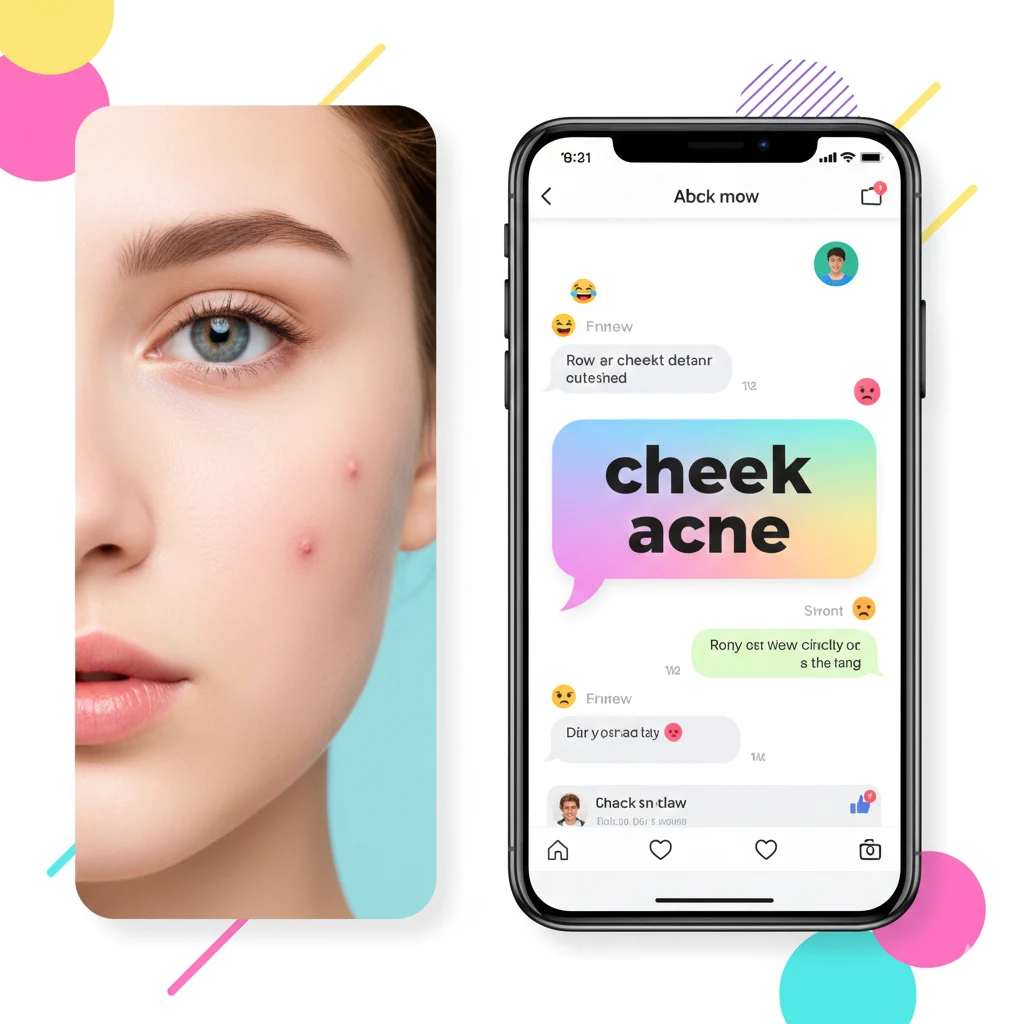
I’ll never forget the first time I got a text that stopped me mid-scroll. A friend had sent a cryptic message: “Hey, having a rough day. Major cheek acne 😔.” My first thought was a mix of confusion and concern—were they having a sudden skincare crisis? I almost replied with my favorite spot treatment recommendation! But something about the context felt off. After a quick moment of panic, I realized this wasn’t a call for Clearasil; it was a subtle, coded cry for emotional support. If you’ve ever been equally baffled, you’re in the right place. Let’s decode this modern piece of digital communication.
“Cheek acne” is a slang term that means “Check in on me.” It’s a subtle, often vulnerable way of saying, “I’m struggling and could use someone to talk to,” using a playful phonetic pun.
🧠 What Does Cheek Acne Mean in Text?
In the world of text slang, words are often shortened, and phrases are transformed into clever homophones (words that sound the same but have different meanings). “Cheek acne” is a perfect example of this linguistic creativity. It has absolutely nothing to do with clogged pores or skincare routines.
The term is a phonetic pun. When you say “cheek acne” out loud, it sounds almost identical to the phrase “check in on me.” This is the core of its meaning. When someone texts you “cheek acne,” they are indirectly asking for you to “check in” on their well-being. It’s a low-key, sometimes humorous, but genuinely heartfelt way of expressing that they’re feeling down, lonely, or going through a tough time and would appreciate your support.
Example Sentence: “I saw her post ‘ugh, feeling the cheek acne today’ on her private story, so I immediately sent her a message to see if she was okay.”
In short: Cheek Acne = “Check in on me” = A discreet request for emotional support.
📱 Where Is Cheek Acne Commonly Used?
This particular piece of slang thrives in specific digital environments where casual, personal, and often coded communication is the norm. You’re most likely to encounter it in the following places:
- Private Stories on Snapchat & Instagram: This is the #1 spot for “cheek acne.” Users often post it as a text-over-a-blank-screen or a vague selfie to their “Close Friends” list, signaling a need for support without making a public announcement.
- Finsta Accounts (Fake Instagram): These private accounts are for a user’s innermost thoughts, and “cheek acne” fits perfectly as a coded distress signal to a trusted inner circle.
- Text Messaging (iMessage, WhatsApp): Used in one-on-one chats or small, intimate group chats with close friends who understand the slang.
- Twitter & TikTok DMs: While less common in public feeds, it’s used in direct messages as a way to subtly tell a friend you’re not doing well.
Tone & Formality: “Cheek acne” is highly casual and strictly for informal, social-media-friendly communication. It would be completely inappropriate and confusing in any formal or professional context.
💬 Examples of Cheek Acne in Conversation
Seeing “cheek acne” in action is the best way to understand its nuance. Here are 5 realistic chat examples.
1. The Subtle Hint on a Private Story:
Person A: (Posts a black screen with the text “cheek acne is flaring up 😪” to their Close Friends story)
Person B: (DMs them) “hey, saw your story. what’s going on? everything ok? 💙”
2. The Direct Text to a Close Friend:
A: “my parents are being so annoying rn. just a lot of cheek acne.”
B: “aw no, i’m sorry 🙁 want to facetime and vent?”
3. In a Supportive Group Chat:
A: “not to be a downer but… big cheek acne energy today.”
B: “sending you a hug 🫂”
C: “do you want to talk about it? we’re here for you.”
4. A Response to a Vague Post:
A: (Publicly tweets) “some days are just harder than others.”
B: (Replies privately) “hey, saw your tweet. cheek acne? 💭”
5. The Self-Aware Usage:
A: “lol sorry for the random cheek acne, just feeling a bit isolated.”
B: “never apologize! thanks for telling me. what’s up?”
🕓 When to Use and When Not to Use Cheek Acne
Navigating the use of “cheek acne” is all about understanding context and audience.
✅ When to Use “Cheek Acne”
- With Close Friends: When you’re feeling down and want to signal your need for support to people who know you well.
- In Casual, Informal Settings: On private social media stories, in DMs, or personal text threads.
- When You Want to Be Subtle: It’s less direct than saying “I’m sad,” making it feel less vulnerable for some people.
- To Respond to a Friend’s Vague Post: When you see a friend posting sad or ambiguous content, you can use it to gently check in.
❌ When NOT to Use “Cheek Acne”
- In Formal or Professional Communication: Never use it in work emails, team chats (Slack, Teams), or with colleagues.
- With Family or Acquaintances: Unless you are 100% sure they are familiar with Gen Z/Millennial slang, it will lead to confusion.
- During a Genuine Emergency: If you are in immediate danger or need serious help, use clear, direct language to communicate your needs.
- As a Joke with Someone You Don’t Know Well: It could be seen as insensitive or confusing.
Contextual Usage Table
| Context | Example Phrase | Why It Works (or Doesn’t) |
|---|---|---|
| Friend’s Private Story | “Cheek acne is real today 😓” | Subtle & effective with an audience that understands the code. |
| Text to a Best Friend | “Just got some bad news. Cheek acne pls.” | Casual, vulnerable, and directly asks for what you need from a trusted person. |
| Work Slack Channel | “Hey team, please cheek acne on the project progress.” | DO NOT DO THIS. It’s unprofessional and will cause confusion. |
| Formal Email | “Please cheek acne at your earliest convenience.” | Inappropriate. The recipient will have no idea what you mean. |
🔄 Similar Slang Words or Alternatives
“Cheek acne” is part of a larger trend of using coded language to express emotional states online. Here are some similar terms and their meanings.
| Slang | Meaning | When to Use |
|---|---|---|
| Cheek Acne | Check in on me | When you’re feeling down and need someone to reach out. |
| I’m Finna | I’m not fine. | A more direct way to say you’re not okay, often used similarly. |
| I’m just vibe-ing | I’m just surviving. | Suggests you’re barely getting by, but trying to keep up appearances. |
| Soft Launch | Hinting at a new relationship without making it official. | Used on social media to test the waters or create buzz. |
| Ate and Left No Crumbs | Did something perfectly and flawlessly. | To give a massive compliment for an incredible performance. |
| NPC | Non-Player Character; someone who just goes with the flow. | To describe someone who isn’t asserting themselves in a situation. |
❓ FAQs About Cheek Acne
1. Is “cheek acne” a real medical condition in this context?
No, not at all. In the context of texting and social media, “cheek acne” is purely a slang term based on a phonetic pun for “check in on me.” It is not a reference to the skin condition.
2. Who typically uses the term “cheek acne”?
The term is most popular among Gen Z and younger Millennials who are active on visual and private social media platforms like Snapchat, Instagram, and TikTok. It’s part of the ever-evolving lexicon of digital native communication.
3. How should I respond if someone says “cheek acne” to me?
The best way to respond is with empathy and directness. Send them a private message saying something like, “Hey, I saw your post/I got your text. I’m here for you. What’s going on?” or “Do you want to talk about it?” The key is to acknowledge their signal and offer support.
4. Why don’t people just say “I’m sad” instead of using code words like this?
Using coded language like “cheek acne” can feel less vulnerable and intimidating than directly stating “I’m sad.” It acts as a soft launch for your feelings, allowing the person to test the waters and see who responds with care. It also adds a layer of humor or lightness to a heavy feeling, making it easier to express.
Conclusion: More Than Just a Pimple Joke
Understanding “cheek acne” is about more than just adding a new slang word to your vocabulary. It’s a window into how modern communication has evolved to include subtle, coded calls for help and connection. In a world where oversharing is easy, terms like this allow for a more nuanced expression of vulnerability. They create a sense of community and understanding among those “in the know.” So, the next time you see a friend complaining about “cheek acne” online, you’ll know it’s not a skincare emergency—it’s an invitation to be a better friend. Don’t just scroll past; send that check-in message. It might make all the difference.

Ava White is a digital content creator, quotes writer, and communication expert at Jinglas.com. She specializes in crafting simple, engaging explainers on slang, texting culture, and modern online trends to help readers stay informed and confident in the digital world.