

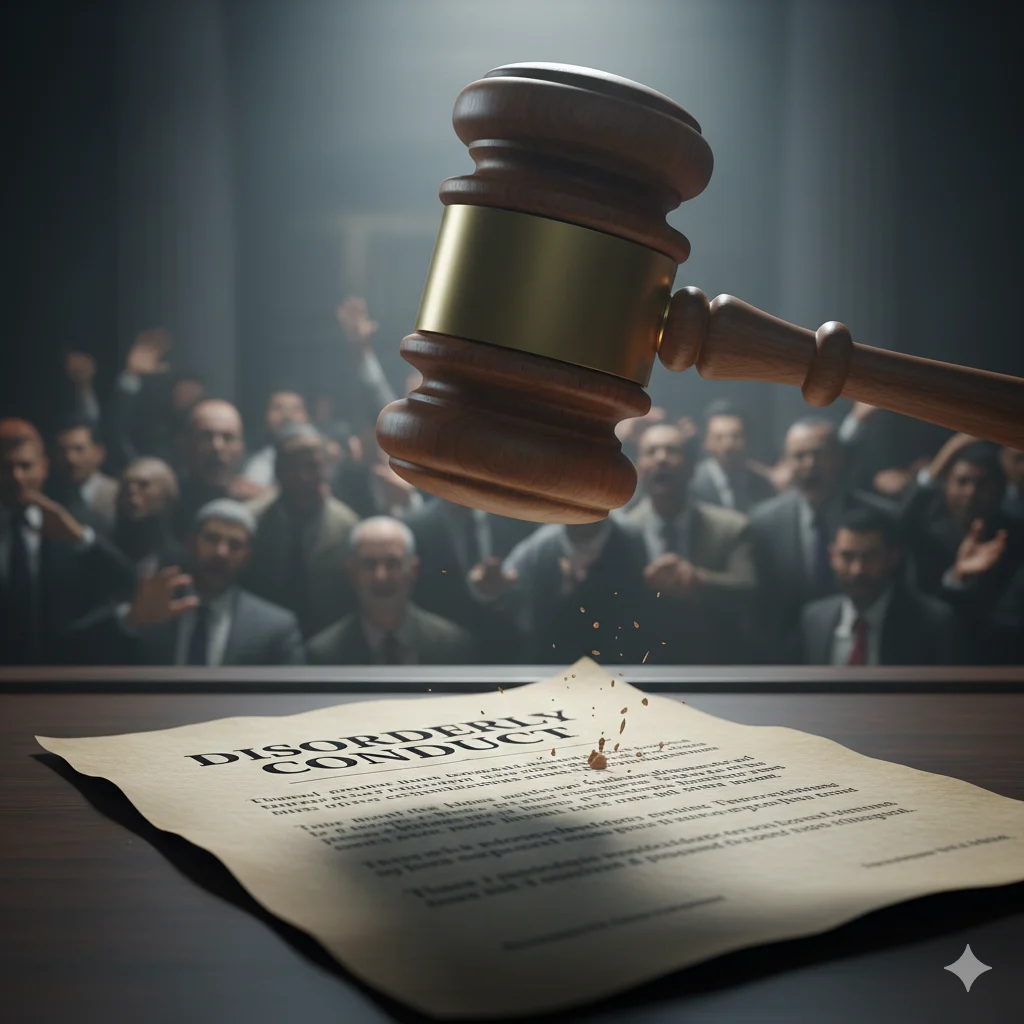
I’ll never forget the first time I heard the term “disorderly conduct.” I was watching a movie where a character was arrested at a rowdy protest, and the police officer yelled those exact words. My initial thought was, “That sounds serious, but what did he actually do?” Is it fighting? Is it just being loud? The legal jargon felt intentionally vague and confusing. If you’ve ever found yourself in a similar situation, scratching your head at a news report or a friend’s story, you’re not alone. “Disorderly conduct” is one of those catch-all legal phrases that seems to cover a world of mischief, and understanding its true meaning is crucial.
“Disorderly conduct” means engaging in disruptive public behavior that disturbs the peace and endangers the safety or health of the community. It’s a broad, catch-all criminal charge used by law enforcement to address acts that don’t fit neatly into more specific crimes.
🧠 What is the Legal Definition of Disorderly Conduct?
At its core, disorderly conduct is a public order offense. It’s not about a private disagreement in your own home; it’s about actions in public spaces that cause a nuisance, alarm, or inconvenience to others. The key element is that the behavior is disruptive to the public peace.
While the exact definition varies by state and even by city ordinance, most laws include a combination of the following acts:
- Fighting or engaging in violent, tumultuous behavior.
- Making unreasonable noise.
- Using abusive or offensive language in a manner likely to provoke an immediate violent reaction.
- Creating a hazardous or physically offensive condition with no legitimate purpose.
- Obstructing vehicular or pedestrian traffic.
Example Sentence: “The man was charged with disorderly conduct after he refused to stop yelling obscenities and blocking the sidewalk outside the restaurant.”
In short: Disorderly Conduct = Disruptive Public Behavior = Disturbing the Peace.
📜 The Origins and Purpose of Disorderly Conduct Laws
To truly understand “what does disorderly conduct mean,” it helps to know why these laws exist. Disorderly conduct statutes have deep roots in English common law, originally intended to prevent breaches of the king’s peace. In modern society, their purpose is to give police a tool to de-escalate situations and maintain public safety before a minor disturbance escalates into something more dangerous, like a riot or a violent assault. They act as a legal buffer, allowing officers to intervene in potentially volatile scenarios. This legal concept is foundational to maintaining civic order and falls under the broader umbrella of public nuisance laws.
📱 Where Are Disorderly Conduct Charges Commonly Applied?
This charge is incredibly versatile for law enforcement. You’re likely to encounter it in a variety of public settings. Think of it as the legal system’s Swiss Army knife for managing public spaces.
- 🎉 At Large Social Gatherings: Parties, concerts, and festivals where noise or fights break out.
- 🏀 Sporting Events: Drunken, unruly behavior in the stands or on the streets after a game.
- ✊ Protests and Demonstrations: When a lawful protest turns into blocking streets or aggressive confrontations.
- 🍻 Bar and Nightlife Districts: Public intoxication, arguing loudly on the street, or refusing to disperse.
- 🛒 Retail Stores and Malls: Causing a major scene, yelling at employees, or refusing to leave.
- 🏠 Residential Neighborhoods: Blasting music late at night or engaging in a loud, public domestic dispute.
It’s important to note that while the charge is common and widely used, it is a criminal offense, not just a social faux pas. A conviction can appear on your criminal record.
🚨 Common Examples of Disorderly Conduct in Real Life
Let’s break down the legal definition into real-world scenarios. Here are 5 realistic examples of what could lead to a disorderly conduct charge.
Example 1: The Noisy Neighbor
A: “Can you please turn your music down? It’s 2 AM!”
B: Turns music up even louder “IT’S A FREE COUNTRY! I’LL DO WHAT I WANT!”
Result: After multiple complaints, police arrive and issue a citation for disorderly conduct due to unreasonable noise.
Example 2: The Bar Fight Instigator
A: Shoves another patron “You spilled my drink!”
B: “It was an accident, man!”
A: “I don’t care! Let’s take this outside!”
Result: Before any punches are thrown, security holds A and police charge them with disorderly conduct for threatening, tumultuous behavior.
Example 3: The Unruly Sports Fan
A: Standing on seats, screaming profanities at the players, and throwing a cup onto the field.
B: (Security Guard) “Sir, you need to leave now.”
A: “NO WAY! I’M NOT GOING ANYWHERE!”
Result: A is escorted out and handed over to police for disorderly conduct and trespassing.
Example 4: The Obstructionist Protester
A: Lying down in the middle of a busy intersection during a march, stopping all traffic.
B: (Police Officer) “You are unlawfully obstructing traffic. You must move or you will be arrested.”
A: “I’m not moving! Arrest me!”
Result: A is arrested and charged with disorderly conduct for obstructing vehicular traffic.
Example 5: The Public Nuisance
A: Spray-painting graffiti on a public bench and then arguing loudly with a passerby who confronts them.
B: “You can’t do that! I’m calling the police.”
A: “Go ahead! I don’t care!”
Result: Police arrive and charge A with vandalism and disorderly conduct for creating a hazardous/offensive condition and disruptive arguing.
✅ When a Disorderly Conduct Charge Is Valid vs. ❌ When It’s Not
The broad nature of this charge means it’s sometimes misapplied. Understanding the line is key.
✅ When the Charge is Typically Valid:
- When your behavior is genuinely disruptive and alarms or annoys others in a public place.
- When you refuse a lawful police order to disperse from an unlawful assembly.
- When your actions are likely to provoke violence from others.
- When you are publicly intoxicated to a degree that you are a danger to yourself or others.
❌ When the Charge Might Be Questionable or Infringe on Rights:
- Criticizing a police officer in a non-threatening manner (protected free speech).
- Peacefully filming in a public space (protected activity).
- Simply being in a group that has a few unruly members, without participating in the disruption yourself.
- Silent, non-obstructive protests (like a sit-in on a public sidewalk that doesn’t block pedestrian flow).
| Context | Example Scenario | Why It Works (or Doesn’t) |
|---|---|---|
| Valid: Loud Party | Yelling, blasting music at 3 AM in an apartment complex. | Valid because it disturbs the peace and health of numerous neighbors. |
| Valid: Bar Argument | Shouting threats and challenging others to fight. | Valid because it creates a dangerous situation that could escalate. |
| Invalid: Free Speech | Telling a politician “You’re doing a terrible job!” in a public square. | Invalid as it’s protected political speech, not “fighting words.” |
| Professional Context | A heated, but non-threatening, argument in a private office. | Not Applicable as it’s not in a public space disturbing the community. |
🔄 Similar Offenses and Legal Alternatives
Disorderly conduct often overlaps with other minor crimes. Here’s a quick comparison table to clarify the differences.
| Offense | Meaning | Key Difference |
|---|---|---|
| Breach of the Peace | Very similar to disorderly conduct; a general term for disturbing public order. | Often used interchangeably, but can be broader in some jurisdictions. |
| Public Intoxication | Being visibly drunk or high in a public place. | Specifically related to substance impairment, while disorderly conduct focuses on the disruptive act itself. |
| Disturbing the Peace | A category of crimes that includes disorderly conduct, noise complaints, and fighting. | Essentially the umbrella category under which disorderly conduct falls. |
| Resisting Arrest | Obstructing or opposing a law enforcement officer during an arrest. | A separate charge that often accompanies disorderly conduct if the person fights the officer. |
| Criminal Trespass | Entering or remaining on a property after being told to leave. | Focuses on unlawful presence, while disorderly conduct focuses on disruptive behavior. |
⚖️ What Are the Potential Penalties and Consequences?
The penalties for a disorderly conduct conviction can vary widely but generally include:
- Fines: Typically ranging from $100 to $1,000+.
- Probation: A period of court supervision instead of, or in addition to, jail time.
- Jail Time: Usually a short sentence, from a few days up to a year, often for repeat offenders or severe cases.
- Community Service: A judge may order a set number of hours of service.
- A Criminal Record: This is the most lasting consequence, which can affect employment, housing, and professional licenses.
Many states classify simple disorderly conduct as a misdemeanor. However, aggravated circumstances (like targeting someone based on race or causing a riot) can bump it up to a felony.
🛡️ How to Defend Against a Disorderly Conduct Charge
Fighting a disorderly conduct charge often hinges on the specific facts of the case. A skilled criminal defense attorney might use several strategies, grounded in a strong understanding of criminal law and constitutional rights:
- Lack of Probable Cause: Arguing the officer had no valid legal reason to make the arrest.
- First Amendment Defense: Proving the behavior was protected free speech (e.g., political protest).
- Vagueness: Challenging the statute as unconstitutionally vague as applied to your specific actions.
- Self-Defense: Arguing you were acting to protect yourself or another from imminent harm.
- Factual Dispute: Presenting evidence (like witness testimony or video) that the alleged disruptive behavior did not occur.
❓ FAQs About Disorderly Conduct
1. Is disorderly conduct a felony?
Typically, no. Most disorderly conduct charges are classified as misdemeanors. However, they can be elevated to a felony if the behavior is exceptionally severe, leads to a riot, or is considered a “hate crime.”
2. Can you go to jail for disorderly conduct?
Yes, you can. While many cases result in fines or probation, jail time is a possibility, especially for repeat offenses or cases involving violence or extreme obstruction.
3. Does disorderly conduct stay on your record?
Yes, a conviction will appear on your criminal record unless you are able to have it expunged or sealed, which depends on your state’s laws and the specifics of your case.
💎 The Bottom Line
So, what does disorderly conduct mean? In essence, it’s a tool for maintaining public order, but its vagueness requires careful navigation. It’s not about criminalizing simple rudeness, but about preventing behavior that genuinely disrupts community safety and peace. Whether at a protest, a party, or a public park, being aware of how your actions affect others is the best way to avoid this charge. If you do find yourself facing a disorderly conduct allegation, remember that it is a real criminal offense with real consequences, and seeking qualified legal counsel is the most critical step you can take to protect your rights and your future.

Freya Huge is a digital writer and content strategist known for her clear, relatable explainers on modern slang, online culture, and everyday communication. She blends creativity with research to help readers understand trends and express themselves confidently.