
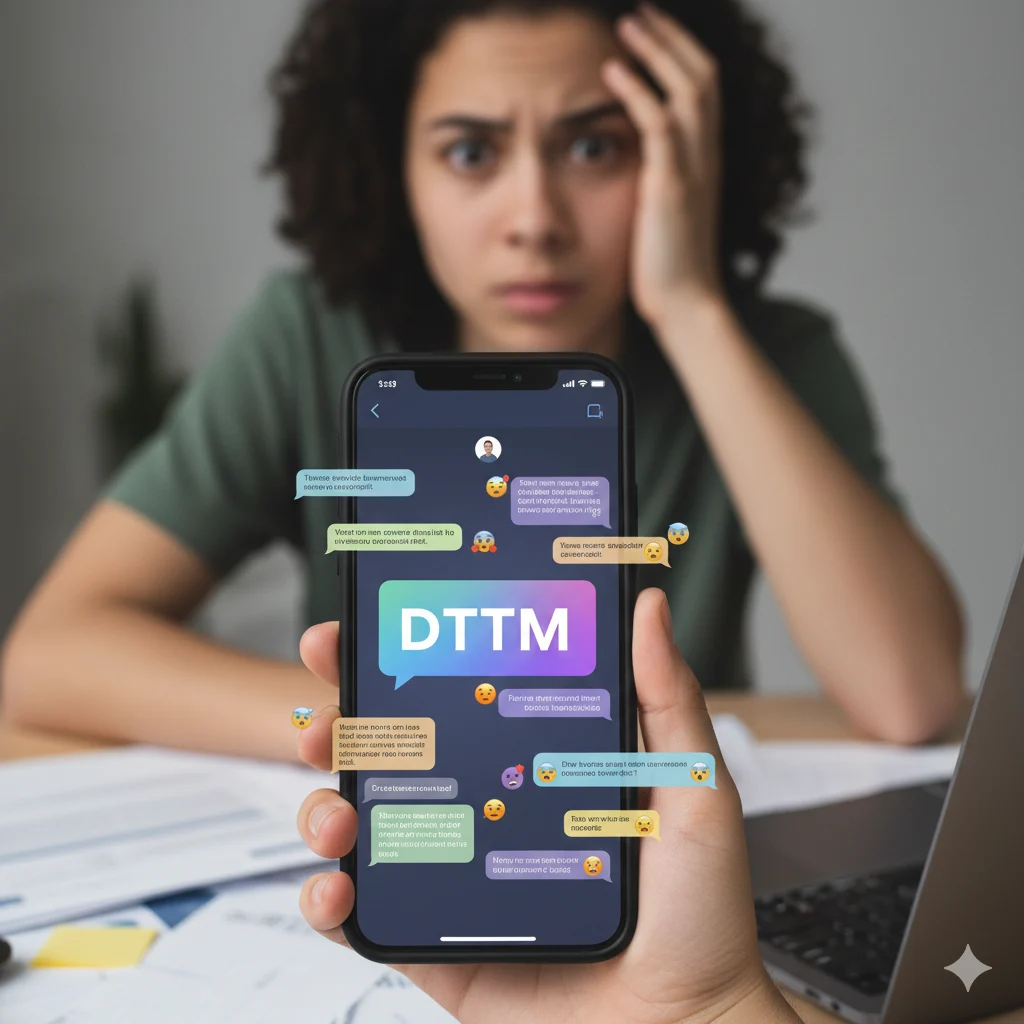
You’re scrolling through your DMs, and you see it. A friend just posted a cryptic status: “Exam season. DTTM.” Your brain starts racing. Is it a new band? A project deadline? The latest TikTok trend you missed? You feel a little out of the loop, and that familiar pang of digital FOMO sets in. We’ve all been there. The world of texting slang moves at lightning speed, and keeping up can feel like a full-time job. But don’t worry, you’ve come to the right place to decode the mystery.
DTTM means “Don’t Talk To Me.” It’s a direct, often humorous or stressed-out way of telling someone you need space and shouldn’t be disturbed.
🧠 What Does DTTM Mean in Text?
Let’s break it down. DTTM is an initialism that stands for “Don’t Talk To Me.” Unlike acronyms like “LOL” (Laughing Out Loud) that we say as words, initialisms are pronounced by saying each letter individually: D-T-T-M.
In practice, the meaning of DTTM is less about being outright rude and more about setting a clear, no-nonsense boundary. It’s a digital “Do Not Disturb” sign. People use it to signal that they are in a state of deep focus, extreme stress, or simply not in the mood for conversation. It’s a preemptive strike against incoming messages that could break their concentration or drain their social battery.
Example: “I have three deadlines tomorrow, so DTTM until Friday.”
In short: DTTM = Don’t Talk To Me = A clear signal that you are unavailable and need to be left alone.
📱 Where Is DTTM Commonly Used?
DTTM thrives in fast-paced, informal digital environments where quick communication is key. You’re most likely to encounter it on:
- WhatsApp & iMessage: In direct messages or group chats to manage expectations with friends.
- Snapchat: Often used in Snap captions or stories to broadcast one’s current unavailability.
- Instagram & Twitter (X): Found in bios, story posts, or tweets to express being overwhelmed or busy.
- TikTok: Used in video captions or comments, especially in relatable content about stress, studying, or needing alone time.
- Gaming Chats: In platforms like Discord, a player might type “DTTM, final boss fight” to avoid distractions.
Tone & Formality: DTTM is decidedly casual and informal. It’s social-media-friendly but should never be used in a professional or formal context. Its tone can range from playful and humorous among close friends to genuinely stressed and serious.
💬 Examples of DTTM in Conversation
Seeing DTTM in action is the best way to understand its nuance. Here are some realistic chat examples.
Example 1: The Stressed Student
- A: wanna grab food later?
- B: can’t, my entire grade depends on this paper. dttm, sorry 😫
Example 2: The Overwhelmed Friend
- A: Omg did you see the drama in the group chat??
- B: dttm about it. i can’t handle any more today.
Example 3: Broadcasting on Social Media
- Post on Snapchat Story: A picture of a messy desk covered in books. Caption: “DTTM. Emerging in 48 hours.”
Example 4: The Gamer in the Zone
- Player 1: hey, you almost done? we need a healer for the next round.
- Player 2: dttm, in a ranked match.
Example 5: The Preemptive Warning
- A: calls for the third time in an hour
- B: dttm, i’m with family. text you tonight.
Example 6: The Playful “Don’t Bother Me”
- A: what are you doing?
- B: watching the new episode of my show. dttm unless the house is on fire 🔥
Example 7: In a Group Chat
- Alex: @everyone who’s coming to the party tonight?
- Sam: dttm about party plans, i’m on a work call.
🕓 When to Use and When Not to Use DTTM
Knowing the appropriate context for using DTTM is crucial to avoid coming off as rude or unprofessional.
✅ When to Use DTTM
- With Close Friends: People who know your sense of humor and communication style will understand it’s not personal.
- In Casual Settings: On social media, in private messages, or in gaming communities.
- To Signal Genuine Need for Focus: When you’re studying, working on a tight deadline, or in a high-pressure situation.
- As a Humorous Exaggeration: When you’re “in the zone” on a hobby or wallowing a show and want to be left alone in a lighthearted way.
- To Manage Your Social Energy: When you’re feeling overwhelmed and need to communicate your boundaries simply.
❌ When NOT to Use DTTM
- In Professional Communication: Never use it with your boss, colleagues, or clients.
- In Formal Emails: It is completely inappropriate and unprofessional.
- During Serious or Urgent Situations: If someone needs to reach you for an emergency, DTTM can be dangerously misleading.
- With Acquaintances or Strangers: They may not get the tone and could be offended.
- As a Passive-Aggressive Tool: Using it to punish someone after an argument is unhealthy communication.
What Does Cheek Acne Mean? The Surprising Text Slang Explained 💬🔍
DTTM Usage Context Table
| Context | Example Phrase | Why It Works (or Doesn’t) |
|---|---|---|
| Friend Chat | “Deep in this video essay, dttm 😤” | Casual, relatable, and sets a clear, humorous boundary. |
| Work Chat | “Heads up, I’m focusing on a project and will be slow to respond.” | Polite, professional, and manages expectations without slang. |
| Formal Email | “I am currently unavailable and will respond to your email upon my return.” | Formal, clear, and uses standard professional language. |
| Family Text | “Mom, DTTM, big exam tomorrow! Love you!” | Can be okay if your family understands your texting style, but “Studying, call you tomorrow!” is safer. |
🔄 Similar Slang Words or Alternatives
DTTM isn’t the only way to say you’re unavailable. The digital lexicon is full of alternatives for different levels of intensity and tone.
| Slang | Meaning | When to Use |
|---|---|---|
| GTG | Got To Go | When you need to end a conversation quickly. |
| BRB | Be Right Back | When you’re stepping away briefly but plan to return. |
| AFK | Away From Keyboard | Common in gaming; you’re temporarily not at your device. |
| IB | Inactive/Busy | A more formal shorthand for being busy or unavailable. |
| NMU | Not Much, You? | A casual greeting; the opposite of DTTM, it invites conversation. |
| ONG | On God | Used for strong emphasis or agreement; unrelated but common in similar chats. |
❓ FAQs About DTTM
1. Is DTTM rude?
It can be, depending on the context and your relationship with the person. With close friends who understand you, it’s usually seen as direct and humorous. With acquaintances or in professional settings, it is almost always considered rude.
2. What is the difference between DTTM and GTG?
DTTM (Don’t Talk To Me) is a preemptive signal that you should not be disturbed. GTG (Got To Go) is used in the middle of a conversation to say you are leaving it now.
3. Can DTTM be used flirtingly?
It’s uncommon, but in a specific, playful dynamic, it could be used. For example, “You’re too distracting, dttm 😉”. However, this is very context-dependent, and slang like ION (I Don’t) or IDC (I Don’t Care) might be more commonly used in a flirty, teasing way.
4. How do I respond to someone who says DTTM?
The best response is to simply acknowledge it and give them space. A short “k,” “no prob,” or even just a “thumbs up” reaction is perfect. Don’t take it personally; respect their boundary.
Conclusion:
So, the next time you see DTTM pop up in a text or on a story, you’ll be in on the secret. It’s more than just four random letters; it’s a powerful tool for managing digital communication and personal space in our always-connected world. Understanding slang like DTTM, ION, NMU, and ONG helps you navigate online conversations with confidence and empathy. Now that you’re an expert, you can use it to signal when you need to focus or recognize when a friend needs a little distance. Just remember the golden rule: know your audience and use it wisely

Charles Dickens was a legendary English novelist and social commentator known for his timeless storytelling and deep understanding of human nature. His works continue to inspire writers and readers worldwide, shaping literature, culture, and modern narrative craft.