

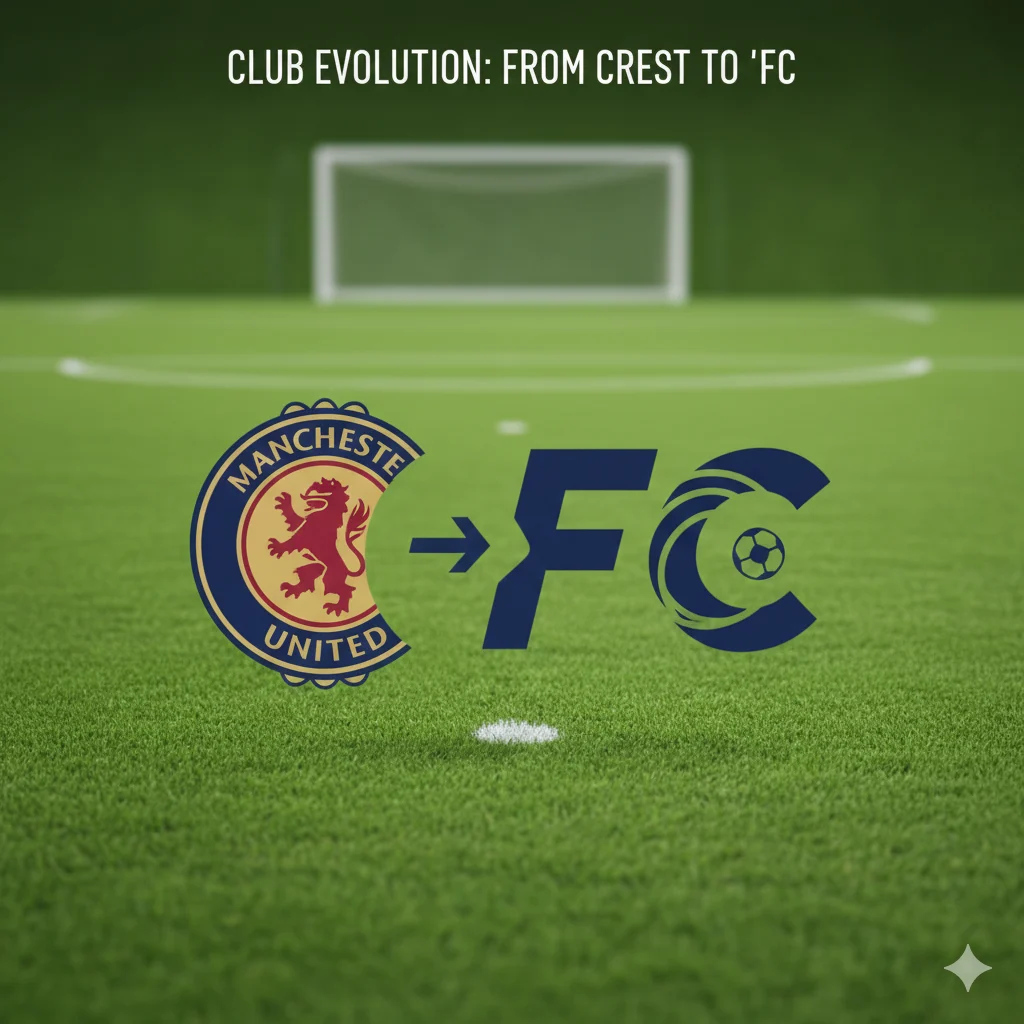
FC means Football Club. It’s a standard prefix or suffix in a soccer team’s official name, identifying it as a club for association football.
You’ve seen it a million times. FC Barcelona. Liverpool FC. FC Bayern Munich. It’s plastered on jerseys, etched into trophies, and screamed by fans worldwide. But have you ever stopped mid-chant and wondered, “Wait… what does FC actually mean?” If you’ve ever felt a tiny flicker of curiosity while scrolling through scores or picking a team in a video game, you’re not alone. That simple two-letter abbreviation is the unspoken backbone of the soccer world, a tiny code that unlocks a team’s very identity. It’s more than just letters; it’s a badge of history, culture, and sporting purpose. Let’s unravel the story behind those two powerful letters and discover why “Football Club” is the most important acronym in the world’s most popular sport.
🧠 What Does FC Mean in Soccer?
In the world of soccer, FC is an acronym that stands for Football Club. It’s not slang, jargon, or a casual abbreviation—it’s a formal, official part of a team’s registered name.
The term “football” here refers specifically to association football (the sport known as soccer in the United States and Canada), as opposed to other football codes like rugby football (RFU) or American football (NFL). The word “club” signifies that the organization is a membership-based society, historically formed by a group of individuals, not just a corporate franchise.
When you see “FC” in a team’s name, it’s declaring: “We are an organized club dedicated to playing association football.”
Example:
“Are you supporting Manchester City FC or Manchester United FC in the derby?”
In short: FC = Football Club = The official designation for an association football team.
📜 The History and Global Spread of “FC”
The use of “FC” is deeply rooted in the sport’s British origins. As association football was codified in England in the 19th century, the first organized teams were formed as “clubs.” Some of the world’s oldest professional clubs, founded in the 1800s, bear this title:
- Sheffield FC (Founded 1857) – Recognized by FIFA as the world’s oldest existing club still playing association football.
- Notts County FC (Founded 1862) – The world’s oldest professional football club.
As the sport spread across Europe and the globe, this naming convention traveled with it. In non-English speaking countries, the English “Football Club” was often adopted as a mark of authenticity and connection to the sport’s roots.
- Germany/Spain: You see FC Bayern München and FC Barcelona.
- Italy: The equivalent is “Football Club” in English (e.g., FC Internazionale Milano).
- Eastern Europe: Widely used (e.g., FC Dynamo Kyiv, FC Shakhtar Donetsk).
The persistence of the English “FC” globally, even where the local word for soccer is different (like Fútbol in Spanish or Fußball in German), highlights soccer’s shared international language.
🌍 Regional Variations and Alternatives to FC
While “FC” is universal, it’s not the only club designation you’ll see. Regional language and sporting culture create fascinating alternatives.
Common Alternatives to FC:
- CF: Stands for Club de Fútbol (Spanish) or Clube de Futebol (Portuguese). Used primarily in Spain, Latin America, and Portugal.
Example: Real Madrid CF, Valencia CF. - SV: Stands for Sportverein (German) or Sportvereniging (Dutch). Means “sports club,” indicating the club has teams in multiple sports, with football being one.
*Example: Bayer 04 Leverkusen (a Turn- und Spielverein), AFC Ajax (Amsterdamsche Football Club Ajax).* - AFK/AFC: Stands for Athletic Football Club or simply Association Football Club.
Example: AFC Bournemouth. - Inter, AC, AS: In Italy, you’ll see Internazionale, Associazione Calcio (Football Association), and Associazione Sportiva (Sports Association).
Example: AC Milan, AS Roma.
The “United,” “City,” and “Real” Factor:
Often, “FC” is combined with other common elements:
- United: Signifies the merger of two or more local clubs.
- City: Identifies the club with a major city.
- Real: Spanish for “Royal,” granted by royal patronage.
- Dynamo, Spartak, Lokomotiv: Historically tied to specific societal sectors in Eastern Europe.
📱 Where Is “FC” Commonly Seen and Used?
You’ll encounter “FC” in virtually every context related to soccer:
- ⚽ Official Team Names & Logos: The most formal usage (e.g., Arsenal FC).
- 📰 Sports Journalism & Broadcasting: Used in graphics, headlines, and commentary.
- 🎮 Video Games (FIFA, Football Manager): Central to database and league structuring.
- 🛒 Merchandise & Kit: Printed on official jerseys, scarves, and apparel.
- 🌐 Social Media Handles & Hashtags: #MCFC (Manchester City FC), #FCB (FC Barcelona).
- 🗣️ Fan Chants & Culture: Often incorporated (“Come on, you Spurs!” for Tottenham Hotspur FC).
It is a formal and standard term, not casual slang. Using it shows a correct understanding of the team’s official identity.
💬 Examples of “FC” in Use
Here’s how “FC” fits naturally into conversations among fans:
- Talking about a big match:A: Who are you picking in the Champions League final?
B: Gotta support Borussia Dortmund FC. Their story is incredible. - In a social media post:“What a goal! PSG FC is on fire tonight! 🔥 #PSG #UCL”
- Discussing history:A: Why is AC Milan called ‘AC’?
B: It’s Associazione Calcio. But many historic Italian clubs use that or ‘FC’ like FC Internazionale. - Gaming context:A: Want to play FIFA? I’ll use Liverpool FC.
B: Okay, I’ll go with FC Bayern. Ready to lose? 😉 - Correcting a common mistake:A: I love Barcelona FC!
B: Actually, it’s just FC Barcelona. They put the ‘FC’ first!
✅ When to Use and When Not to Use “FC”
When to Use “FC”:
✅ When referring to a team by its full, official name in writing or formal speech.
✅ When discussing a club’s history, founding, or legal structure.
✅ When the distinction between different club types matters (e.g., FC vs. SV).
✅ In fantasy sports, gaming, or data contexts where precise naming is key.
When You Can Drop the “FC”:
❌ In everyday, casual conversation among fans. People usually just say “Barcelona,” “Bayern,” or “United.”
❌ In urgent or shorthand communication like quick texts or tweets where space/tone is casual.
❌ When it’s stylistically redundant. Most people understand “Manchester United” refers to the football club.
| Context | Example Phrase | Why It Works / Doesn’t |
|---|---|---|
| Match Program/Formal Report | “Tonight’s fixture: Arsenal FC vs. Chelsea FC.” | Formal, official, and correct. |
| Casual Fan Chat | “Can’t believe Arsenal lost to Chelsea last night!” | Casual, conversational, and perfectly natural. |
| Historical Deep Dive | “Sheffield FC, founded in 1857, is the world’s oldest FC.” | Highlights the formal “Club” designation in a historical context. |
| Social Media Caption | “Proud to support this club. #MUFC 🔴” | Uses the common hashtag abbreviation, which includes the FC. |
🔄 Similar Abbreviations and Acronyms in Soccer
Beyond FC, the soccer world is full of acronyms that define clubs. Here’s a quick guide:
| Abbreviation | Stands For | Meaning / When It’s Used | Example Club |
|---|---|---|---|
| CF | Club de Fútbol (Sp) / Clube de Futebol (Por) | The Spanish/Portuguese equivalent of “FC.” | Real Madrid CF |
| SV / SVV | Sportverein (Ger) / Sportvereniging (Dut) | “Sports Union,” for multi-sport clubs. | SV Werder Bremen |
| AC | Associazione Calcio (It) | “Football Association” in Italian. | AC Milan |
| AS | Associazione Sportiva (It) | “Sports Association” in Italian. | AS Roma |
| Olympique | Olympique (Fr) | A French term, often used by clubs from cities with a classical history. | Olympique de Marseille |
| RCD | Reial Club Deportiu (Cat) | “Royal Sports Club” in Catalan. | RCD Espanyol |
❓ FAQs About “FC” in Soccer
Q: Does every soccer team have FC in its name?
A: No. Many do, especially those with British roots or influence, but plenty of major clubs do not. Examples include Paris Saint-Germain (PSG), Juventus, Club América, and Boca Juniors.
Q: Why do some teams put FC before the name (FC Barcelona) and some after (Liverpool FC)?
A: This is mostly a matter of tradition and local linguistic custom. Spanish and German clubs often place “FC” first (FC Barcelona, FC Bayern). English clubs almost always place it after the location/name (Manchester United FC). There’s no functional difference.
Q: Is there a difference between “FC” and “Soccer Club” (SC)?
A: Yes, but it’s primarily a regional language difference. “Football Club” (FC) is used in countries that call the sport “football.” “Soccer Club” (SC) is sometimes used in countries like the USA, Canada, and Australia, where “soccer” distinguishes it from other football codes. Example: Columbus Crew SC.
Q: What’s the oldest FC in the world?
A: Sheffield FC, founded in England in 1857, is recognized as the world’s oldest existing association football club.
Q: In video games, why is it important?
A: In games like FIFA or Football Manager, “FC” is part of the club’s official licensing data. It ensures accuracy and realism in league structures, databases, and official branding.
Conclusion
So, the next time you see FC, you’ll see more than just two letters. You’ll see a direct link to the dusty fields of 19th-century England where it all began, a badge of pride for millions of fans, and a universal symbol in the global language of soccer. It’s a small tag that carries the weight of history, identity, and sporting passion. Whether your team is an FC, a CF, an SV, or has no abbreviation at all, understanding this little piece of terminology connects you more deeply to the beautiful game’s rich tapestry. Now you’re not just a fan; you’re an informed fan. And that’s always a winning position.

Andrew Jones is a digital content specialist, quotes writer, and education-focused author at Jinglas.com. He creates clear, engaging explainers on tech, online learning, and modern communication to help readers understand trends, slang, and digital tools with ease.