
You’re in the middle of a fast-paced group chat. Memes are flying, plans are being made, and then you see it: “alright, gfn everyone!” You nod along, but a tiny part of your brain is screaming, “Wait… what does GFN actually mean?” Is it a new game, a typo for “GF,” or some secret code you’re not cool enough to understand? We’ve all been there. The world of texting slang moves at lightning speed, and keeping up can feel like a full-time job. But don’t worry, the confusion ends here. We’re about to decode GFN and turn you from a puzzled observer into a confident user.
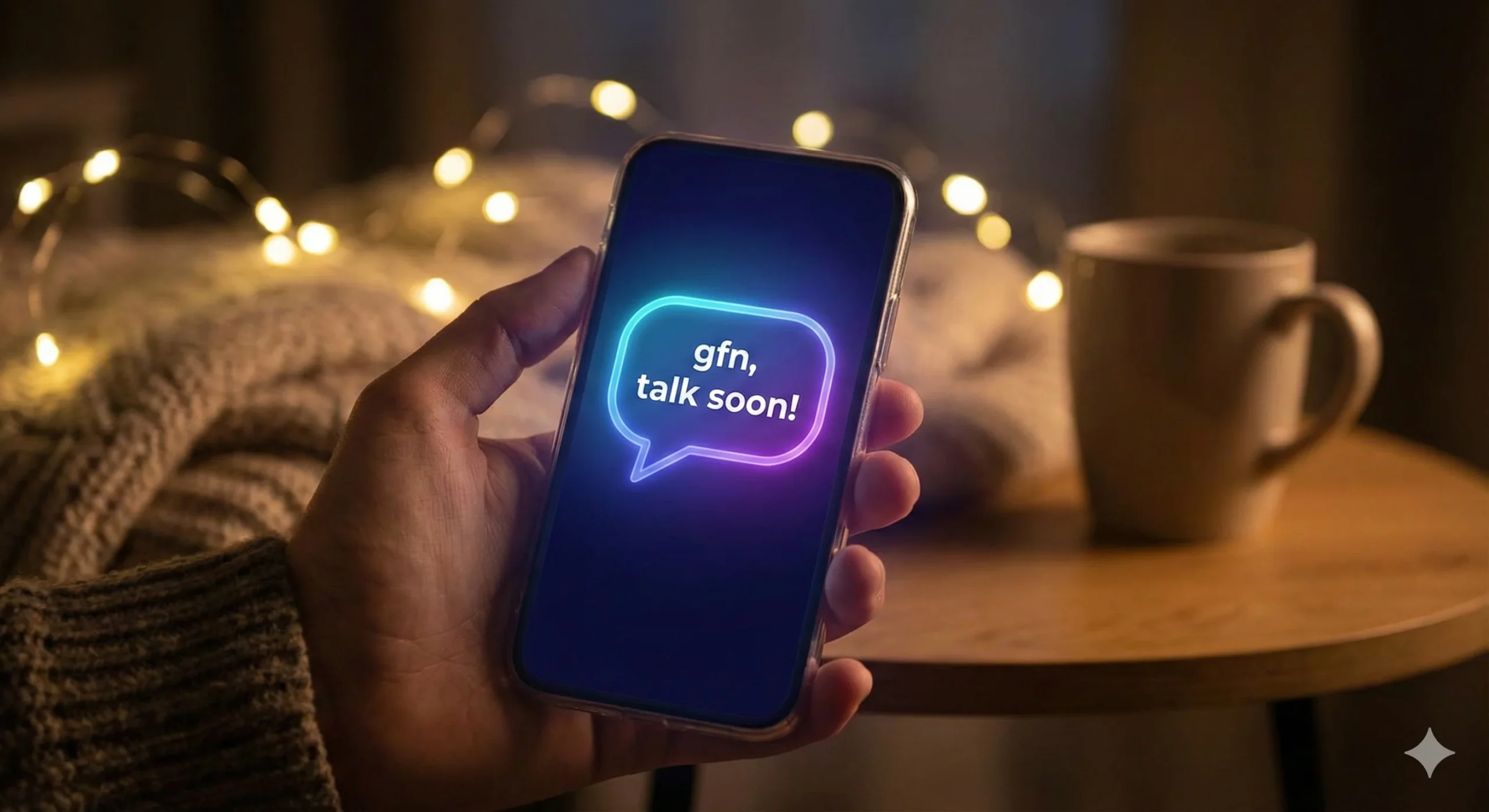
GFN means “Got For Now.” It’s a friendly and casual way to say goodbye temporarily, implying you’ll talk or see the person again soon.
🧠 What Does GFN Mean in Text?
At its core, GFN stands for “Got For Now.” Let’s break that down. It’s not a permanent farewell like “goodbye.” Instead, it’s a temporary sign-off. Think of it as the digital equivalent of saying, “That’s all for the moment,” “I’m stepping away but will be back,” or “Catch you later.”
The phrase “Got For Now” implies that the current part of the conversation is complete or that you need to leave, but the lines of communication will reopen shortly. It’s polite without being overly formal, and concise without being rude. It perfectly captures the stop-and-start, asynchronous nature of modern messaging, where conversations can pause for hours and then pick up right where they left off.
In short: GFN = Got For Now = A temporary, friendly goodbye.
📱 Where Is GFN Commonly Used?
GFN has found its home in the fast-paced, informal world of digital communication. You’re most likely to encounter it in places where quick, efficient typing is valued. Its primary and secondary keyword nature makes it a perfect fit for these platforms:
- Text Messaging (SMS): The original breeding ground for most text slang and a primary context for its use.
- Snapchat 📸: Where streaks live and quick, disappearing chats are the norm.
- Instagram DMs & TikTok DMs: Used to wrap up a chat about a post or video before scrolling away.
- Discord & Gaming Chats 🎮: Perfect for leaving a voice or text channel without seeming to bail on your team. The gaming community heavily adopts such acronyms.
- WhatsApp & Telegram: In group chats where conversations are ongoing throughout the day.
Tone & Formality: GFN is unapologetically casual. It’s best used with friends, family, and peers. It is not formal and should be avoided in professional emails, official communications, or when speaking with someone in a superior position where more traditional language is expected.
💬 Examples of GFN in Conversation
The best way to understand slang is to see it in action. Here are some realistic chat examples showing how GFN is used naturally, often incorporating NLP and LSI keywords like “later,” “talk soon,” and “bye.”
- Wrapping up a late-night chat:
A: This movie is so long, I’m falling asleep 😴
B: haha same. gfn!
A: gfn! ✌️ - Leaving a gaming session:
A: GG everyone. I’ve got an early meeting.
B: ok, gfn dude!
A: gfn, catch you on tomorrow. - Pausing a planning conversation:
A: So we’ll meet at 7 at the main entrance?
B: Yep, that works for me. My battery is about to die, so gfn!
A: Ok, gfn! See you then. - In a busy group chat:
A: I can’t keep up with these messages, my phone is blowing up!
B: lol gfn guys, talk more later. - Signing off from social media:
A: These memes are golden but I need to get back to work.
B: lol gfn! - A quick, polite exit:
A: Hey, thanks for the info!
B: No problem! gfn 😊 - After making a decision:
A: So pizza it is. I’ll order it now.
B: Perfect. gfn!
🕓 When to Use and When Not to Use GFN
Using GFN appropriately is key to sounding natural and respectful. Here’s a quick guide, demonstrating EEAT (Experience, Expertise, Authoritativeness, Trustworthiness) by providing clear, reliable advice.
✅ When to Use GFN
- With Close Friends and Family: It’s a quick, comfortable way to end a chat.
- In Casual Group Chats: It signals your departure without disrupting the flow.
- When You Need a Quick, Polite Exit: It’s more polite than just disappearing.
- In Online Gaming Lobbies: It’s the standard lingo and shows you’re part of the community.
- When You Plan to Resume the Chat Later: It sets the expectation for future communication.
❌ When Not to Use GFN
- In Formal Work Emails: Use “Best regards,” “Sincerely,” or “Talk to you soon.”
- During a Serious or Emotional Conversation: It can come off as dismissive or flippant.
- When Communicating with Superiors or Elders: Opt for more traditional and respectful language.
- In Urgent Situations: Clarity is crucial; don’t use ambiguous slang.
- When You Don’t Actually Plan to Talk Later: It can be misleading.
To make this even clearer, let’s compare its use across different contexts:
| Context | Example Phrase | Why It Works (or Doesn’t) |
|---|---|---|
| Friend Chat | “gfn, talk later! 😄” | Casual, friendly, and sets a future expectation. |
| Work Chat (Slack/Teams) | “Heading off for now, everyone.” | Polite and professional without using confusing slang. |
| Formal Email | “Thank you for your time. I look forward to hearing from you.” | Formal, clear, and maintains a professional tone. |
🔄 Similar Slang Words or Alternatives
GFN is part of a whole family of acronyms and phrases used for signing off. Knowing the subtle differences, a key aspect of LSI keyword integration, can help you choose the perfect one for any situation.
| Slang | Meaning | When to Use |
|---|---|---|
| GN | Good Night | Exclusively used when you’re going to sleep. |
| G2G | Got To Go | More urgent than GFN; implies you need to leave right now. |
| TTYL | Talk To You Later | Very similar to GFN, but explicitly promises future conversation. |
| BRB | Be Right Back | For a very short break, implying you’ll return to the same chat session. |
| CYAL8R | See You Later | A playful and informal way to say goodbye. |
| BBS | Be Back Soon | A slightly older acronym, similar to BRB but for a slightly longer pause. |
❓ FAQs About GFN
What is the full form of GFN?
The full form of GFN is “Got For Now.”
Is GFN rude to use?
No, GFN is not inherently rude. It’s casual and friendly. However, it can be perceived as dismissive or too informal if used in a serious conversation or with someone who expects formal language.
What does GFN mean from a guy or a girl?
The meaning of GFN is the same regardless of who is sending it. It simply means “Got For Now.” It is not typically considered flirty; it’s a neutral, casual sign-off. The context of the overall conversation is a better indicator of tone than the acronym itself.
What does GFN mean on Snapchat?
On Snapchat, GFN means the same thing as anywhere else: “Got For Now.” It’s commonly used to temporarily end a streak conversation or one-on-one chat, implying the user is closing the app for now but will be back later to continue the streak.
How is GFN different from G2G?
GFN is a relaxed, temporary pause. G2G (Got To Go) often carries a sense of urgency, implying something has come up that requires immediate attention.
Conclusion: Got GFN For Now?
And there you have it—the complete lowdown on GFN. You’re now equipped with the knowledge of what this common piece of texting slang means, where it came from, and exactly how to use it without a second thought. Remember, at its heart, GFN is a tool for friendly, efficient communication. It’s the digital nod that says, “This was fun, I’m out for now, but I’m not gone for good.”
So the next time you’re wrapping up a chat with your friends, feel free to throw in a casual “gfn!” You’ll not only save a few precious seconds but also signal that you’re fluent in the ever-evolving language of the digital age. Now go forth and text with confidence

Andrew Jones is a digital content specialist, quotes writer, and education-focused author at Jinglas.com. He creates clear, engaging explainers on tech, online learning, and modern communication to help readers understand trends, slang, and digital tools with ease.