
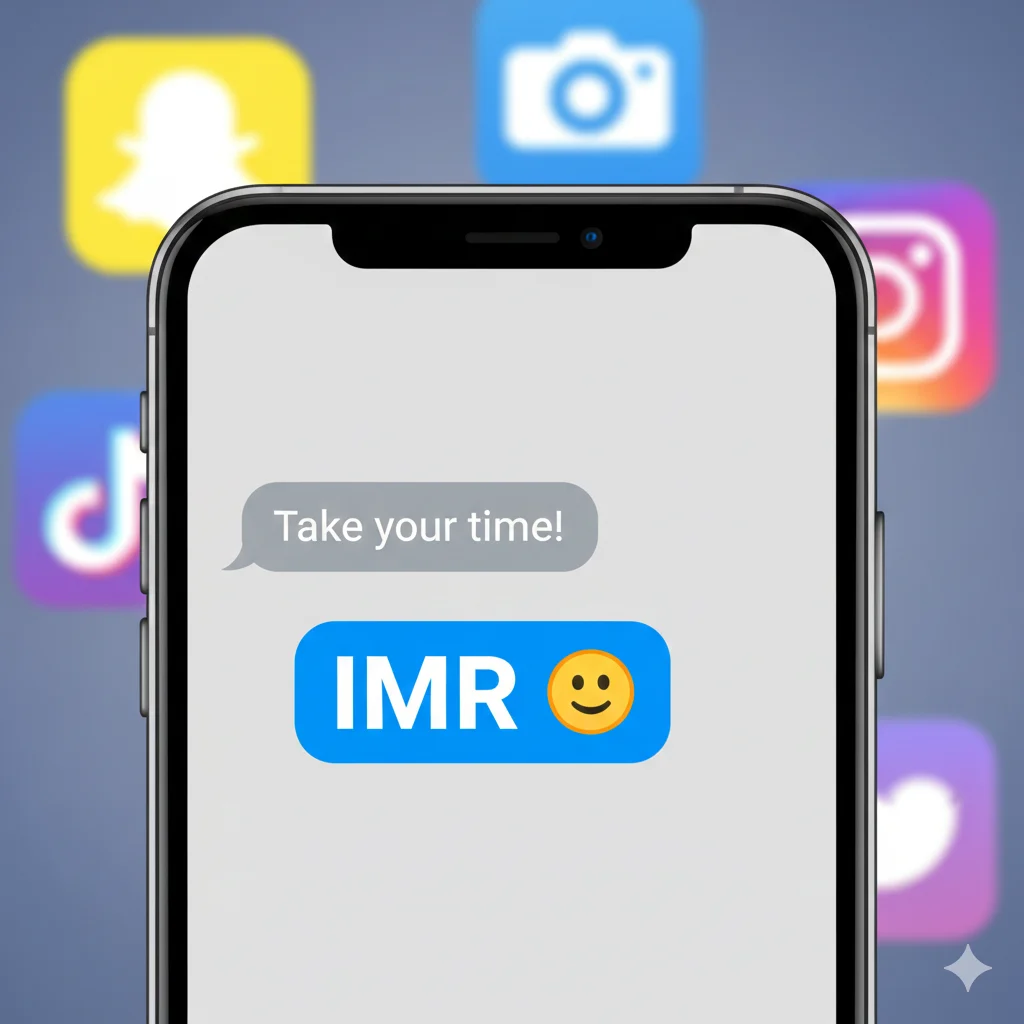
IMR means “If I Remember Rightly” or “If I Recall/Remember Correctly.” It’s a friendly, casual way to show you’re a bit unsure about a detail or memory you’re sharing in a text or online chat
You’re scrolling through a group chat, catching up on 200 messages you missed. Your friend is telling a wild story about last weekend, and they type: “And then Sarah said… IMR, it was something about a pizza and a karaoke machine? 🤔”
You pause. IMR? Is that a typo? A new acronym everyone just decided to know? You feel that tiny, digital-age pang of being out of the loop. Don’t worry—we’ve all been there. The world of texting slang evolves faster than app updates, and today, we’re cracking the code on IMR. It’s one of those low-key, useful abbreviations that’s less about hype and more about nailing the nuance of casual conversation. Let’s dive in.
🧠 What Does IMR Mean in Text?
At its core, IMR is an acronym that stands for “If I Remember Rightly.” You might also see it interpreted as “If I Recall Correctly” or “If I Remember Correctly.” All variations point to the same idea: the sender is stating something based on their memory, but they’re adding a sprinkle of humility or uncertainty.
It’s the textual equivalent of saying, “I think this is how it went, but don’t quote me on it!” or tapping your temple while you try to recall a fact. It softens a statement, making it less like a declaration and more like a collaborative piece of information.
Example in action: *“IMR, the meeting is at 3 PM, not 4. Double-check the calendar!”*
In short: IMR = If I Remember Rightly = A casual way to say “I think this is correct, but I’m not 100% sure.”
📱 Where Is IMR Commonly Used?
IMR isn’t the flashiest slang, so you won’t see it plastered on viral TikTok videos. Its home is in everyday digital conversations where nuance matters. Look for it here:
- 💬 Group Chats (WhatsApp, iMessage, Telegram): Perfect for recalling shared event details (“IMR, you were supposed to bring the drinks?”).
- 👻 Snapchat: In those quick, ephemeral chats about plans or memories.
- 💭 Online Forums & Reddit: Used when someone is answering a question based on their knowledge but wants to avoid absolute authority. “IMR, that software issue was fixed in the last update.”
- 🎮 Gaming Chats (Discord): Discussing game lore, patch notes, or strategies from memory.
- 📧 Informal Work Messages (Slack, Teams): In a casual team channel, like “IMR, the client feedback doc is in the shared drive.”
Tone: IMR is casual, friendly, and social-media–friendly. It’s generally not formal and is best used with people you have a relaxed rapport with.
💬 Examples of IMR in Conversation
Let’s see IMR in the wild with some realistic chat examples.
- Making PlansA: What time does the train leave tomorrow?
B: imr, the email said 10:15 am from platform 4. let me find it. - Settling a DebateA: I swear this song came out in 2015.
B: nah, imr it was late 2016. it was the winter after we graduated. - Sharing a MemoryA: That restaurant was so good, what was it called?
B: imr, it was ‘La Piazza’? over on Maple St. - In a Gaming SquadPlayer 1: How do we beat this boss again?
Player 2: imr you have to shoot the glowing crystals first. try that. - Casual Work ReminderColleague 1: Do you know the password for the wifi guest login?
Colleague 2: imr it’s ‘Welcome123’ but all caps. might have changed though. - Correcting GentlyA: Your birthday is next week, right?
B: imr, it’s actually the week after! the 22nd 😊
🕓 When to Use and When Not to Use IMR
✅ When to Use IMR
- In casual chats with friends and family.
- When you’re 90% sure of a detail but want to leave room for correction.
- To sound less assertive or arrogant when recalling facts.
- In collaborative environments (like work chats) where teamwork is valued.
- When the stakes are low (e.g., planning a hangout, discussing movie trivia).
❌ When NOT to Use IMR
- In formal emails, reports, or academic papers. Use the full phrase “If I recall correctly,” or better yet, verify the fact.
- When giving critical instructions (e.g., medical advice, safety procedures).
- In urgent or emergency situations where clarity is paramount.
- When you are the definitive source (e.g., you created the event, you are the boss giving a directive).
- With people who might not understand texting slang (e.g., older relatives).
Contextual Usage Table
| Context | Example Phrase | Why It Works |
|---|---|---|
| Friend Chat | “imr, you owe me $10 for pizza 😄” | Casual, playful, and non-confrontational. |
| Work Chat (Informal) | “imr, the deadline is EOD Friday.” | Shows you’re trying to help without being dictatorial. |
| Formal Email | Avoid IMR. Use: “If I recall correctly, the figures were agreed upon in the Q2 meeting.” | Maintains professionalism and clarity. |
| Settling a Fact | “Actually, imr, he played the villain in the first movie, not the sequel.” | Softens the correction, making it more palatable. |
🔄 Similar Slang Words or Alternatives
IMR has cousins in the world of hedging your bets. Here’s a quick guide:
| Slang/Acronym | Meaning | When to Use It |
|---|---|---|
| IIRC | If I Recall/Remember Correctly | The most direct and common alternative to IMR. Slightly more common on forums. |
| AFAIK | As Far As I Know | For knowledge you have now, not necessarily memory. “AFAIK, the store is still open.” |
| CMIIW | Correct Me If I’m Wrong | More direct invitation for correction. Common in online discussions. |
| IIWM | If I Were You | Not for memory! Used for giving advice. “IIWM, I’d take the earlier train.” |
| TBF / TBH | To Be Fair / To Be Honest | Prefaces an opinion or frank statement, not a memory recall. |
| NGL | Not Gonna Lie | Used to introduce an honest opinion or feeling. |
🧐 FAQs About IMR
Q: Is IMR flirty?
A: Not inherently. IMR is neutral and informational. Its tone depends entirely on the context of the conversation. It could be used in a flirty way if you’re playfully “forgetting” details to keep a conversation going, but its primary function is casual recall.
Q: What’s the difference between IMR and IIRC?
A: They are essentially interchangeable. IIRC (“If I Recall Correctly”) is arguably more widespread, especially on older internet platforms like forums. IMR (“If I Remember Rightly”) is common in texting. You can use either.
Q: Can I use IMR in a professional email?
A: It’s not recommended. In professional correspondence, it’s better to use the full phrase “If I recall correctly,” or, even better, to verify the information and state it confidently. Using acronyms like IMR can seem too casual.
Q: How do I respond to someone who uses IMR?
A: You can simply confirm or correct them! Examples: “Yes, you remember rightly!” or “Actually, I think it was…”, or just continue the conversation with the confirmed info.
Q: Is IMR rude?
A: Not at all. In fact, it can be considered polite because it shows you’re not stating your memory as an absolute fact, leaving room for others to contribute or correct you gently.
💭 The Takeaway
In the fast-paced world of digital communication, tone is everything. A misplaced period can seem angry; a forgotten emoji can cause confusion. IMR is a tiny, powerful tool for managing tone. It adds a layer of softness and self-awareness to your messages, showing that you’re engaged in a cooperative conversation, not just broadcasting facts.
It turns a potential correction (“It’s at 3 PM”) into a collaborative check-in (“IMR, it’s at 3 PM?”). That small shift builds better rapport, prevents misunderstandings, and makes your texting style more relatable and approachable.
So, the next time you’re about to share a detail from memory in a chat, throw in an IMR. It’s the linguistic equivalent of a friendly shrug—a simple way to show you’re human, you’re trying to help, and you’re cool with being gently corrected. Now you’re not just in the loop; you’re using the lingo like a pro.

Charles Dickens was a legendary English novelist and social commentator known for his timeless storytelling and deep understanding of human nature. His works continue to inspire writers and readers worldwide, shaping literature, culture, and modern narrative craft.