
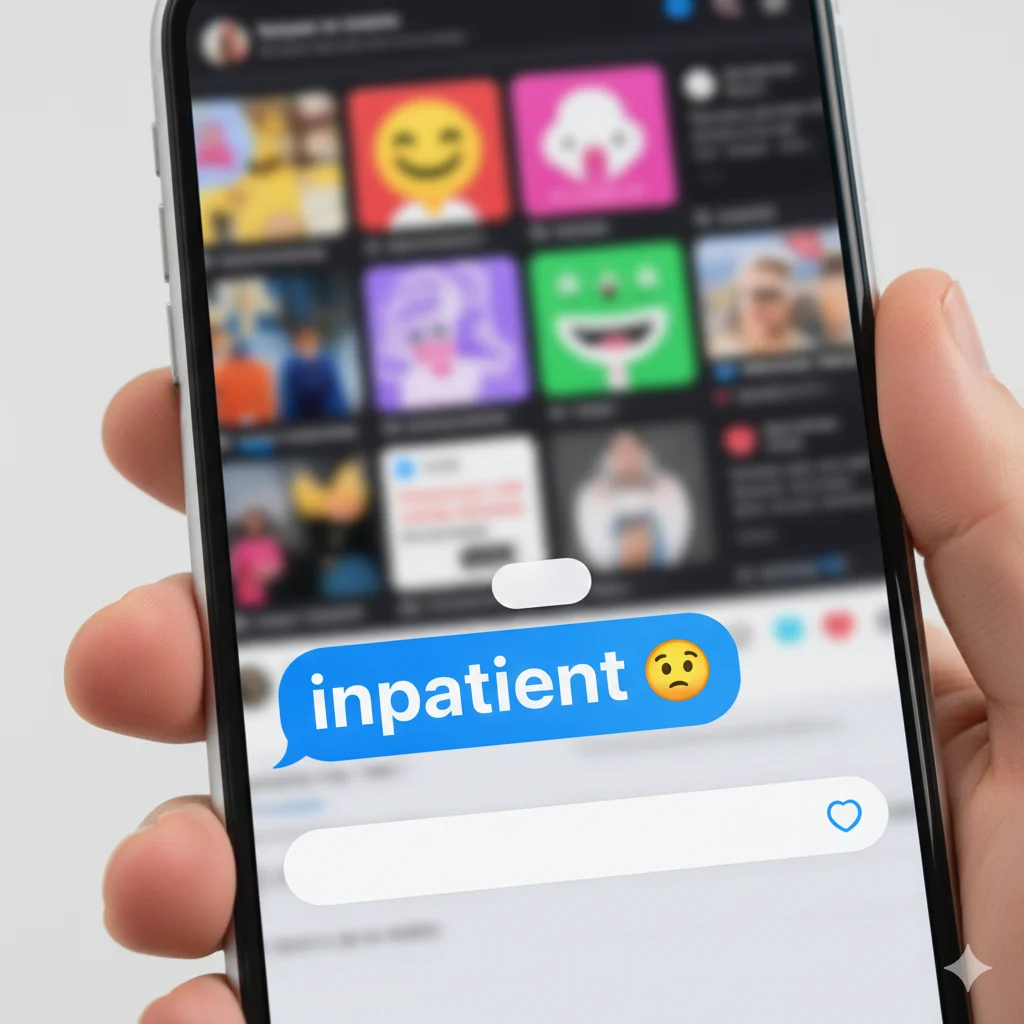
Inpatient is a humorous or ironic slang term that deliberately misspells “impatient.” It’s a playful way to describe someone who is eagerly waiting for something or can’t wait, often used in a lighthearted, self-deprecating, or casual tone among friends online
You’re scrolling through TikTok or a group chat, and you see it: “Ugh, I’m so inpatient for the weekend!” You pause. You know “impatient,” but this spelling looks off. Is it a typo? A new medical term? A secret code? If you’ve ever felt that flash of confusion, you’re not alone. This clever twist on a common word has been popping up in digital conversations, leaving many to wonder if they missed a memo. It’s a perfect example of how internet culture loves to play with language, creating inside jokes through intentional “mistakes.” Let’s decode this viral bit of text slang so you’re never left guessing again.
🧠What Does “Inpatient” Mean in Texting & Social Media?
Let’s clear this up right away: in the world of internet slang, “inpatient” is not a typo. It’s a deliberate and playful misspelling of the word “impatient.”
When someone texts “I’m so inpatient,” they are humorously saying they are eager, restless, or having a hard time waiting for something. The joke lies in using the wrong spelling of a common word, which adds a layer of casual, self-aware humor. It’s like saying, “I can’t wait so much that I can’t even spell correctly!”
The humor can also come from the contrast with the actual word “inpatient,” which in a medical context means a person who is admitted to stay in a hospital. The slang version plays on this double meaning for comedic effect.
Example Sentence: “Only 2 hours until the concert, I’m getting so inpatient!!”
In short: Inpatient (slang) = A joking way to say “Impatient” = I can’t wait!
📱 Where Is “Inpatient” Commonly Used?
This slang thrives in informal, text-based environments where playful language is the norm. You’re most likely to encounter it in:
- 💬 Casual Texting & DMs: Between friends who enjoy internet humor.
- 🎵 TikTok & Instagram Captions: Used to express excitement for an upcoming event, drop, or video.
- 📝 Twitter (X) & Meme Culture: As part of relatable, humorous posts about anticipation.
- 🎮 Gaming & Stream Chats: When viewers are eagerly waiting for a stream to start or a game update.
- 👥 Discord & Group Chats: Where inside jokes and relaxed communication styles flourish.
Tone & Formality: “Inpatient” is decidedly casual, humorous, and social-media–friendly. It’s not for formal writing, professional emails, or serious contexts. It’s a tone-setter that says, “We’re just having fun here.”
💬 Examples of “Inpatient” in Conversation
Here’s how “inpatient” looks in real, relatable chats:
- Planning a HangoutA: what time are you getting here?
B: traffic is terrible, gonna be like 20 more min sorry 😭
A: all good, just getting inpatient for tacos 🌮 - Waiting for NewsA: did you get the email about the job yet??
B: no, checking my phone every 5 seconds. i’m so inpatient it’s unhealthy. - Anticipating a ReleaseTikTok Caption: Me checking the app store for the new game update every hour. #inpatient
- Self-Deprecating HumorA: my package says “out for delivery” i can’t focus on work
B: lol you’re the most inpatient person i know.
A: it’s true, i have a problem ✋ - In a Group ChatAlex: One more day until the vacation!!!
Sam: Dude, my inbox is flooded with your countdown messages. Peak inpatient behavior.
Alex: 😂😂 guilty as charged!
🕓 When to Use and When Not to Use “Inpatient”
Navigating when this slang is appropriate is key to using it effectively.
✅ When to Use “Inpatient”:
- In casual text messages with friends.
- In social media captions or comments where you’re expressing playful excitement.
- When you want to sound relatable and in on the internet joke.
- In situations where the anticipation is lighthearted, not stressful.
❌ When NOT to Use “Inpatient”:
- In professional emails, reports, or any formal writing.
- In situations involving genuine, serious waiting (e.g., medical results).
- When communicating with someone who may not understand internet slang (like a parent or teacher).
- If you want to be perfectly clear without a hint of sarcasm or humor.
📊 Context Comparison Table
| Context | Example Phrase | Why It Works (or Doesn’t) |
|---|---|---|
| Friend Chat | “No spoilers! I’m inpatient for the new episode.” | Casual, humorous, and builds shared excitement. |
| Work Slack/Chat | “Following up on that report when you have a moment.” | Avoid “inpatient” here. Direct and polite is professional. |
| Formal Email | “Please take your time to review the proposal.” | Never use slang here. Clear and formal language is required. |
| Instagram Story | “Inpatient traveler mode: activated. 48 hours to go! ✈️” | Perfect for relatable, casual, audience-engaging content. |
🔄 Similar Slang Words & Alternatives
The internet loves playful alternatives for expressing impatience or excitement. Here’s a quick guide to similar slang:
| Slang / Phrase | Meaning | When to Use It |
|---|---|---|
| Inpatient | Humorous misspelling of “impatient.” | Casual chats, social media, humorous self-description. |
| IMPY | Abbreviation for “impatient.” | Quick texting, often by younger users. |
| Jelly | Slang for “jealous.” | When you’re envious of someone who already has what you’re waiting for. |
| Can’t Even | Expression of being overwhelmed with excitement/frustration. | For dramatic, humorous effect about anticipation. |
| The Struggle is Real | Phrase for relatable frustration. | When the waiting feels particularly arduous or funny. |
| 👀 (Eyes Emoji) | Suggests eager watching or waiting. | A visual shorthand in comments or captions. |
🧩 The Psychology Behind Playful Misspellings Like “Inpatient”
Why do we enjoy using “wrong” words online? It’s more than just laziness. Intentional misspellings like “inpatient,” “doggo,” or “smol” serve as social bonding tools. They create an in-group of people who “get it,” separating those who are dialed into internet culture from those who aren’t. It adds personality and relatability to text-based communication, which can often feel flat. Using “inpatient” is a way to signal, “I’m not just telling you I’m eager; I’m telling you in a way that’s funny and culturally aware.”
💡 How to Stay on Top of Evolving Text Slang
Feeling like you need a decoder ring for the internet? Here are a few tips:
- Lurk on Trendy Platforms: TikTok, Twitter, and specific subreddits are often ground zero for new slang.
- Use Context Clues: Look at the surrounding words and emojis. “Inpatient” followed by a laughing emoji is a big hint.
- Ask or Look It Up: There’s no shame in asking a friend or searching on a dedicated slang site (like this one!).
- When in Doubt, Keep it Standard: If you’re unsure whether your boss will understand “inpatient,” just use “impatient.” Clarity trumps coolness in professional settings.
❓ FAQs About “Inpatient”
Q: Is “inpatient” just a common typo?
A: Not when used intentionally in slang! While it can start as a typo, its repeated use as a joke has given it a life of its own as deliberate internet slang.
Q: Could using “inpatient” be confusing?
A: Potentially, yes. If someone isn’t familiar with the trend, they might think you’re talking about a hospital stay or that you made a spelling error. Know your audience.
Q: What’s the best way to respond if someone says they’re “inpatient”?
A: With similar casual humor! You could say “Same,” “The wait is torture,” or use a crying-laughing emoji (😂). It’s a low-stakes conversational cue.
Q: Is this slang here to stay?
A: Like much of internet slang, it may have a peak and fade. But it’s a great example of how digital communication evolves with playful, community-driven language.
✨ Conclusion
So, the next time you see “inpatient” pop up in your feeds, you’ll know it’s not a medical emergency or a spelling bee fail—it’s a clever, cheeky way to shout “I can’t wait!” into the digital void. This small twist on language is a perfect snapshot of how our communication evolves: quickly, playfully, and with a strong sense of community. Whether you choose to adopt “inpatient” into your own texting vocabulary or just enjoy understanding the joke, you’re now fluent in another piece of the ever-changing puzzle that is internet slang. Now, if you’ll excuse us, we’re getting a little inpatient for your next slang question to decode

William Shakespeare was a legendary English playwright, poet, and storyteller whose works have shaped literature for centuries. Known for his timeless plays and sonnets, he continues to inspire writers, artists, and readers around the world with his mastery of language and storytelling.