

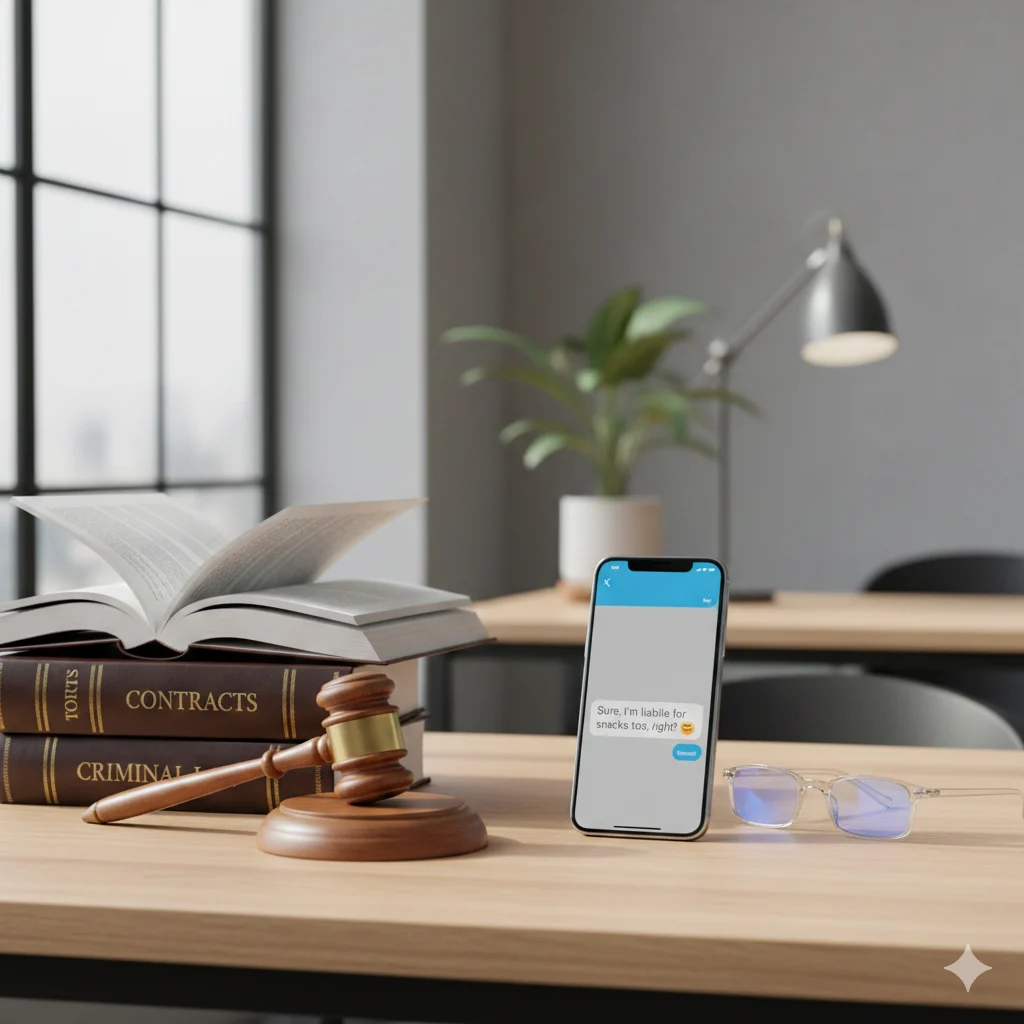
I was scrolling through a news article about a data breach, and the headline blared: “Company Found Liable for Millions in Damages.” Then, later that day, my friend joked, “If you eat my last slice of pizza, you’re liable to get a slap on the hand!” I paused. The same word, but it felt… different. Was the company about to get a slap on the hand? Probably not. I realized that “liable” is one of those chameleon words that changes its shade based on the context, blending serious legal consequences with everyday, playful warnings. If you’ve ever been confused about its exact meaning, you’re in the right place. Let’s break it down.
“Liable” primarily means “legally responsible” for something, like damages or harm. In casual conversation, it can also mean “likely” to do or experience something, often with a negative or predictable outcome.
🧠 What Does Liable Mean?
At its core, the word liable is an adjective that points to responsibility or a high probability. Its meaning shifts significantly depending on whether you’re in a courtroom or a coffee shop. The full form isn’t an acronym but a word derived from the Old French lier, meaning “to bind.” This idea of being “bound” or “tied” to a consequence is the key to understanding it.
Think of it as a word with two main jobs:
- The Legal Enforcer: This is the serious version. When someone is found liable in a legal sense, it means they are held legally accountable or responsible for compensating for a loss, injury, or damage. It’s about obligation under the law.
- The Casual Predictor: This is the everyday, informal version. When we say someone is “liable to” do something, we mean they are very likely to do it, especially if it’s something awkward, funny, or negative. It carries a sense of expectation, often of a foreseeable outcome.
In short: Liable = Legally Responsible / Likely to Happen.
📚 The Two Faces of Liable: Legal vs. Common Use
To truly master this word, let’s dive deeper into its two primary contexts. Understanding this distinction is crucial for using it correctly and comprehending everything from legal contracts to friendly banter.
1. Liable in a Legal Context (Responsible)
This is the most precise and powerful use of the word. In the realms of tort law, civil law, and business, liable is a heavyweight term. It’s the formal declaration that a person or entity is legally obligated to make things right, usually through the payment of damages.
Key characteristics of legal liability:
- It’s based on a breach of a duty or law.
- It requires proof of fault or negligence in many cases.
- The consequence is almost always financial compensation.
Example Sentence: “If a store owner doesn’t clear an icy sidewalk, they may be held liable for any injuries sustained by a slip-and-fall accident.”
2. Liable in Everyday Speech (Likely)
In informal, conversational English, liable sheds its legal robes and becomes a synonym for “likely” or “prone to.” However, it’s not a perfect substitute for “likely.” It often implies a sense of risk, a predictable outcome, or a potential for something slightly undesirable to occur. It’s frequently used in hypotheticals (“If you… you’re liable to…”).
Example Sentence: “If you tease the cat like that, you’re liable to get scratched.”
📜 A Brief Look at the History of Liable
Understanding a word’s origin can solidify its meaning. The word liable entered the English language in the mid-15th century, borrowed from the Anglo-French lier, meaning “to bind.” This root is also shared with words like “liaison” and “ligament.” This etymological background perfectly captures the modern sense of the word: being bound by law to a consequence or being likely to be bound to a future event. It’s a word that has always been about connection and obligation.
📝 Grammatical Rules: How to Use Liable Correctly
Using “liable” properly isn’t just about meaning; it’s also about grammar. The preposition that follows it changes depending on the context.
- Liable + FOR: Use this when referring to legal responsibility for a thing (a debt, damages, an action).
- Example: “The company is liable for the environmental cleanup costs.”
- Liable + TO: Use this in two ways:
- When referring to being likely to experience something (often negative).
- Example: “Without a coat, you are liable to catch a cold.”
- When referring to being subject to a law or penalty.
- Example: “Violators are liable to a fine of up to $500.”
- When referring to being likely to experience something (often negative).
💬 Examples of Liable in Conversation
Seeing “liable” in action is the best way to learn. Here are realistic examples from both legal and casual contexts.
Legal & Formal Examples:
- In a News Report:“The jury found the manufacturer liable for the defective product, awarding the plaintiff $2 million.”
- In a Business Contract:“Neither party shall be held liable for failures or delays resulting from circumstances beyond its reasonable control.”
- In a Lawyer’s Advice:“As the property owner, you could be liable for any injuries that occur on your premises.”
Casual & Everyday Examples:
- Between Friends:
- A: “I’m thinking of telling Sarah her new haircut is a bit extreme.” 😬
- B: “Dude, you’re liable to get slapped. Maybe just say you like her confidence.”
- A Parent Warning a Child:
- Parent: “If you keep jumping on the bed, you’re liable to fall and hurt yourself.”
- Planning an Outdoor Event:
- A: “The sky looks clear for the picnic tomorrow!”
- B: “Yeah, but the forecast says it’s liable to rain in the afternoon. We should have a backup plan.”
🚦 When to Use and When Not to Use Liable
Navigating the use of “liable” is about understanding your audience and context.
✅ When to Use “Liable”
- In formal or legal writing to denote responsibility.
- In casual speech to predict a likely (and often slightly negative) outcome.
- When you want to sound more specific than just using “likely” by adding a nuance of risk.
❌ When Not to Use “Liable”
- In place of “likely” for positive outcomes. Saying “You’re liable to win the lottery!” sounds awkward. “You’re likely to win!” is better.
- In highly technical scientific writing where “probability” or “statistically likely” is more accurate.
- When simple, plain language is required, and “responsible” or “likely” would be clearer for your audience.
Contextual Use Table
| Context | Example Phrase | Why It Works |
|---|---|---|
| Legal Document | “The defendant was held liable for the damages.” | Formal, precise, and legally accurate. |
| Friend Chat | “If you drink that much coffee, you’re liable to be up all night.” 😅 | Casual, predictive, and implies a foreseeable consequence. |
| Work Email | “Please ensure the report is accurate, as we are liable for its contents.” | Professional and clearly communicates responsibility. |
| Formal Invitation | (Avoid using “liable.”) “We look forward to seeing you at the gala.” | “Liable” is too informal or negative for a positive social context. |
🔄 Similar Words and Alternatives to Liable
“Liable” has cousins in the English language. Here’s a quick guide to synonyms and when to use them.
| Slang/Word | Meaning | When to Use |
|---|---|---|
| Accountable | Responsible for your actions and expected to explain them. | Broader than liable; used in professional and personal ethics. |
| Responsible | Having a duty to deal with something. | The most general term for being in charge or being the cause. |
| Likely | Probable or having a high chance of happening. | A neutral, all-purpose word for probability. |
| Prone to | Having a tendency or inclination, usually toward something negative. | “He is prone to exaggeration.” Focuses on inherent tendency. |
| At risk of | In danger of suffering something unpleasant. | Highlights vulnerability to a specific negative outcome. |
| Answerable | Required to justify your actions or decisions to someone. | Often used in hierarchical structures (e.g., “answerable to the board”). |
❓ FAQs About Liable
1. Is “liable” a negative word?
It often carries a negative connotation because it’s associated with blame, responsibility for bad outcomes, or likely negative events. However, in pure legal terms, it is neutral, simply stating a fact of responsibility.
2. What is the difference between “liable” and “libel”?
This is a common mix-up! Liable means responsible. Libel is a noun referring to a published false statement that damages a person’s reputation (a form of defamation). You can be held liable for libel.
3. Can “liable” be used in a positive way?
It’s very uncommon. Using “liable” for a positive prediction, like “You’re liable to love this movie!” sounds strange and is generally considered incorrect. Stick with “likely” for positive contexts.
4. What’s the noun form of “liable”?
The noun form is liability. In law, it means the state of being liable. It can also refer to a debt or obligation (e.g., “business liabilities”) or a person or thing that is a disability(e.g., “His knee injury became a liability on the field”).
💡 Conclusion:
So, the next time you encounter “liable,” you won’t be confused. You’ll know it’s a word of consequence and prediction. In a legal headline, it signals accountability and financial responsibility. In a friend’s text, it’s a playful or cautious warning about what’s likely to happen next. By understanding its dual nature and the simple grammatical rules that guide it, you can confidently add this powerful and precise word to your own vocabulary. Now you’re fully equipped to not just understand it, but to use it correctly and effectively.

Andrew Jones is a digital content specialist, quotes writer, and education-focused author at Jinglas.com. He creates clear, engaging explainers on tech, online learning, and modern communication to help readers understand trends, slang, and digital tools with ease.