

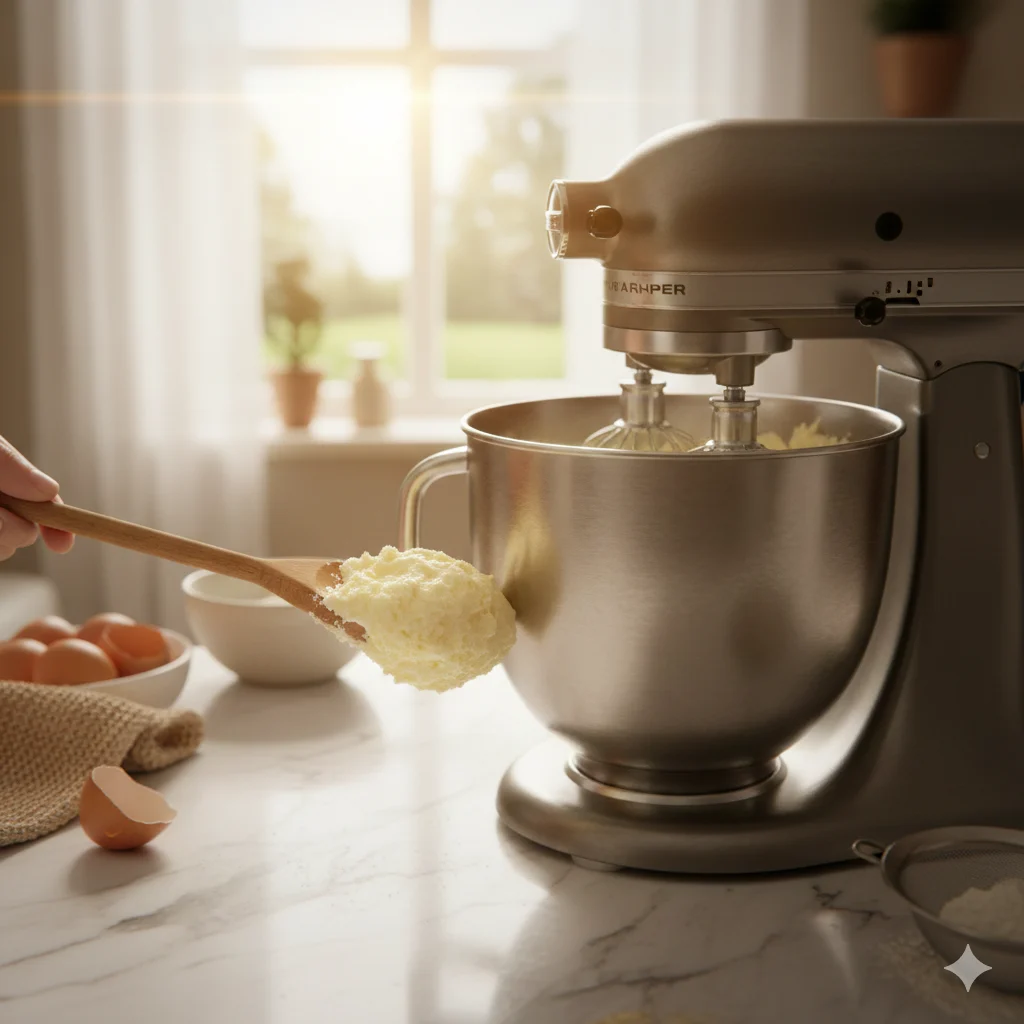
To cream butter and sugar is a foundational baking technique where softened butter and granulated sugars are beaten together until the mixture becomes pale, light, fluffy, and increased in volume. It’s the essential first step for creating tender, airy cookies, cakes, and more.
You’re scrolling through a gorgeous recipe for the ultimate chocolate chip cookies. The instructions start simply enough: “Preheat your oven to 350°F.” Then, you hit step two: “In a large bowl, cream together the butter and sugars until light and fluffy.”
And you pause. Cream? Like, the dairy product? Do I add cream? Is it a verb? What does “light and fluffy” even look like? If you’ve ever felt a flicker of confusion at this seemingly mysterious baking term, you’re not alone. It sounds more like a skincare routine than a cooking step! But fear not—this isn’t internet slang. It’s the magical, scientific secret behind every dreamy, bakery-style treat. Let’s demystify this crucial technique so you can bake with confidence.
🧠 What Does “Cream Butter and Sugar” Actually Mean?
In the world of baking, “to cream” is a verb. It describes the mechanical process of beating solid fat (almost always butter) with sugar(s). This isn’t just mixing; it’s aeration. You are physically incorporating millions of tiny air bubbles into the fat by forcing the sharp edges of the sugar crystals to cut through the butter.
As you beat, the mixture transforms from a grainy, yellowish paste into a homogeneous, pale yellow, almost white mixture that is noticeably lighter in texture and increased in volume. This visual change is your key indicator of success.
In short: Creaming = Beating butter + sugar = Trapping air for a light, tender bake.
Why Is It So Important?
Those tiny air bubbles you create are essential. During baking, they expand in the oven’s heat, acting as a leavening agent. This gives cakes their delicate crumb and prevents cookies from turning into dense hockey pucks. Without proper creaming, your baked goods will be flat, dense, and greasy.
Simple Example: “The recipe instructed me to cream the butter and brown sugar for a full 5 minutes, which resulted in the chewiest, most perfect cookies I’ve ever made.”
🛠️ The Science Behind the Fluff: Why We Cream
This isn’t just busywork; it’s edible chemistry. Here’s what’s happening in your mixing bowl:
- Mechanical Leavening: The trapped air bubbles expand when heated, causing your batter or dough to rise. It’s a physical form of leavening, just like chemical (baking soda) or biological (yeast).
- Sugar Dissolution: The friction and mixing help dissolve the sugar granules into the butter. This creates a smoother batter and helps retain moisture in the final bake.
- Structure Building: The creamy mixture helps emulsify and bind other ingredients (like eggs and flour), creating a stable, uniform structure that bakes evenly.
📱 Where Is This Term Commonly Used?
You won’t find this in a text message (unless you’re planning a bake-off with friends!). It’s the language of bakers, both professional and home cooks.
- 👩🍳 Recipe Blogs & Websites: The #1 place you’ll encounter this instruction.
- 📚 Cookbooks & Baking Manuals: A standard term in any foundational baking guide.
- 🎥 YouTube Cooking Tutorials & TikTok Baking Videos: Often demonstrated visually.
- 🧑🍳 Cooking Classes: A fundamental skill taught in Baking 101.
- 💬 Texting/Group Chats (Contextual): “Ok, I’m creaming the butter and sugar now, be there in 20!” – coordinating timing with a baking buddy.
Tone: It’s a technical, instructional term. It’s neither formal nor casual slang; it’s the precise language of the kitchen.
🍪 How to Cream Butter and Sugar: A Step-by-Step Guide
Mastering this technique is easier than you think. Follow these steps for perfect results every time.
✅ The Golden Rules (The “When to Use” of Technique)
- Butter Temperature is KEY: Your butter must be “room temperature.” This means it’s soft enough to easily indent with your finger but not melting or greasy. It should be about 65-70°F (18-21°C). Cold butter won’t aerate; melted butter can’t hold air.
- Use the Right Sugar: Usually granulated white sugar, brown sugar, or a combination. The coarser the sugar, the more air it can incorporate.
- Choose Your Tool: A stand mixer or hand mixer is ideal for efficiency. You can do it by hand with a wooden spoon and serious elbow grease, but it will take much longer.
- Don’t Rush: Time matters. Most recipes require 3 to 5 minutes of beating on medium speed after the initial combine. Set a timer!
❌ Common Mistakes (The “When Not to Use” of Technique)
- Using Cold Butter: This is the #1 mistake. It won’t cream; it will just break down messily.
- Using Melted or Oily Butter: It has lost its ability to hold air. Your bake will spread too much and be dense.
- Not Beating Long Enough: 30 seconds of mixing isn’t creaming. You haven’t given the air time to incorporate.
- Adding Eggs Too Fast: Once creamed, add eggs one at a time, fully incorporating each before adding the next. Dumping them in all at once can cause the mixture to “break” or curdle.
| Context | Example Scenario | Why It Works / Doesn’t |
|---|---|---|
| Perfect Scenario | Making chocolate chip cookies, butter is softened. | The foundation for a chewy, textured cookie. |
| Will Fail | Butter just out of the fridge, impatiently trying to cream. | Cold butter resists aeration, leading to a dense result. |
| Alternative Method | “Reverse Creaming” for pound cake. | Mixing butter into flour first for a supremely tender, fine crumb. |
💬 Examples in Action: The Recipe Walk-Through
Let’s see how this instruction lives in real recipes.
1. Classic Chocolate Chip Cookies
Recipe Step 2: “In the bowl of a stand mixer fitted with the paddle attachment, cream the softened butter, granulated sugar, and brown sugar together on medium-high speed for 3-4 minutes, until light, fluffy, and pale in color.”
2. Vanilla Birthday Cake
Recipe Step 1: “Begin by creaming the butter and sugar. This is crucial for a light cake. Beat for a full 5 minutes until the mixture is almost white.”
3. Lemon Pound Cake
Chef’s Note: “Don’t shortcut the creaming time. I set a timer for 4 minutes. When properly creamed, the mixture will look like a spreadable, fluffy frosting.“
4. Peanut Butter Blossoms
Visual Cue: “You’ll know it’s ready when you can see a visible increase in volume and the gritty texture has completely disappeared.”
5. DIY Failure (A Learning Moment)
Home Baker’s Confession: “I was impatient and my butter was still cool. I tried to cream it, but it just smeared around the bowl. My cookies baked flat and greasy. Lesson learned: patience with butter temperature is non-negotiable!“
🔄 Similar Baking Techniques & Terminology
| Term | Meaning | When It’s Used | Difference from Creaming |
|---|---|---|---|
| Cut-In | To incorporate solid fat (like butter or shortening) into dry flour using a pastry blender or fingers until pea-sized crumbs form. | Pie crusts, biscuits, scones. | Goal is flakiness, not airiness. Fat is kept cold and solid. |
| Fold | To gently combine a delicate, aerated mixture (like whipped egg whites) into a heavier batter without deflating it. | Soufflés, angel food cake, mousse. | A gentle, careful motion, not beating. |
| Knead | To work a dough (usually yeast-based) to develop gluten structure through stretching and folding. | Bread, pizza dough, bagels. | Develops elasticity and chew, done after all ingredients are combined. |
| Whip | To beat rapidly to incorporate air and increase volume. | Whipped cream, egg whites, meringue. | Usually done with liquids or semi-liquids, not with solid fat. |
| Reverse Creaming | Mixing softened butter directly into the dry ingredients first, before adding liquids. | Certain cakes for ultra-fine, moist crumbs. | Prevents over-mixing gluten, results in a more velvety texture. |
❓ FAQs
Can I cream butter and sugar by hand?
Yes, absolutely! Use a sturdy wooden spoon or flexible spatula and prepare for an arm workout. It will take 7-10 minutes of vigorous beating. The visual cues are the same: pale, light, and fluffy.
My butter and sugar look “grainy” or “curdled.” What did I do wrong?
This usually happens if your butter was too cold or your eggs were added too quickly and the mixture broke. To fix it, try placing the bowl over a very low heat source (like a warm burner for seconds) while mixing, or add a tablespoon of the recipe’s flour to help re-emulsify it.
How long should I really cream for?
For most home mixers, 3 to 5 minutes on medium speed after the butter and sugar are initially combined is the sweet spot. Always trust the visual cue over the clock.
Can I use a food processor to cream?
Not recommended. Food processors are designed to cut, not aerate. You’ll likely overwork the butter, warming it up too much, and not incorporate enough air.
What if I only have melted butter?
If your recipe calls for creaming, using melted butter will change the texture dramatically. Your bake will likely be denser, flatter, and chewier (which might be desirable for some brownie or bar recipes, but not for cakes or classic cookies). It’s best to find a recipe specifically designed for melted butter.
Conclusion
Understanding what it means to cream butter and sugar is like learning the secret handshake of the baking world. It transforms you from someone who simply follows a recipe into someone who understands why the recipe works. This one technique is the invisible architect behind the height of your cakes, the chew of your cookies, and the tender crumb of your muffins.
So next time you see that instruction, smile. You’re not just mixing; you’re engineering deliciousness, one tiny air bubble at a time. Preheat that oven, soften that butter, and beat with confidence. Your fluffiest, most impressive bakes are waiting. Happy creaming! 🎂

Ava White is a digital content creator, quotes writer, and communication expert at Jinglas.com. She specializes in crafting simple, engaging explainers on slang, texting culture, and modern online trends to help readers stay informed and confident in the digital world.