

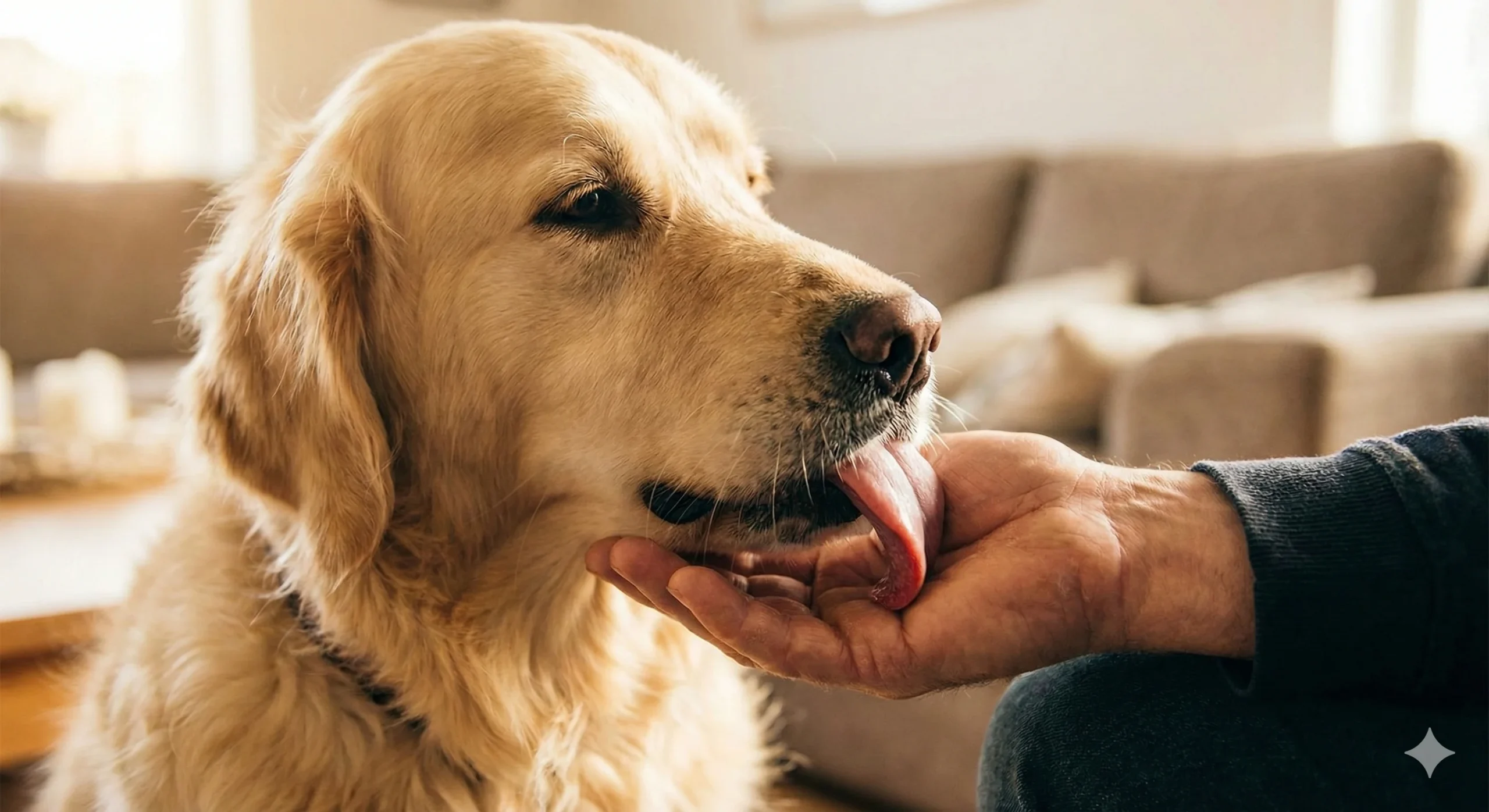
: When a dog licks your hand, it can mean a variety of things including affection, submission, a request for attention, hunger, or an attempt to gather information through taste and smell. It’s primarily a natural, communicative behavior, not necessarily a sign they want to kiss your face.
You’re settled on the couch, finally relaxing after a long day, when your furry best friend sidles up. They nuzzle your arm, let out a contented sigh, and then it starts: the persistent, warm, slightly slimy sensation of a dog licking your hand. Maybe you laugh and give them a pat, or perhaps you gently pull away, wondering, “Why does he always do that? Is this a canine kiss, or is something else going on?” If you’ve ever found yourself puzzling over this common yet curious behavior, you’re not alone. For centuries, humans have been interpreting—and sometimes misinterpreting—the “doggy kiss.” Is it love? Is it a secret code? Or are they just tasting that leftover chip dust? Let’s unravel the lick, from the scientific to the sentimental.
A dog licking your hand is a multifaceted form of communication. It can express affection, respect, curiosity, or a simple request. Understanding the context—like your dog’s body language and the situation—is key to decoding the true message behind the moisture.
🧠What Does It Mean When a Dog Licks Your Hand? Decoding the Behavior
At its core, licking is a deeply ingrained behavior in dogs that starts from their very first moments of life. Mother dogs lick their newborn puppies to clean them and stimulate breathing. Puppies lick their mother’s face to solicit food. This early bonding establishes licking as a fundamental tool for communication, care, and survival.
So, when your adult dog licks your hand, they are tapping into this primal vocabulary. The meaning isn’t singular; it’s a sentence where the context provides the punctuation. It’s their way of saying something, and that “something” can change based on the scenario, their personality, and their relationship with you.
In short: A Hand Lick = Canine Communication = “I’m expressing something important to me about you or our environment.”
📱 The 6 Most Common Reasons Behind the Lick
Let’s break down the primary motivations. Your dog is likely driven by one (or a combination) of these factors.
1. Affection and Bonding (“I Love You” or “You’re My Person”)
This is the interpretation we all hope for. Licking releases endorphins (feel-good hormones) in your dog, calming and pleasing them. When paired with a relaxed body, soft eyes, and a wagging tail, a gentle lick is very much a dog’s version of a hug or kiss. It strengthens your social bond.
2. Submission and Respect (“I Acknowledge You Are In Charge”)
In canine social structures, subordinate dogs often lick the mouths and faces of more dominant pack members. By licking your hand—a stand-in for your face—your dog may be displaying deference and acknowledging your role as the leader. It’s a peacekeeping and appeasement gesture.
3. Attention-Seeking (“Hello! Look at Me! Pet Me!”)
This is a classic. Dogs are smart. They learn that licking often results in a reaction—a pet, a laugh, a kind word, or even a treat. If licking your hand successfully gets your eyes off your phone and onto them, the behavior is reinforced. It’s their way of saying, “Interact with me, please!”
4. Taste and Exploration (“You Taste Interesting”)
Our skin carries traces of salt, lotions, food, and sweat. To a dog’s incredibly powerful sense of taste and smell, your hand is a fascinating sensory map. They’re literally gathering data about where you’ve been and what you’ve been doing.
5. Hunger or Anticipation (“Is It Dinner Time?”)
Remember the puppy behavior of licking mom’s face to get her to regurgitate food? That instinctual link between licking and food persists. A dog licking your hands around meal times or while you’re cooking might be making a polite (or not-so-polite) inquiry about the menu.
6. Anxiety or Stress (“I’m Nervous”)
Compulsive, frequent licking, especially if focused on one spot or accompanied by other signs like pacing, whining, or tucked ears, can signal anxiety. It’s a self-soothing behavior, much like a human biting their nails. If the licking seems obsessive, it’s worth investigating potential stressors.
💬 What Your Dog’s Licking Style Is Telling You
Not all licks are created equal. The how can be as telling as the why.
- The Gentle, Slow Lick: Often associated with affection and relaxation. This is the “love lick.”
- The Rapid-Fire “Zipper” Lick: Can indicate higher excitement, strong attention-seeking, or mild stress.
- The Focused, Persistent Lick on One Spot: Could mean they’ve found a compelling taste (like lotion) or could point to underlying anxiety or even a medical issue if it’s excessive.
- The “Drive-By” Lick: A single, quick lick as they walk past. This is likely a simple acknowledgment or appeasement gesture—a canine “hello.”
🕓 When to Welcome the Lick and When to Be Cautious
✅ When It’s Generally Fine:
- When it’s gentle, infrequent, and seems like a happy greeting.
- When you understand the reason (e.g., after a fun play session as a bonding behavior).
- When you are comfortable with it and your dog is healthy.
❌ When to Be Concerned or Redirect:
- Obsessive Behavior: If the licking is constant, disruptive, or focused on one area of their body or yours.
- Sign of Stress: If it’s paired with anxious body language (whale eye, yawning, lip licking, cowering).
- After Using Topical Products: If you’ve just applied medications, creams, or essential oils to your hands that could be toxic to dogs.
- For Hygiene Reasons: A dog’s mouth contains bacteria. While generally not harmful through intact skin, it’s wise to avoid licks on open wounds, your face, or for immunocompromised individuals.
- If You Simply Don’t Like It: It’s perfectly okay to not want to be licked. You can train an alternative behavior.
🔄 Understanding Related Canine Body Language
Licking rarely happens in a vacuum. Read the full message by observing their whole body.
| Body Language Cue | Paired with Licking | Likely Meaning |
|---|---|---|
| Relaxed body, wagging tail, soft eyes | Gentle hand lick | “I’m happy and I love you.” |
| Lowered body, ears back, avoiding eye contact | Submissive licks | “I respect you; please don’t be mad.” |
| Pawing, jumping, barking | Energetic licking | “Pay attention to me RIGHT NOW!” |
| Pacing, panting, whining | Repetitive licking | “I am feeling anxious or stressed.” |
🐾 How to Respond to Your Dog’s Licks
Your reaction teaches your dog what works. Here’s how to respond based on your goal:
- To Encourage Affectionate Licks: Offer calm praise and gentle petting. “Good girl,” in a soft voice reinforces the bonding moment.
- To Discourage/Redirect Unwanted Licking:
- Stay Neutral: Without saying a word, calmly withdraw your hand. Stand up or turn your back briefly.
- Offer an Alternative: As soon they stop, ask for a behavior that’s incompatible with licking, like “Sit.” Then reward that behavior with a treat or toy.
- Be Consistent: Everyone in the household should respond the same way.
- Never: Yell, push, or punish. This can increase anxiety and confusion, potentially worsening the behavior.
❓ FAQs About Dogs Licking Hands
Is it safe to let my dog lick my hand?
For most healthy people, yes—if you wash your hands afterward. Avoid if you have open cuts or a compromised immune system.
Why does my dog lick my hands excessively when I pet them?
This is often an overflow of excitement and affection. The petting feels so good they have to express it, sometimes with licks. It can also be a submissive gesture.
My dog licks my hand obsessively at night. Why?
This could be a self-soothing habit for boredom or mild anxiety, or they might be attracted to the scent of your night cream. Ensure they get enough exercise and mental stimulation during the day.
Should I let my dog lick my face?
This is a personal choice. Be aware that a dog’s mouth contains bacteria not found in the human mouth. It’s safest to avoid contact with your eyes, nose, and mouth.
When should I see a vet about my dog’s licking?
If the licking is sudden, intense, obsessive, or focused on one spot on their own body (which can indicate pain, allergies, or infection), a vet visit is warranted to rule out medical causes.
🎯 Conclusion
The next time your dog offers a lick, you can now listen more closely to what they’re trying to say. That simple, wet gesture is a rich sentence in the language of dog. It might be a heartfelt “I’m glad you’re home,” a curious “You taste like bacon,” a respectful “You’re the boss,” or a pleading “Play with me!” By observing the context and their overall body language, you move from confusion to connection. Whether you choose to accept the slimy seal of approval with a smile or calmly redirect the behavior, you’re engaging in a deeper dialogue with your four-legged friend. And that understanding is the true mark of a best friend—no translation needed.

Ava White is a digital content creator, quotes writer, and communication expert at Jinglas.com. She specializes in crafting simple, engaging explainers on slang, texting culture, and modern online trends to help readers stay informed and confident in the digital world.