

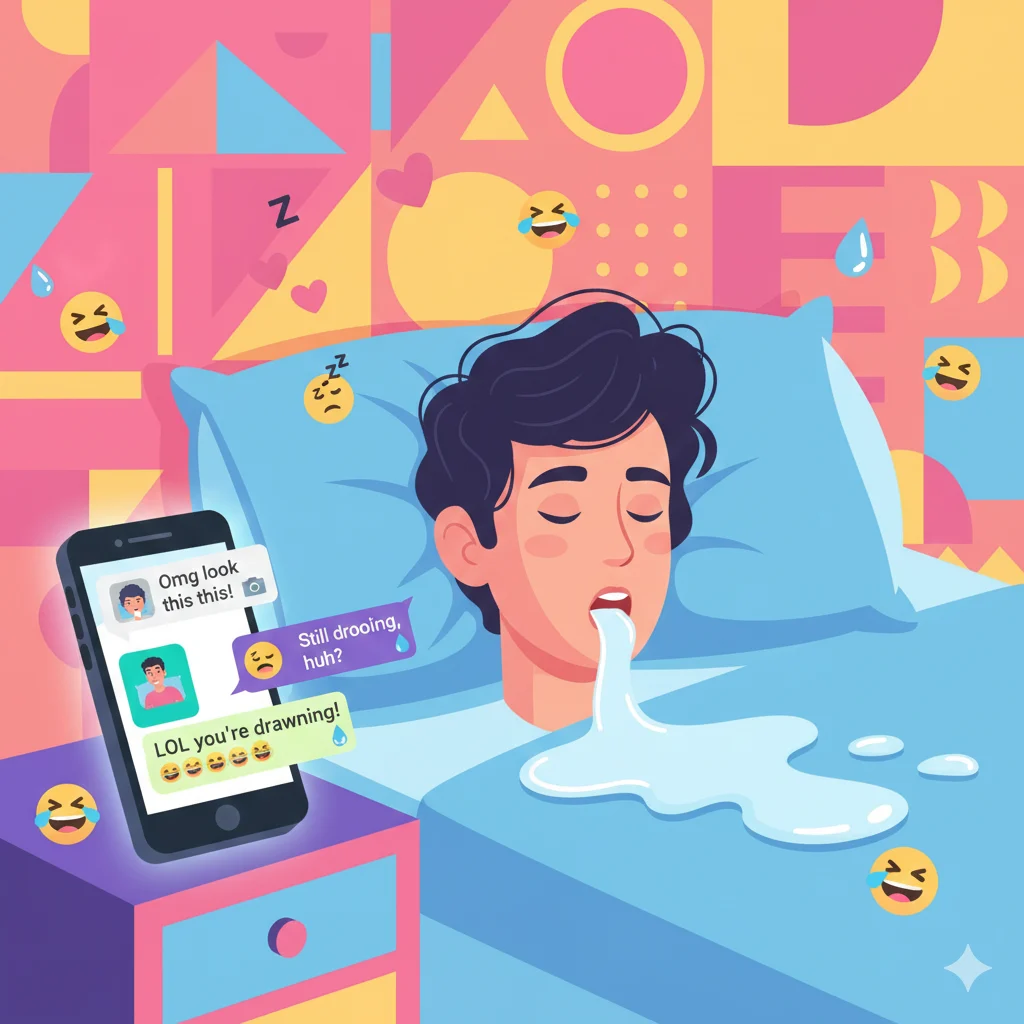
Have you ever woken up with a wet pillow and wondered, “Why on earth did I drool in my sleep?” 😅 You’re not alone. Drooling while sleeping is surprisingly common, yet many people feel embarrassed or confused when it happens. Maybe you saw a funny TikTok or a friend joked about it, and now you’re curious.
Drooling in your sleep happens when your mouth produces excess saliva while your body is relaxed. It’s a natural, mostly harmless phenomenon that can be influenced by sleep position, nasal congestion, or even certain health conditions.
🧠 What Does It Mean When You Drool in Your Sleep?
Drooling while sleeping is medically called sialorrhea or hypersalivation. Simply put, it’s when saliva escapes from your mouth during sleep because your body is relaxed and your swallowing reflex is slower.
Example:
“Last night I slept on my side and woke up with drool on my pillow 😅. Apparently, it’s normal!”
In short:
Drooling in sleep = excess saliva escaping the mouth = usually harmless and common.
📱 Where Is Drooling in Sleep Commonly Discussed?
Though it’s a natural phenomenon, people often joke or discuss it online:
- TikTok 🎵 – funny sleep hacks & reactions
- Reddit 💬 – health discussions & personal stories
- YouTube 🎥 – sleep tip videos
- Texting with friends 😆 – casual, humorous chat
Tone: Casual, funny, and sometimes educational. Not formal.
💬 Examples in Conversation
A: “OMG I just woke up with drool all over my pillow 😭”
B: “Haha same here! Sleep side effects 😆”
A: “Why do I drool in my sleep?”
B: “Probably just your body relaxing too much 😴💦”
A: “I can’t believe I drooled during the Zoom call nap 😅”
B: “Classic! Sleep drool is universal 😂”
A: “Help! How do I stop drooling at night?”
B: “Try sleeping on your back and keep your mouth closed 😏”
A: “Do babies drool this much?”
B: “Yep, totally normal! Saliva production is high 😄”
🕓 When to Use and When Not to Use This Info
✅ When to Use
- Casual chats with friends or family
- Social media discussions about sleep habits
- Health forums or Reddit
❌ When Not to Use
- Professional or formal settings
- Serious medical advice without consulting a doctor
| Context | Example Phrase | Why It Works |
|---|---|---|
| Friend Chat | “I drooled so much last night 😅” | Casual & relatable |
| Reddit Post | “Is it normal to drool in your sleep?” | Informative & engaging |
| Medical Forum | “Consult your doctor if excessive” | Accurate & professional |
🔄 Similar Slang Words or Alternatives
| Slang/Term | Meaning | When to Use |
|---|---|---|
| Sialorrhea | Excess saliva production | Medical discussions |
| Hypersalivation | Overactive saliva glands | Health-related content |
| Drooling | Informal term for saliva escape | Casual texting & chats |
| Sleep drool | Drooling specifically in sleep | Social media or casual talk |
🧠 Causes of Drooling in Sleep
- Sleep Position: Side or stomach sleepers are more prone.
- Nasal Congestion: Blocks airflow, forcing mouth breathing.
- Relaxed Muscles: During deep sleep, throat and jaw muscles relax.
- Medications: Some antidepressants and antihistamines increase saliva.
- Medical Conditions: Sleep apnea, GERD, neurological disorders.
🛏️ Tips to Reduce Drooling
- Sleep on your back with a supportive pillow
- Keep nasal passages clear before bed
- Avoid alcohol and sedatives close to bedtime
- Stay hydrated throughout the day
- Consult a doctor if drooling is chronic or severe
🧩 Fun Facts About Drooling
- 10–37% of adults report occasional sleep drooling.
- Babies may drool up to 5–6 times more than adults.
- Side sleeping is the most “drool-prone” position.
- Saliva protects teeth from decay and helps digest food even while you sleep.
❓ FAQs About Drooling in Sleep
Q1: Is it normal to drool in your sleep?
A: Yes! Most people drool occasionally. It’s a natural body function.
Q2: Can sleeping positions affect drooling?
A: Absolutely. Sleeping on your side or stomach can increase drooling because your mouth opens more.
Q3: Does drooling indicate a health problem?
A: Usually not, but chronic excessive drooling can be linked to sleep apnea, sinus infections, or certain medications.
Q4: How can I reduce drooling at night?
A: Try sleeping on your back, staying hydrated, and addressing nasal congestion.
Q5: Do children drool more than adults?
A: Yes, babies and young kids often drool more because their swallowing reflexes aren’t fully developed.
✅ Conclusion
Drooling in your sleep is perfectly normal and nothing to be embarrassed about 😄. It’s your body doing its thing while you rest. Most cases are harmless, but paying attention to sleeping positions, nasal health, and hydration can help minimize it. Remember, sharing funny stories about it with friends or online is totally relatable—and you’re definitely not alone!

Freya Huge is a digital writer and content strategist known for her clear, relatable explainers on modern slang, online culture, and everyday communication. She blends creativity with research to help readers understand trends and express themselves confidently.