
So, you’re wondering what does monotonous mean, huh? Maybe you saw it in a text or online chat and thought, “Wait… is this some secret slang I’m missing?” Don’t worry — you’re not alone.
Monotonous means “repetitive, dull, or lacking variety.” It’s a friendly, casual way of describing something that feels boring or unchanging, especially in conversation, texts, or social media. Use it to describe a chat, a day, or even a meme that feels the same over and over.
By the end of this article, you’ll know exactly how and when to use it, see real conversation examples, and even learn fun alternatives that keep your texts fresh.
🧠 What Does Monotonous Mean in Text?
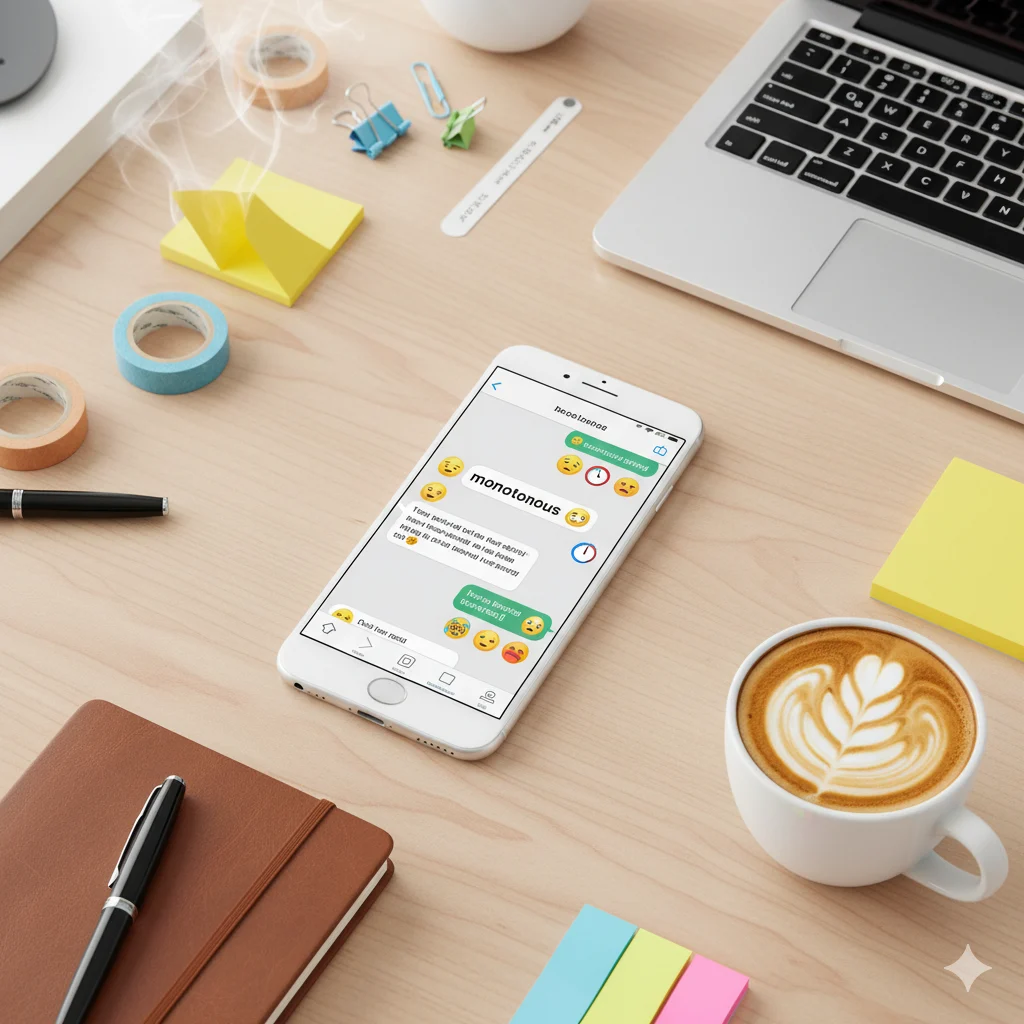
Monotonous is used to describe something repetitive or boring. In texting, it often conveys mild humor or observation rather than harsh criticism.
Example:
- “This lecture is so monotonous 😴” — meaning it’s boring and repetitive.
In short:
Monotonous = repetitive = dull or lacking variety
📱 Where Is Monotonous Commonly Used?
Monotonous is most popular in casual settings where people share their day-to-day experiences.
- Texting friends 💬: “Ugh, this day feels monotonous.”
- Snapchat 👻: Captioning a slow, boring activity.
- Instagram posts 📸: Memes about repetitive life moments.
- TikTok 🎵: Videos emphasizing daily routines.
- Gaming chats 🎮: Commenting on repetitive gameplay.
Tone: Friendly, casual, humorous — not formal.
💬 Examples of Monotonous in Conversation
Here are realistic text examples:
- A: “Another Monday… ugh”
B: “Yeah, totally monotonous 😩” - A: “This homework is endless”
B: “I feel you, so monotonous 😴” - A: “Same lunch again 😒”
B: “Monotonous much? 🍕” - A: “Watching reruns all day”
B: “Sounds monotonous but comfy 😂” - A: “Waiting in line forever”
B: “Pure monotonous vibes ⏳” - A: “Zoom meetings again”
B: “Monotonous for sure 😬” - A: “Nothing new at work”
B: “Classic monotonous day 💻”
🕓 When to Use and When Not to Use Monotonous
✅ When to Use:
- Casual chats with friends or family
- Social media captions
- Gaming or meme contexts
- Lighthearted observations
❌ When Not to Use:
- Work emails or formal messages
- Urgent or serious discussions
- Professional presentations
Comparison Table:
| Context | Example Phrase | Why It Works |
|---|---|---|
| Friend Chat | “This movie is monotonous 😴” | Casual & relatable |
| Work Chat | “This task feels repetitive” | Polite & professional |
| “The report is rather repetitive” | Formal & clear |
🔄 Similar Slang Words or Alternatives
| Slang | Meaning | When to Use |
|---|---|---|
| Boring | Uninteresting | Casual/friendly |
| Dull | Lacking excitement | Formal or casual |
| Repetitive | Happens over and over | Work, school, gaming |
| Mundane | Ordinary, not exciting | Professional or casual |
| Tiresome | Exhaustingly boring | Casual/friendly |
📝 Monotonous Tone vs Boring Tone: What’s the Difference?
- Monotonous: Implies repetition; can be humorous or observational.
- Boring: Stronger, sometimes negative; less playful.
Example:
- “This class is monotonous 😐” — slightly humorous observation
- “This class is boring 😒” — blunt and critical
📱 Monotonous in Social Media Posts
- Use as captions:
- “Monday mornings… so monotonous 😴”
- “Same coffee, same vibes… monotonous ☕”
- Meme-friendly: highlight repetitive life moments.
- TikTok trend captions: “When your day feels monotonous but still cute 🎵”
😂 How Monotonous Can Add Humor to Texts
- Exaggerate repetition for comedic effect:
- “My snacks are monotonous, but I’m committed 🍿”
- Self-deprecating humor:
- “My life is 90% Netflix and 10% monotonous chores 😂”
- Sarcasm in memes:
- “Zoom calls again… monotonous as ever 😬”
🎮 Monotonous in Gaming and Online Communities
- Describe repetitive gameplay:
- “Grinding for hours… monotonous 😩”
- Share humor with friends:
- “Another loot box… monotonous but worth it 🎁”
- Online forum discussions:
- “Quests are fun but slightly monotonous 🗡️”
Name Kennedy Mean: The Hidden Meaning Everyone Gets Wrong
💌 Flirty or Casual? Tone of Monotonous Explained
- Casual tone: great for friends, memes, and chats
- Flirty tone: playful teasing
- “Waiting for you is monotonous 😉”
- Avoid in serious contexts: professional or formal texts
❌ Common Misunderstandings About Monotonous
- Not always negative: can be humorous or descriptive
- Not formal slang: mostly casual use
- Not interchangeable with “boring” in every situation
- Can be used with emojis to lighten tone
⚠️ Monotonous Texting Mistakes to Avoid
- Using in formal work messages
- Overusing without context
- Sending without emojis in casual chats (may sound harsh)
- Misreading tone: could come off as rude
💡 Tips for Using Monotonous Naturally in Chats
- Pair with emojis to show tone 😴😆
- Keep it casual: friends, social media, memes
- Use in small doses for comedic effect
- Combine with other slang for playful tone
- Observe online trends for modern usage
❓ FAQs
1. What does monotonous mean in texting?
It describes something dull, repetitive, or boring in a casual, humorous way.
2. Can I use monotonous in social media captions?
Absolutely! It works perfectly for memes, relatable posts, or everyday humor.
3. Is monotonous formal or casual?
Mostly casual; avoid in professional or urgent messages.
4. Are there alternatives to monotonous?
Yes — dull, boring, repetitive, mundane, tiresome.
5. How do I make monotonous sound funny?
Add emojis, exaggerate repetition, or pair with memes for humor.
6. Can monotonous be used flirtily?
Yes! Playful teasing works: “Waiting for your reply is monotonous 😉”
✅ Conclusion
Now you know exactly what does monotonous mean and how to use it confidently in texting, memes, or social media. It’s perfect for describing repetitive, dull, or routine situations — with a playful twist. Pair it with emojis, sprinkle it in captions, or make friends laugh at the monotonous nature of everyday life. Next time your chat feels repetitive, you’ll have the perfect word to spice it up. Go ahead — text it, meme it, and share the fun!

Freya Huge is a digital writer and content strategist known for her clear, relatable explainers on modern slang, online culture, and everyday communication. She blends creativity with research to help readers understand trends and express themselves confidently.