

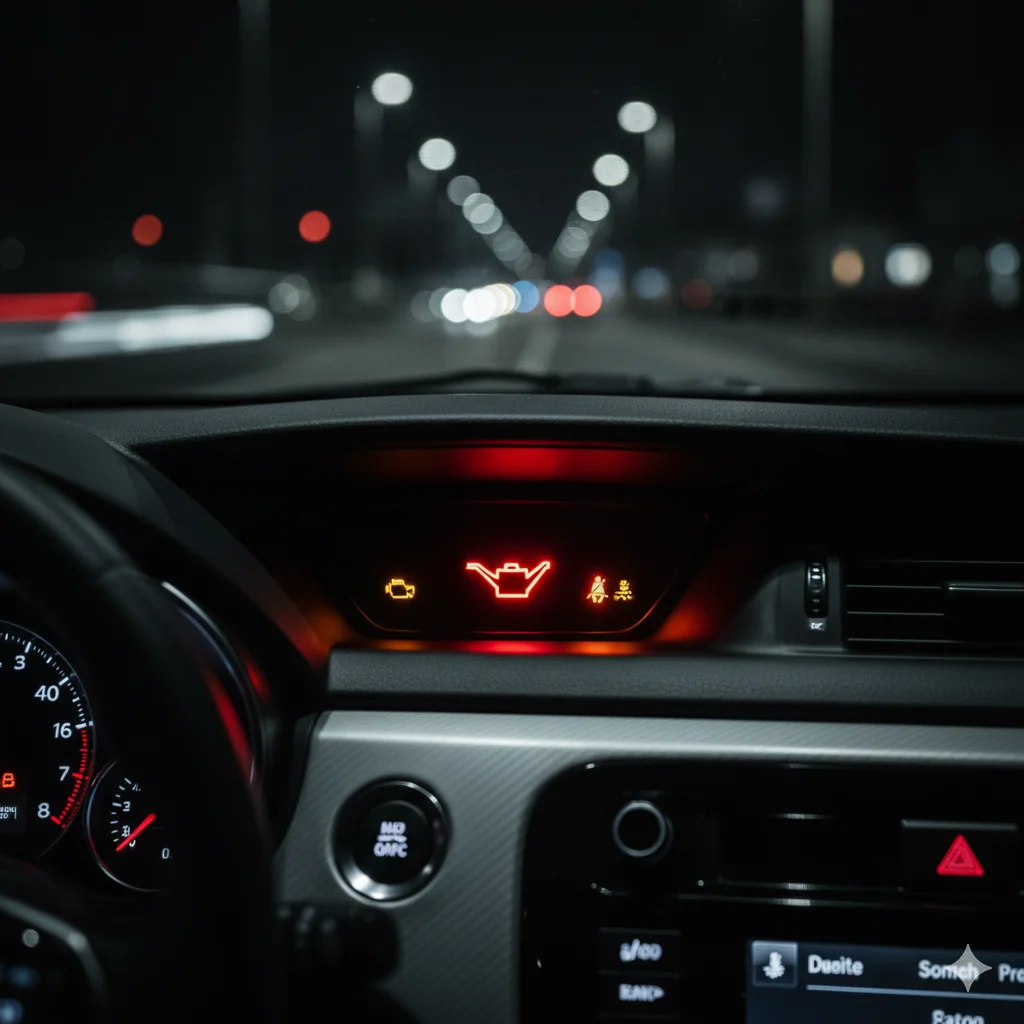
I’ll never forget the first time I saw it. I was cruising down the highway, singing along to the radio, when a terrifying red light suddenly glared from my dashboard—a little oil can symbol. My heart sank. I knew it was bad, but I didn’t know why. I pulled over, my mind racing with questions: “What does ‘oil pressure low’ even mean? Is my car about to explode?” If you’re seeing that same warning light, take a deep breath. You’ve come to the right place to get clear, expert-backed answers without the automotive jargon.
The “Oil Pressure Low” warning means your engine is not getting the proper lubrication it needs to operate safely. It’s a critical, urgent alert signaling that continued driving could cause severe, often irreversible, engine damage. You should stop the vehicle safely and turn off the engine as soon as possible.
🧠 What Does the “Oil Pressure Low” Warning Mean?
Let’s break it down in simple terms. Your car’s engine is made of dozens of fast-moving metal parts—pistons, crankshafts, camshafts—all spinning and sliding against each other at thousands of revolutions per minute. This creates immense friction and heat.
Engine oil is the lifeblood that prevents this metal-on-metal contact. It’s pumped under pressure throughout the engine, creating a protective film between components. “Oil pressure” is the force that ensures this vital oil reaches every nook and cranny.
So, when your car says “Oil Pressure Low,” it’s screaming that this crucial delivery system has failed. The oil isn’t circulating with enough force, leaving metal parts to grind against each other without proper lubrication. This generates extreme heat and friction, leading to catastrophic wear and tear in a very short amount of time.
In short: Oil Pressure Low = Inadequate Engine Lubrication = Risk of Catastrophic Engine Failure.
📊 What Are the Common Symptoms?
While the dashboard warning light is the most direct symptom, your car might give you other clues that something is wrong. Being aware of these signs can help you act before the red light even comes on.
- The Red Oil Can Light: The most obvious and serious sign. Don’t ignore it.
- Illuminated Check Engine Light: The engine control unit may detect issues related to low oil pressure and trigger this light as well.
- Engine Noise (Ticking or Knocking): This is the sound of metal components hitting each other without a cushion of oil. A low rumble or a loud “knock” are very bad signs.
- Burning Smell: This could be oil leaking onto hot engine components and burning off.
- Engine Performance Issues: The engine may feel sluggish, stall, or struggle to maintain power due to increased internal friction.
🔧 What Causes Low Oil Pressure?
Understanding the root cause is key to fixing the problem. Low oil pressure is typically a symptom of one of several underlying issues, ranging from simple to severe.
1. Low Engine Oil Level
This is the most common and often the simplest cause. Your engine might be burning oil (common in older cars) or have a leak, depleting the total volume. Not enough oil in the system means the oil pump can’t build up the necessary pressure.
2. A Failing or Faulty Oil Pump
The oil pump is the heart of the lubrication system. If it wears out or fails, it can’t generate the pressure needed to push oil through the engine’s passages.
3. Wrong Oil Viscosity
Using oil that is too thin for your engine or climate (e.g., 0W-20 instead of 5W-30) can result in low pressure. Thin oil doesn’t provide the same resistance and pressure as thicker oil.
4. Clogged Oil Filter
The oil filter traps contaminants. If it becomes completely clogged and isn’t replaced, it can restrict the flow of oil, dramatically reducing pressure downstream.
5. Worn Engine Bearings
Main and rod bearings provide a narrow clearance for oil to pass through, which helps maintain pressure. As these bearings wear down over time, the gaps widen, allowing oil to flow through too easily, which drops the overall pressure.
6. Oil Dilution or Contamination
If fuel or coolant leaks into the oil pan, it can dilute the oil, making it thinner and less effective at maintaining pressure.
🚦 What to Do Immediately When the Warning Light Comes On
This is the most critical section. Your immediate actions can mean the difference between a cheap fix and a multi-thousand-dollar engine replacement.
Step 1: Don’t Panic. Stay calm and carefully signal your intention to pull over.
Step 2: Pull Over Safely. Find a secure location to stop, such as the shoulder of a highway or a parking lot. Turn off the engine as soon as you are safely stopped. Do not continue driving.
Step 3: Check Your Oil Level. After the engine has cooled for a few minutes, use your dipstick to check the oil level. If it’s low, you may have found the problem.
Step 4: Call for Help. This is not a “drive to the mechanic” situation. If the oil level is critically low or you see/smell anything concerning, call for a tow truck to transport your vehicle to a trusted auto repair shop.
📱 Where Is This Warning Commonly Seen?
This isn’t a warning you’ll see on your phone, but it’s a universal alert across all vehicle types. It’s critical to recognize it wherever you encounter it.
- Car & Truck Dashboards 🚗: The primary location for this warning light.
- Heavy Machinery & Tractors 🚜: Industrial equipment relies on hydraulic pressure and oil for operation.
- Motorcycle Dashboards 🏍️: Just as critical in motorcycle engines.
- Boat Engine Alarms ⛵: Marine engines have similar lubrication systems and warnings.
- Aircraft Cockpits ✈️: (Though far more complex) Oil pressure is a critical flight parameter.
💬 Examples of Real-World Scenarios
Let’s look at how this warning plays out in different situations.
Scenario 1: The Simple Top-Up
- Driver: Sees red oil light. Pulls over safely.
- Action: Checks dipstick, finds oil level is low. Adds a quart of the correct oil.
- Result: Light turns off. Drives to a shop for a full inspection to check for leaks.
Scenario 2: The Ignored Warning
- Driver: Sees red oil light. Thinks, “I’m almost home,” and keeps driving.
- Action: Hears a loud knocking sound from the engine a mile later.
- Result: Car stalls. Requires a complete engine replacement or rebuild.
Scenario 3: The Professional Diagnosis
- Driver: Sees red oil light. Pulls over and calls a tow truck.
- Action: Mechanic diagnoses a failing oil pump.
- Result: Oil pump is replaced. The engine is saved from major damage.
✅ When to Use and When Not to Use This Knowledge
✅ When to Use This Knowledge:
- When you see the warning light on your own dashboard.
- When a friend or family member asks for car advice about a warning light.
- When performing basic vehicle maintenance to understand its importance.
- When buying a used car and checking its maintenance history.
❌ When Not to Use This Knowledge:
- Do not use it to dismiss the warning and continue driving.
- Do not use it as a sole guide for complex mechanical repairs unless you are a trained professional.
- Do not ignore the context; a red light requires immediate action, a yellow/oil level light suggests checking soon.
Context & Action Table
| Context | Example Phrase/Scenario | Why It Works / What It Means |
|---|---|---|
| Red Warning Light On | “Oil Pressure Low” light illuminates. | Critical & Urgent: Requires immediate engine shutdown. |
| Yellow/Amber Light On | “Oil Level Low” or “Change Engine Oil Soon.” | Cautionary: Schedule service soon, but not an immediate shutdown. |
| Preventative Maintenance | Regular oil changes every 5,000 miles. | Proactive: Prevents most low oil pressure issues from ever occurring. |
| Mechanic Diagnosis | “Your oil pump is failing, causing low pressure.” | Diagnostic: Identifies the root cause for a targeted repair. |
🔄 Similar Automotive Warning Lights
Just as important as understanding “Oil Pressure Low” is recognizing its cousins on the dashboard.
| Warning Light | Meaning | When to Use / Severity |
|---|---|---|
| Check Engine Light | Engine management system has detected a fault. | Investigate Soon: Can range from a loose gas cap to a serious misfire. |
| Engine Temperature Warning | Engine is overheating. | Critical: Pull over safely and turn off the engine to prevent damage. |
| Brake System Warning | Issue with the braking system or parking brake engaged. | Critical: Do not drive until brakes are inspected. |
| Battery Charging Alert | The charging system is faulty; the battery is not being charged. | Address Soon: Vehicle may stall once the battery is depleted. |
| Tire Pressure Warning | One or more tires are significantly under-inflated. | Address Soon: Improves safety, fuel economy, and prevents tire wear. |
❓ FAQs About Low Oil Pressure
1. Can I drive with low oil pressure?
No. Driving with the “Oil Pressure Low” warning light on, even for a short distance, can destroy your engine. The cost of a tow truck is insignificant compared to the cost of a new engine.
2. How much does it cost to fix low oil pressure?
The cost varies wildly based on the cause. Topping up low oil might cost $20. Replacing a clogged oil filter during a service might be $50. Replacing an oil pump can cost $1,000-$2,500, and a full engine replacement can be $4,000-$8,000+.
3. Will low oil pressure make my car stall?
Yes, eventually. As internal friction increases from lack of lubrication, the engine will struggle to run, become overloaded, and stall. By the time this happens, the damage is usually already done.
💎 Conclusion: Don’t Ignore the Red Light
The “Oil Pressure Low” warning is one of the most serious alerts your vehicle can give you. It’s not a suggestion; it’s a demand for immediate attention. While the causes can range from a simple lack of oil to a major mechanical failure, the initial response should always be the same: stop driving. By understanding what this warning means, what causes it, and the critical steps to take, you empower yourself to make the right decision. That quick, informed action can save you from a massive repair bill and keep you safe on the road. Remember, when it comes to oil pressure, it’s always better to be safe than sorry.

Charles Dickens was a legendary English novelist and social commentator known for his timeless storytelling and deep understanding of human nature. His works continue to inspire writers and readers worldwide, shaping literature, culture, and modern narrative craft.