

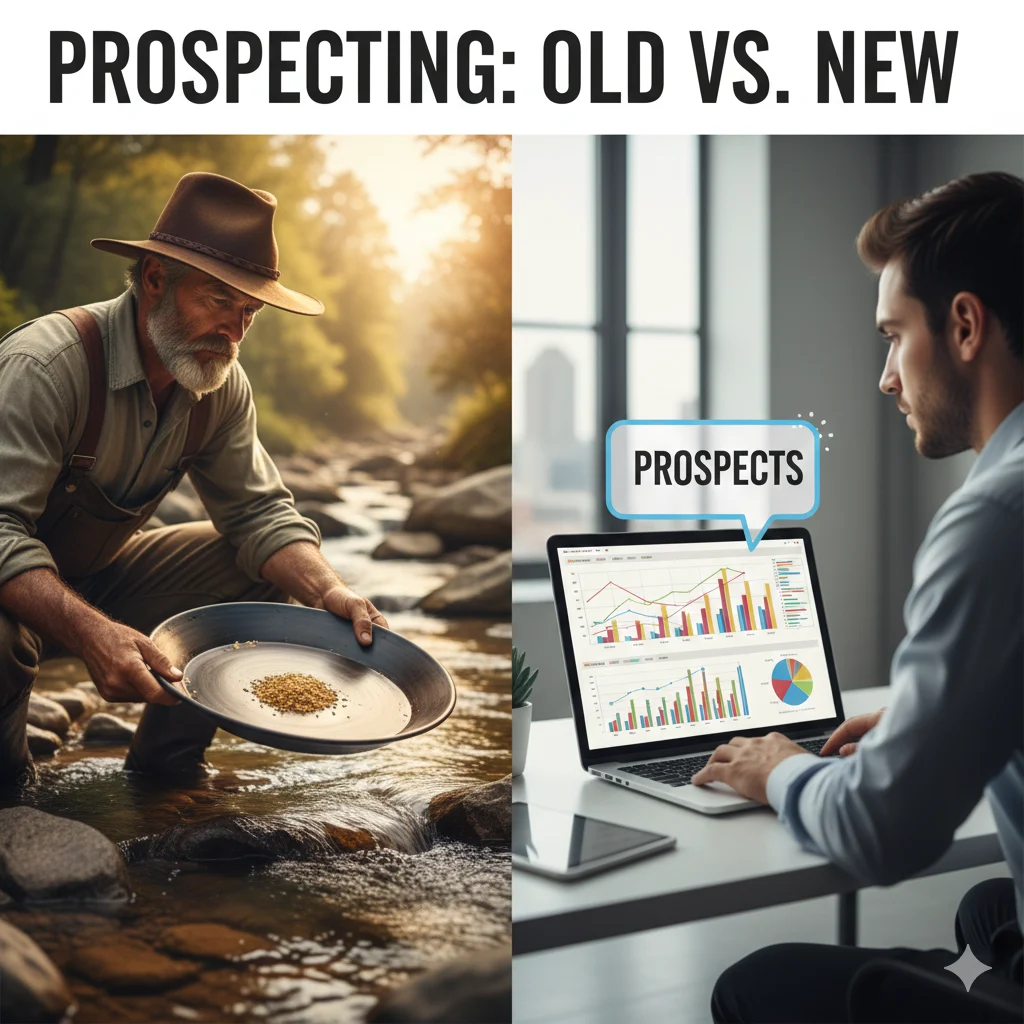
“Prospecting” means actively searching for potential customers or valuable opportunities. It’s a core business and sales strategy where you identify and qualify leads to grow a pipeline, much like a historical miner would search for gold.
Ever found yourself in a meeting where someone enthusiastically says, “We need to ramp up our prospecting efforts!” and you nod along, but a tiny voice in your head whispers, “Wait, are we going mining?” You’re not alone. The first time I heard it in a startup setting, I genuinely pictured pickaxes and hard hats. It felt like jargon meant to confuse the new person.
But here’s the thing: once you unlock the meaning, you realize it’s one of the most vivid and important metaphors in the business world. Prospecting is the lifeblood of growth, whether you’re selling software, freelance services, or even building a network. It’s the bridge between hoping for success and actively building it. Let’s dig into what prospecting really means today and how you can master it.
What Does “Prospecting” Mean? (Beyond the Gold Rush)
At its core, prospecting is the systematic process of searching for and identifying potential customers (prospects) for your business. It’s the first, crucial step in the sales pipeline where you move from a broad audience to a targeted list of individuals or companies who might have a need for what you offer.
The term is a direct callback to the 19th-century Gold Rushes, where prospectors would sift through tons of riverbed silt to find flecks of valuable gold. In a modern business context:
- The “landscape” is your total addressable market.
- The “panning” is your research and outreach methods.
- The “flecks of gold” are your qualified leads—people who are a good fit and potentially interested.
In short: Prospecting = Searching for Potential Customers = The modern-day hunt for valuable business opportunities.
Where Is Prospecting Talk Commonly Used? 🎯
You’ll hear this term primarily in professional, growth-focused environments. It’s not casual texting slang, but essential business vocabulary.
- 🏢 Sales & Business Development: The most common home for this term. Sales teams live and breathe prospecting metrics.
- 💼 Marketing Departments: Especially where marketing’s goal is to generate “sales-qualified leads” for the sales team.
- 🤝 Networking & Recruitment: Recruiters prospect for talent. Entrepreneurs prospect for partners or investors.
- 📱 Social Media Platforms: Specifically LinkedIn, which is a powerhouse digital prospecting tool. You’ll also see strategies discussed on Twitter (X) and in industry-specific forums.
- 🎤 Podcasts, Webinars & SaaS Tools: The term is ubiquitous in B2B (business-to-business) content and tools like CRM platforms (e.g., Salesforce, HubSpot).
Tone: It is formal/professional jargon in a business context. Using it correctly marks you as knowledgeable about sales and growth processes.
Real-World Examples of Prospecting in Action 💬
Let’s look at how this term is used in professional conversations.
Example 1: Sales Team Stand-Up
Manager: “Our pipeline is looking thin for Q3. We need to double down on prospecting this week.”
Rep: “On it. I’ve blocked off two hours daily for cold outreach and LinkedIn prospecting.”
Example 2: Marketing to Sales Handoff
Marketer: “We just launched a new ebook on cloud security. Great for prospecting into IT managers.”
Sales Rep: “Perfect. Send me the download list, and I’ll start qualifying those prospects.”
Example 3: Defining Strategy
Founder: “How are we generating new business?”
Head of Sales: “Right now, it’s 70% outbound prospecting via email sequences and 30% inbound leads from our blog.”
Example 4: Talking About Tools
A: “My prospecting workflow feels slow.”
B: “You should try a tool like Apollo or Lusha. It automates finding contact info for your prospects.”
Example 5: Setting Goals
A: “What’s your main focus this quarter?”
B: “Prospecting. I aim to add 50 new qualified leads to my CRM every month.”
When to Use and When Not to Use “Prospecting” ✅❌
✅ When to Use:
- In business, sales, or startup meetings when discussing growth strategy.
- When writing marketing plans, sales reports, or professional emails about lead generation.
- On your LinkedIn profile (e.g., “Experienced in outbound prospecting and CRM management”).
- When discussing business development activities with partners or mentors.
❌ When NOT to Use:
- In casual social settings with friends (they’ll think you’ve joined a mining expedition).
- When describing shopping or browsing (“I was prospecting for shoes at the mall” – no).
- In formal academic writing unrelated to business, unless discussing the historical term.
- When talking about existing customer relationships; that’s “account management,” not prospecting.
Context & Phrasing Comparison Table
| Context | Example Phrase | Why It Works / Doesn’t Work |
|---|---|---|
| Sales Plan | “Our primary channel will be prospecting via LinkedIn.” | Professional, accurate, and clearly defines the activity. |
| Team Motivational Speech | “Every ‘no’ gets us closer to a ‘yes.’ Keep prospecting!” | Uses the metaphor effectively to encourage persistence. |
| Email to a Colleague | “Spent the morning prospecting and found a few great leads for us to discuss.” | Standard professional jargon for internal communication. |
| Text to a Friend | “Just prospecting for some pizza places lol.” | Doesn’t work. Confusing and misused; just say “looking for.” |
Similar Terms & Alternatives to “Prospecting” 🔄
While “prospecting” is specific, it fits into a larger family of sales and growth terminology.
| Slang / Jargon | Meaning | When to Use It |
|---|---|---|
| Lead Generation | The broader process of attracting and identifying potential interest. | When talking about the top of the sales funnel, often involving marketing. |
| Outreach | The act of making contact with prospects (a step within prospecting). | When the focus is on the communication (call, email, DM) itself. |
| Qualifying | Assessing if a prospect has the need, budget, and authority to buy. | The step after initial prospecting to prioritize the best leads. |
| Cold Calling/Emailing | A method of prospecting where you contact someone with no prior interaction. | When specifying the often-dreaded tactic of unsolicited contact. |
| Sourcing | Commonly used in recruitment for finding candidates, or in sales for finding lead lists. | Very similar to prospecting, but often the very first data-gathering stage. |
| Pipeline Building | The ongoing process of filling your sales pipeline with prospects and opportunities. | The ultimate goal of prospecting; the broader outcome. |
FAQs About Prospecting ❓
Is prospecting just cold calling?
No! Cold calling is one (often challenging) method of prospecting. Modern prospecting includes social selling (LinkedIn), networking, content marketing, and referral generation.
What’s the difference between a lead and a prospect?
A lead is a contact with minimal information. A prospect is a lead that has been qualified—meaning you’ve determined they are a good potential fit based on need, budget, and timeline.
What does ‘prospecting’ mean in a job search?
It means actively searching for and reaching out to potential employers or hiring managers, even if they haven’t advertised a role. You’re “prospecting” for an opportunity, not just applying to posted jobs.
Is prospecting creepy or spammy?
It can be if done poorly. Good prospecting is research-based, personalized, and provides value. It’s about starting a conversation, not just blasting a sales pitch. The goal is to be helpful, not intrusive.
What are key prospecting skills?
Resilience, research, communication, active listening, and strong organization (using a CRM is a must!).
Conclusion:
So, the next time you hear “prospecting,” you won’t picture a muddy riverbank. You’ll understand it as the essential, proactive hunt for opportunity. It’s the skill of turning unknown territory into a map of potential success. Whether you’re in sales, running your own business, or even navigating a career change, adopting a prospecting mindset—being intentional, systematic, and persistent in seeking out valuable connections—is a powerful strategy. Now go forth and find your gold! 🚀

William Shakespeare was a legendary English playwright, poet, and storyteller whose works have shaped literature for centuries. Known for his timeless plays and sonnets, he continues to inspire writers, artists, and readers around the world with his mastery of language and storytelling.