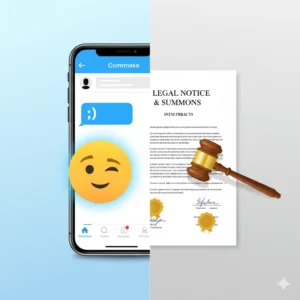


Have you ever been scrolling through a group chat or a heated social media thread when suddenly, someone drops a word that makes you pause? It’s not quite slang, but it’s not your everyday vocab either. I remember seeing “recuse” pop up in a friend’s Discord server during a debate about who should pick the next movie. Someone wrote, “I’m recusing myself from this vote; I suggested all the bad ones last time.” My brain did a double-take. Was that a typo? A fancy way of saying “excuse”? It turns out, this isn’t your typical text slang—it’s a powerful, precise word that’s found a new home in digital conversations. If you’ve ever wondered what it really means when someone says they’re “recusing” themselves online, you’ve come to the right place. Let’s break it down.
“Recuse” is not slang; it’s a formal verb. In text and online, it most commonly means to formally remove oneself from a decision, vote, or situation due to a potential conflict of interest or bias. It’s a polite and responsible way of saying, “I can’t be involved in this because I’m too close to it.”
🧠 What Does “Recuse” Actually Mean in Text and Online?
At its core, the word “recuse” is a verb that means to disqualify or remove oneself from a role, typically as a judge, juror, or decision-maker, because of a potential conflict of interest or lack of impartiality. Think of a judge who has a personal relationship with the defendant—they must recuse themselves from the case to ensure a fair trial.
In the world of texts, social media, and online forums, the meaning is adapted but keeps its essence. When someone says “I recuse myself” in a casual digital setting, they are formally (and often humorously) stepping back from a decision or debate because they recognize their opinion might be biased, they have a personal stake, or they simply don’t want to influence the outcome.
Example: “You guys decide on the pizza toppings. I’m recusing myself because I will always choose pineapple, and that’s not fair to the group.”
In short: Recuse = To formally remove oneself = “I’m stepping out of this decision to keep it fair.”
📱 Where Is “Recuse” Commonly Used Online?
You won’t see “recuse” used as casual slang like “LOL” or “BRB.” Its usage is more situational and often carries a tone of self-awareness or mock formality.
- 💬 Group Chats (Discord, WhatsApp, iMessage): Used when friends are making group decisions (e.g., picking a restaurant, game, or movie).
- 🔄 Reddit & Online Forums: Common in moderator discussions, community votes, or when a user has a personal connection to a debated topic.
- 🐦 Professional Twitter & LinkedIn: Used in discussions about ethics, business decisions, or industry debates where someone declares a conflict.
- 🎮 Gaming Communities: When players are deciding on rules, teams, or in-game judgments.
- 👨💻 Workplace Messaging (Slack, Teams): In a more literal, professional sense when discussing project assignments or reviews where bias could be an issue.
Tone: It is formal by definition but often used with a casual or humorous tone in everyday texting. Using it shows a bit of linguistic flair and self-awareness.
💬 Real Examples of “Recuse” in Digital Conversations
Let’s see how “recuse” plays out in realistic chats.
- The Group Decision:
- A: Alright, vote: beach trip or camping this year?
- B: My family owns a campground, so I’m recusing myself. Totally biased. 😅
- The Work Debate:
- A: We need to pick which design agency to hire. Thoughts?
- B: I went to college with the lead designer at Agency X, so I should recuse myself from this vote.
- The Friendly Argument:
- A: Who was the best character in that show? Fight!
- B: I’m recusing myself. I have too many hot takes that would start a war. 😂
- The Online Moderator:
- User: Can we get a ruling on whether this post breaks the subreddit rules?
- Mod: I’m the original poster, so I’ll recuse and let the other mods decide.
- The Casual Opt-Out:
- A: Should we get Thai or Italian?
- B: You know I’ll say Italian every time. I recuse! You all choose.
🕓 When to Use (and When NOT to Use) “Recuse”
✅ When TO Use “Recuse” in Texts:
- When you have a clear personal bias or conflict in a group decision.
- To add a touch of humorous formality among friends.
- In semi-professional online spaces (forums, work chats) to ethically step aside.
- When you want to show you’re being fair and objective by removing your influence.
❌ When NOT to Use “Recuse”:
- As a synonym for “excuse” or “refuse.” (e.g., “I recuse myself from going to the party” is incorrect unless there’s a conflict).
- In truly urgent or casual situations where simple language is better. (“I’m out” or “you decide” works fine).
- If you are genuinely obligated to participate and are trying to avoid responsibility.
Usage Comparison Table
| Context | Example Phrase | Why It Works (or Doesn’t) |
|---|---|---|
| Friend Chat (Decision) | “I’m recusing myself from the movie vote. I hate horror.” | Works! Shows bias in a fun, formal way. |
| Work Chat (Assignment) | “I collaborated with that vendor before. I’ll recuse myself from the evaluation.” | Works! Appropriate professional ethics. |
| Formal Email | “Due to my prior involvement, I must recuse myself from the selection committee.” | Works! The standard, correct formal use. |
| Casual Opt-Out | “I recuse from cooking tonight.” | Doesn’t Work. This is just refusing a chore. Use “I’ll sit this one out.” |
🔄 Similar Words & Alternatives to “Recuse”
Here’s a quick guide to words you might use in similar—but not identical—situations.
| Slang/Word | Meaning | When to Use Instead of “Recuse” |
|---|---|---|
| Opt Out | To choose not to participate. | For simple non-participation without a conflict of interest. |
| Sit This One Out | To not take part in a particular activity. | Casual, for games, rounds, or activities. |
| Stay Neutral | To not take sides. | When you’re involved but trying not to influence, not removing yourself. |
| I’m Biased | Admitting a partial opinion. | The honest admission that leads to a recusal. Often used together. |
| Conflict of Interest | The reason for recusing. | The noun describing the situation. “I have a conflict of interest, so I’ll recuse.” |
| Pass | To skip your turn or decline. | The ultra-casual, one-word alternative. |
⚖️ The Legal & Formal Origins of “Recuse”
Understanding where “recuse” comes from helps clarify its modern, adapted use. It originates from the Latin “recusare,” meaning “to refuse or object.” In law, recusal is a critical ethical procedure. A judge, juror, or official must recuse themselves to uphold the integrity of the legal process. This bedrock principle of fairness—avoiding even the appearance of bias—is why the word carries such weight. When we use it lightly in a group chat about pizza, we’re borrowing that gravitas for comedic or self-aware effect.
🤔 Why Are We Using a Formal Word Like “Recuse” in Text?
This is a fascinating part of digital language evolution. We use words like “recuse” because:
- Precision: No other word (like “opt out” or “pass”) carries the specific connotation of stepping aside due to bias.
- Humor & Irony: Applying a high-stakes legal term to low-stakes scenarios (like picking a movie) is inherently funny.
- Digital Literacy: As we spend more time in self-moderating online communities (Reddit, Discord servers), the concepts of bias and fair process become more relevant to everyday users.
❓ FAQs About “Recuse”
Is “recuse” slang?
No. It is a standard English word with a formal definition. However, its application in casual digital contexts is a modern, adapted usage.
Can you “recuse” someone else?
Yes, but it’s less common. The active form is “recuse oneself.” You can say a motion was made “to recuse the judge,” meaning to seek their removal. In chats, stick to “I recuse myself.”
What’s the difference between “recuse,” “excuse,” and “refuse”?
- Recuse: To remove oneself due to bias.
- Excuse: To justify or pardon. (“Excuse me” or “excuse my bias”).
- Refuse: To decline or say no. They are not interchangeable.
Is it pronounced “reh-KYOOS” or “rih-KYOOS”?
The most widely accepted pronunciation is “rih-KYOOS.” (Listen: rɪˈkjuːz).
🎯 Conclusion:
So, the next time you’re in a group chat and feel your strong opinion might unfairly sway the group—whether it’s about pizza toppings, a Netflix show, or a more serious online poll—you now have the perfect word in your digital toolkit. “Recuse” is your go-to for gracefully, and perhaps a bit humorously, stepping aside in the name of fairness. It’s more than just a word; it’s a tiny act of digital diplomacy. Use it wisely to show you’re not just a participant in the conversation, but a conscientious one. Now, if you’ll excuse me, I have to recuse myself from any further puns… this article is officially adjourned. 😉

Freya Huge is a digital writer and content strategist known for her clear, relatable explainers on modern slang, online culture, and everyday communication. She blends creativity with research to help readers understand trends and express themselves confidently.