
I remember the first time I heard my friend say, “I can’t, the new season of my show just dropped on my streaming service.” I nodded along, but inside, I was a little lost. Was it like cable? Was it the internet on my TV? I was still living in the world of channel numbers and prime-time schedules. If you’ve ever felt that flicker of confusion, wondering what everyone means when they talk about “streaming” on their television, you’re in the perfect spot. Let’s demystify this modern marvel together.
: Streaming on TV means watching video or listening to audio content delivered directly from the internet to your television in real-time, without needing to download a permanent file. It’s a convenient, on-demand way to access movies, shows, and live events using apps on a smart TV, gaming console, or a dedicated streaming device.
🧠 What Does Streaming Mean on TV?
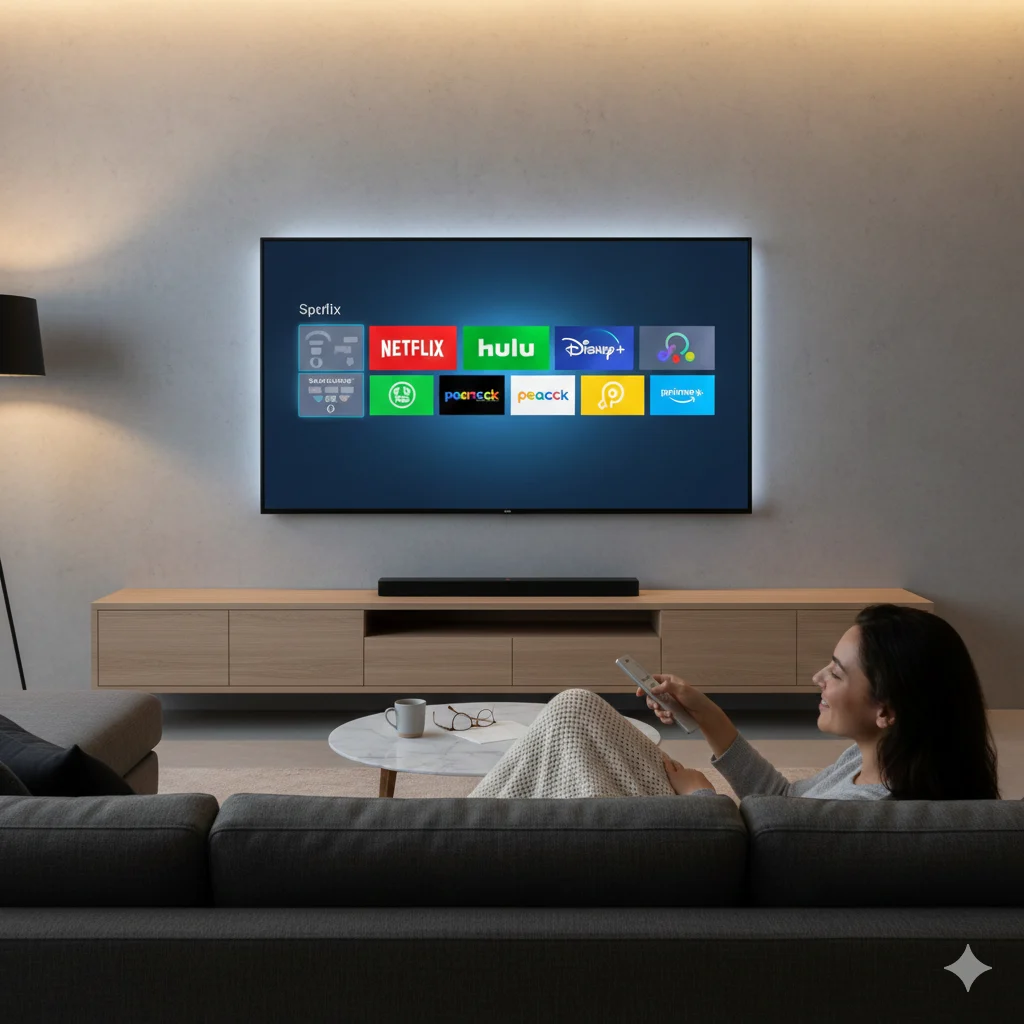
At its core, streaming is a method of data transmission. Think of it like water flowing from a tap. You don’t need to store the entire ocean in your kitchen; you just turn the handle, and water comes out immediately for you to use. Similarly, when you stream a movie on your TV, the video data is sent in a continuous, compressed flow from a remote server over the internet. Your device—whether it’s a Smart TV, Roku, Amazon Fire Stick, or gaming console—decodes this data flow and plays it for you almost instantly.
The key differentiator from older methods (like downloading a movie file to your computer) is that you don’t have to wait for the entire file to transfer before you can watch it. You press “play,” and the content starts while the rest of the data “streams” in the background. This on-demand nature is why it’s often called “streaming media” or “over-the-top” (OTT) media, as it comes directly over the internet, bypassing traditional cable or broadcast providers.
In short: Streaming = Continuous Internet Data Flow = Instant, On-Demand TV.
📱 Where Is Streaming TV Commonly Used?
Streaming has become the dominant form of home entertainment and is used across a wide array of platforms and devices. You’re no longer tied to the living room TV!
- 📺 Smart TVs: Modern Samsung, LG, Sony, and Vizio TVs have built-in streaming platforms like Netflix, YouTube, and Amazon Prime Video.
- 🎮 Gaming Consoles: Devices like the PlayStation, Xbox, and Nintendo Switch are powerful streaming hubs.
- 🖲️ Dedicated Streaming Devices: Products like Roku, Amazon Fire TV Stick, Apple TV, and Google Chromecast plug into any TV to make it “smart.”
- 📱 Mobile Devices & Casting: You can start watching on your phone or tablet and “cast” or “airplay” it to your TV screen.
- 💻 Computers: Many people connect their laptops to their TVs via an HDMI cable for a big-screen streaming experience.
Streaming is inherently casual and user-controlled. It’s designed for flexibility, allowing you to watch what you want, when you want, and where you want.
💬 Examples of Streaming in Everyday Conversation
The term “streaming” is used very casually in modern chat and social media.
1. Making Plans
A: wanna watch a movie tonight?
B: Sure! I’ll see what’s new on streaming.
2. Talking About New Releases
A: The new Star Wars show is so good!
B: I know! I spreed the whole thing on streaming last weekend.
3. Cord-Cutting
A: My cable bill is outrageous this month.
B: You should just cut the cord and switch to streaming. It’s so much cheaper.
4. Sharing Recommendations
A: I need a new show to get into.
B: Have you seen The Bear on Hulu? It’s a must-watch.
5. Technical Issues
A: The big game keeps buffering.
B: Yeah, my internet is slow. Streaming is terrible right now.
6. Comparing Services
A: Is that show on Netflix or Disney+?
B: It’s on HBO Max, which is just “Max” now. The streaming world is confusing!
7. Expressing Overwhelm
A: There are too many streaming services now.
B: Right? I spend more time browsing than actually watching.
🕓 When to Use and When Not to Use Streaming
✅ When Streaming is the Perfect Choice
- For On-Demand Viewing: When you want to watch a specific movie or show on your own schedule.
- satiate-Watching: To watch multiple episodes of a series back-to-back.
- Niche Interests: When you want access to specialized content (e.g., international films, classic cartoons, independent documentaries).
- Cost-Effectiveness: As a cheaper alternative to expensive cable or satellite TV packages.
- Flexibility: When you want to watch on multiple devices, not just the TV.
❌ When Traditional Methods Might Be Better
- During Internet Outages: Streaming requires a stable internet connection. No internet means no TV.
- For Reliable Live News/Sports: While live streaming exists, a traditional antenna or cable can sometimes offer a more reliable, zero-lag broadcast for critical live events.
- In Areas with Poor Broadband: If your internet is slow or has data caps, streaming in high definition (like 4K) can be difficult or expensive.
- For Absolute Simplicity: For someone who is not tech-savvy, the simplicity of turning on a TV and changing channels can be preferable to navigating multiple streaming apps.
Contextual Use Table
| Context | Example Phrase | Why It Works |
|---|---|---|
| Casual Friend Chat | “The new season is streaming now, we have to watch!” | Highlights the immediate, social availability of content. |
| Formal Work Setting | “The presentation recording will be available via a secure video link.” | Uses professional language, avoiding casual tech slang. |
| Tech Support | “The video-on-demand service is currently buffering due to network congestion.” | Provides a precise, technical description of the issue. |
| Marketing/Advertising | “Stream exclusively on our platform starting Friday!” | Creates a sense of immediacy and exclusivity for a modern audience. |
🔄 Similar Slang Words or Alternatives
The world of digital media has its own vocabulary. Here are some terms related to streaming.
| Slang/Term | Meaning | When to Use |
|---|---|---|
| marathon-watch | To watch multiple episodes of a series in one sitting. | When you’ve spent a whole weekend watching a show. |
| OTT (Over-the-Top) | The technical term for streaming services that deliver content directly over the internet. | In more technical discussions about the media industry. |
| SVOD (Subscription Video on Demand) | Services you pay a monthly fee for, like Netflix or Hulu. | When differentiating between paid services and free ones. |
| AVOD (Advertising-Based Video on Demand) | Free, ad-supported streaming services like YouTube or Pluto TV. | When talking about free alternatives to paid streaming. |
| Cut the Cord | The act of canceling traditional cable or satellite TV service. | When discussing the decision to move entirely to streaming. |
| Content Library | The complete collection of movies and shows available on a service. | When comparing the size and quality of what different platforms offer. |
❓ FAQs About Streaming on TV
1. Do I need a smart TV to stream?
No, you can use an external streaming device like a Roku, Fire Stick, or Chromecast with any TV that has an HDMI port.
2. What’s the difference between streaming and downloading?
Streaming plays content live from the internet, while downloading saves a permanent copy to your device. Streaming uses data continuously, while downloading uses it all at once.
3. How much internet speed do I need for streaming?
For standard HD, at least 5 Mbps. For 4K Ultra HD, at least 25 Mbps. More speed is better if multiple people are streaming at once.
4. Is streaming cheaper than cable?
It can be, but “subscription stacking” (paying for Netflix, Max, Disney+, etc.) can add up. Many choose a few core services, which is often still cheaper than a full cable package.
Conclusion:
So, what does streaming mean on TV? It’s more than just a technical term; it’s a fundamental shift in how we consume media. It represents freedom, choice, and control, placing a world of entertainment literally at our fingertips. From its humble beginnings as a niche technology, streaming has surged to become the default way we watch television, reshaping entire industries and our own daily routines. While it requires a reliable internet connection and can feel overwhelming with the number of services available, its benefits of flexibility, personalization, and value are undeniable. The era of appointment viewing is fading, replaced by the golden age of on-demand streaming. So, grab your remote, find your favorite app, and enjoy the show

Andrew Jones is a digital content specialist, quotes writer, and education-focused author at Jinglas.com. He creates clear, engaging explainers on tech, online learning, and modern communication to help readers understand trends, slang, and digital tools with ease.