

🍮 Introduction: The Mystery Behind the Perfect Basque Cheesecake
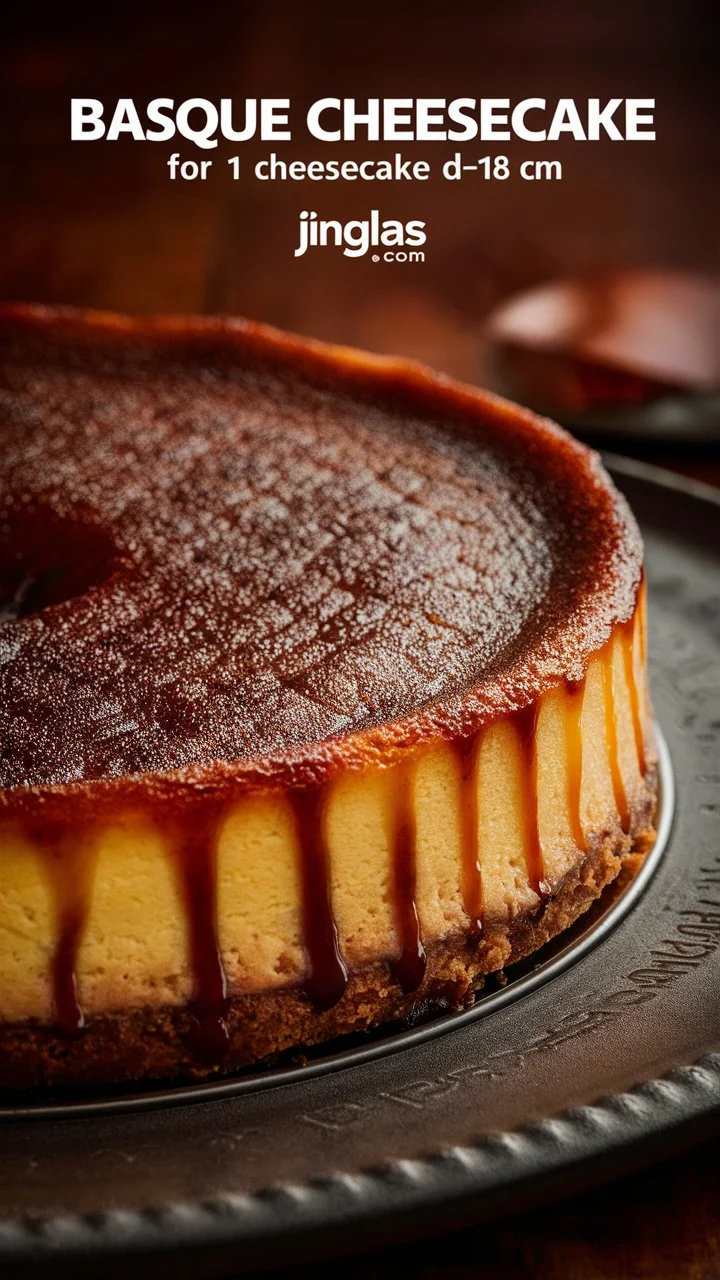
The Basque cheesecake — a beautifully burnt, crustless, creamy creation from Spain’s Basque Country — has become a global dessert icon. With its deep caramelized top and custard-soft center, it’s both rustic and refined.
But what happens when your Basque cheesecake turns watery or underbaked instead of rich and velvety?
Don’t worry — it’s one of the most common issues even expert bakers face. In this guide, we’ll decode the science behind a watery cheesecake, explain the burnt top and jiggle test, and give you professional troubleshooting techniques that’ll ensure your cheesecake turns out perfect every time.
🔍 Why Is My Basque Cheesecake Watery?
A watery Basque cheesecake usually means too much liquid, underbaking, or imbalanced ingredient ratios. Unlike New York cheesecake, Basque cheesecake relies on precise heat and ingredient chemistry — a delicate balance between fat, protein, and moisture.
Here’s what’s really happening:
When you bake the cheesecake, egg proteins coagulate and fat stabilizes the structure. If the mixture is too wet, too airy, or underbaked, it can’t form a proper custard — leading to a watery, uneven center.
🍰 Understanding the Basque Cheesecake
- Origin: San Sebastián, Spain
- Texture: Burnt top, creamy center
- Key Ingredients: Cream cheese, eggs, sugar, heavy cream, flour
- Baking Style: High heat (400°F / 200°C), no crust, no water bath
The beauty of this cake lies in its imperfections — that golden-brown, almost burnt top hides a luxuriously smooth custard beneath.
⚠️ Common Reasons Why Your Basque Cheesecake is Watery (and Fixes)
| Problem | Scientific Reason | Quick Fix |
|---|---|---|
| Low-Fat Cream Cheese | Has higher water content, weakens structure | Always use full-fat cream cheese (Philadelphia or similar) |
| Too Many Eggs | Excess moisture and loose texture | Use 3–5 eggs max, depending on recipe size |
| Overmixing Batter | Adds air bubbles, causes collapse | Mix on low speed, just until smooth |
| Cold Ingredients | Uneven mixing causes water pockets | Use room temperature ingredients |
| Incorrect Oven Temperature | Underbaking keeps center liquid | Bake at 400°F (200°C) and use an oven thermometer |
| Underbaking | Proteins not fully set | Perform the Jiggle Test – edges firm, center jiggly like jelly |
| Rapid Cooling | Causes condensation | Cool gradually before refrigerating |
🔬 Advanced Baking Insights (For Serious Bakers)
- Moisture-to-Fat Ratio:
The ideal ratio for Basque cheesecake is 1:2 fat to moisture. Too much cream or too little cream cheese disrupts this balance. - Egg Protein Coagulation:
Eggs begin to set around 160°F (70°C). If your oven is too cool, proteins don’t coagulate properly — leaving a watery core. - Sugar’s Role:
Sugar delays protein setting. Excess sugar can make your batter too loose. Stick to ¾ cup per 16 oz cream cheese. - Thermal Shock Effect:
Moving the cheesecake from a hot oven to a cold counter too fast causes steam condensation — that’s often the “mystery water” on top.
🔥 The Burnt Top & Jiggle Test (Your Doneness Guide)
A perfect Basque cheesecake should have:
- Deep caramelized top
- Firm edges
- Slightly jiggly (not liquidy) center
How to Perform the Jiggle Test:
- Gently shake the pan.
- The center should wobble like firm gelatin — not like soup.
- If it waves like liquid, bake another 5–10 minutes.
- Remember: It will continue to cook while cooling.
Pro Tip: Use an instant-read thermometer — internal temperature should hit 185°F (85°C) for the perfect creamy center.
🧁 How to Fix a Watery Cheesecake (If It’s Already Baked)
- Rebake Gently: Place it back in the oven at 325°F (160°C) for 10–15 minutes.
- Chill Overnight: Refrigerate uncovered for 6–8 hours to let moisture redistribute.
- Repurpose: If still too soft, turn it into Basque Cheesecake Parfaits layered with crumbled biscuit and whipped cream.
🧠 Pro Baker Tips for the Perfect Texture
✅ Use parchment-lined pan — it promotes even caramelization.
✅ Avoid water baths — Basque cheesecake loves dry, direct heat.
✅ Don’t open the oven early — heat loss = runny center.
✅ Weigh ingredients (especially cream and eggs) for consistency.
✅ Let it rest 24 hours before serving — texture matures and flavor deepens.
🧾 Quick Expert Summary
To Avoid a Watery Basque Cheesecake:
- Use full-fat cream cheese
- Avoid overmixing
- Bake at high heat (400°F)
- Ensure a firm edge and jiggly center
- Cool gradually and chill properly
❓FAQs
Q: Why is my Basque cheesecake wet on top?
A: Steam condensation or cooling too fast. Let it rest uncovered for 20 minutes before refrigeration.
Q: Can I bake it longer to fix watery texture?
A: Yes, but lower heat slightly to avoid burning the top further.
Q: Should I add cornstarch or flour?
A: A small amount (1 tbsp) of flour stabilizes texture without losing creaminess.
🧑🍳 Conclusion: Turn Your Watery Cheesecake into Perfection
Mastering the Basque cheesecake is about understanding balance — between heat, fat, and patience. Once you grasp the science, every bake becomes more predictable and satisfying.
So next time you wonder, “Why is my Basque cheesecake watery?” — you’ll know exactly how to fix it before it happens.